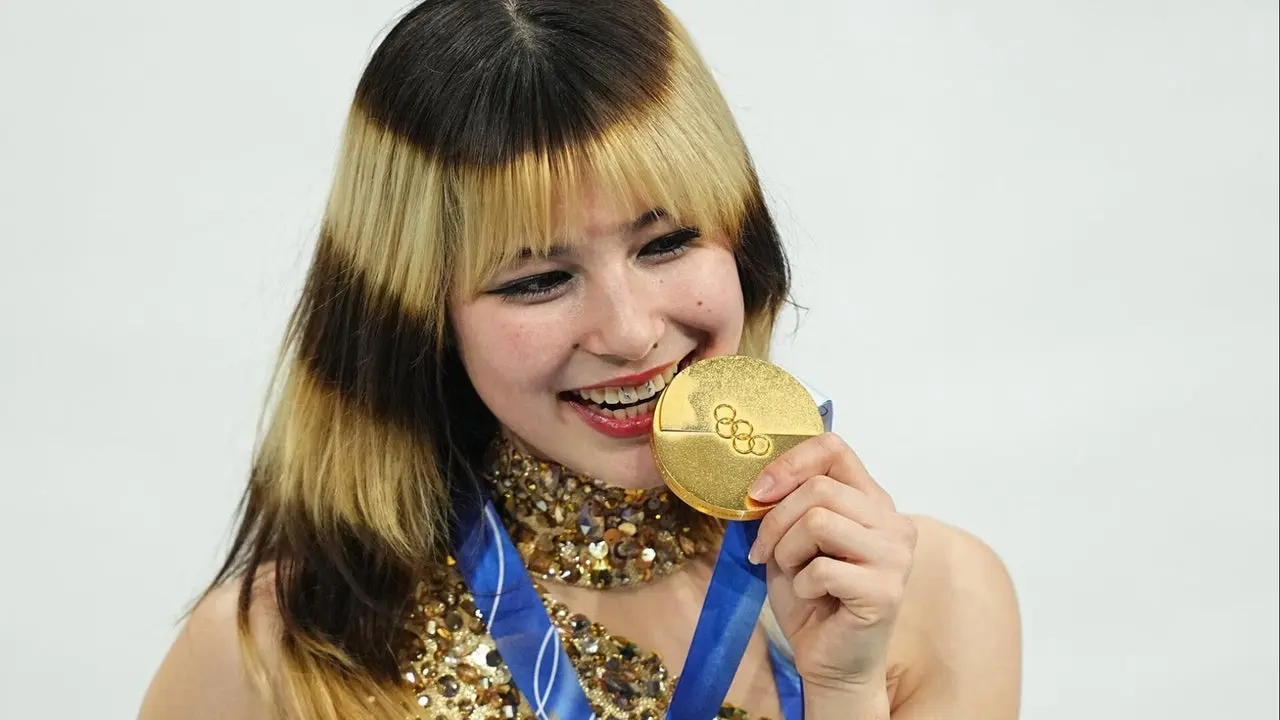
“WE DID IT.” The gold was hers. But the tears belonged to him. When Alysa Liu finished her free skate at the 2026 Winter Olympics, the arena felt suspended in disbelief, as though history itself paused to watch.
For 24 years, American women’s singles figure skating had waited for another Olympic champion. Since Sarah Hughes captured gold in 2002, generations of skaters carried both inspiration and burden. In Milan, Liu ended that drought with breathtaking authority.
Her program opened with quiet intensity. The first jump soared, clean and fearless, slicing through the air with confidence born of relentless repetition. Each landing felt anchored, edges crisp, transitions seamless and deliberate.
The choreography balanced athletic power with restraint. Rather than theatrical excess, Liu projected controlled conviction. Every extension of her arms carried intention, every spin accelerated with technical precision, drawing the audience deeper into her narrative.
Midway through the routine, a triple-triple combination unfolded flawlessly. Commentators’ voices rose in excitement, yet Liu’s expression remained composed. She skated not for spectacle alone, but with the calm of someone who knew she belonged.
By the final minute, anticipation radiated from the stands. Spectators leaned forward collectively, sensing something rare. When she struck her final pose, chin lifted and arms open, applause erupted before music fully faded.
She exhaled only then, shoulders lowering slightly. The scoreboard delay felt endless. Cameras captured her stillness, the quiet calculations behind her eyes, as judges finalized scores that would define careers and headlines alike.
Numbers flashed across the screen. Gasps rippled outward, followed by a roar. The total confirmed it: Olympic gold. The first American women’s singles champion in nearly a quarter century.
Liu’s hand flew to her mouth, disbelief etched across her face. Yet within seconds, broadcast directors shifted focus from the ice to the stands, sensing a parallel story unfolding beyond medals.
There sat Arthur Liu, her father. His hands trembled visibly, fingers pressed against his lips as tears streamed freely. He did not attempt composure. Years of emotion surfaced in one unfiltered moment.
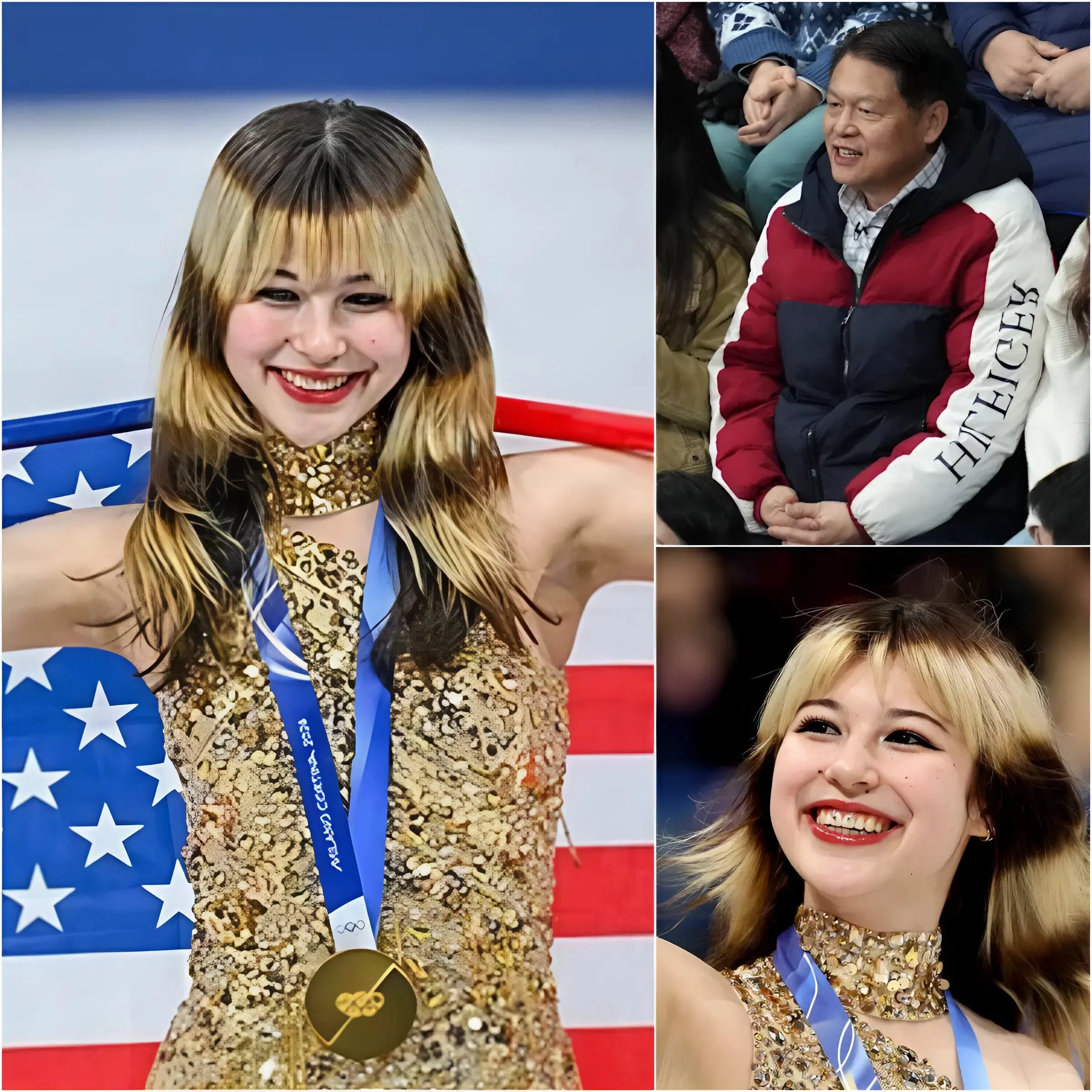
Social media captured it instantly. Clips of his reaction circulated within minutes, accompanied by captions about sacrifice, devotion, and shared dreams. In that brief frame, victory transcended sport.
Arthur’s journey had long been intertwined with his daughter’s. Predawn drives to cold rinks, hours spent waiting in near-empty arenas, financial strain quietly absorbed without complaint. Each practice etched another line of hope.
When Alysa was young, talent emerged early. Coaches marveled at her balance and fearlessness. Yet talent alone does not guarantee Olympic triumph. Injuries, growth spurts, and competitive setbacks tested resolve repeatedly.
There were seasons when expectations felt suffocating. As a teenage prodigy, Liu faced media scrutiny beyond her years. Comparisons to past champions created narratives she never explicitly sought.
At one point, she stepped away from competition entirely, prioritizing mental clarity over relentless pressure. Critics questioned whether her ascent had peaked too soon. Supporters insisted her story remained unfinished.
Her return carried quieter ambition. Training sessions became more introspective, focused not merely on difficulty but on mastery. Arthur reportedly emphasized joy over outcome, reminding her why she first laced skates.
In Milan, that philosophy crystallized. Her free skate did not appear frantic or desperate. It felt assured, each element executed as an affirmation rather than a gamble.
Commentators described the performance as fearless in the air and precise on every edge. Technical panels found no major errors. Judges rewarded both execution and artistry, acknowledging maturity that surpassed earlier seasons.
As medals were prepared, Liu glanced again toward the stands. Arthur’s tears had not subsided. He clasped strangers’ hands beside him, gratitude radiating beyond language.
Those who knew him described the emotion as cumulative. Years of doubt, whispered criticism, and relentless commitment converged into that singular instant of validation.
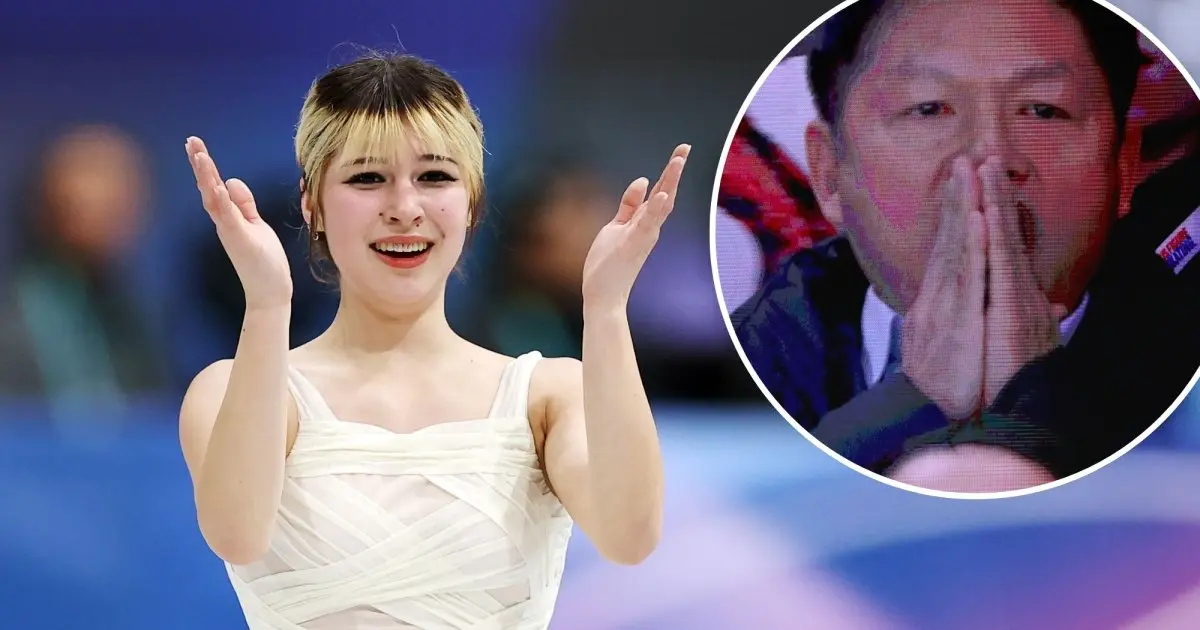
The phrase “We did it” captured the shared nature of triumph. While the medal would hang around her neck, countless unseen efforts contributed to its weight.
Clips of Arthur’s reaction sparked global resonance. Parents of athletes posted tributes, recounting their own sacrifices. Coaches shared anecdotes about perseverance behind every podium finish.
For American figure skating, the victory marked symbolic renewal. The 24-year drought had fueled introspection about development systems and competitive strategy. Liu’s gold signaled potential resurgence.
Younger skaters watching from home saw possibility rather than pressure. Her journey illustrated that pauses and setbacks need not define destiny.
Arthur later described the moment as surreal. He admitted he had envisioned victory countless times, yet reality surpassed imagination. “All I could think was how proud I am,” he said.
Observers noted that his tears humanized the spectacle. Olympic triumphs often appear polished and choreographed. Raw parental emotion pierced that veneer, reminding audiences of intimate stakes.
Liu’s medal ceremony radiated quiet grace. As the anthem played, she closed her eyes briefly, absorbing sound and memory alike. When it concluded, she looked again to the stands.
In interviews afterward, she deflected praise toward her support system. “My dad believed even when I doubted,” she said, voice steady yet reflective.
The 2026 Winter Games had produced numerous dramatic storylines, yet this moment dominated highlight reels. Broadcasters replayed Arthur’s trembling hands alongside her flawless landings.
Sports psychologists analyzed the synergy between athlete and parent. They emphasized balance between guidance and autonomy, crediting Arthur for fostering resilience without imposing rigid expectation.
Teammates described the locker room atmosphere as jubilant and reverent. They understood the historical weight, aware they had witnessed an era-shifting performance.
Meanwhile, merchandise bearing her name sold rapidly. Yet the most circulated image remained not a branded celebration, but a father’s unguarded tears.
Critics occasionally question the commercialization of Olympic narratives. This story, however, felt profoundly personal. It resisted reduction to slogans, rooted instead in lived experience.
Arthur’s sacrifices were not solely financial. Emotional endurance defined the years as much as logistical commitment. Watching his daughter navigate pressure required quiet strength.
When asked about the drought since Sarah Hughes, Liu acknowledged history respectfully but insisted she skated for present joy, not comparison.
Analysts highlighted technical advancements since 2002. The sport evolved dramatically, with increased difficulty and artistry demands. Liu’s program reflected that evolution seamlessly.
Her victory also underscored broader investment in American training infrastructure. Coaches cited collaborative efforts nationwide to nurture diverse talent pools.
Yet statistics and strategy could not fully capture the intimacy of the moment in Milan. A father watching his daughter achieve the improbable transcended analytics.
Online, viewers replayed the broadcast frame by frame. Some admitted crying despite limited knowledge of figure skating rules. Emotion proved universal.
For Arthur, those tears symbolized closure of a chapter defined by persistence. For Alysa, they represented shared ownership of triumph.
The image of trembling hands became shorthand for parental devotion worldwide. It reminded audiences that Olympic glory rests upon countless invisible mornings.
As celebrations continued, Liu maintained characteristic humility. She thanked choreographers, trainers, and competitors, acknowledging the collective ecosystem enabling excellence.
Her free skate will be analyzed technically for years. Yet culturally, the enduring memory may remain that glance toward the stands.
In that exchange of sightlines, athlete and father communicated volumes without words. Sacrifice met fulfillment in a single, electric heartbeat.
Olympic narratives often hinge on dramatic finishes. This one lingered on quiet aftermath—tears flowing freely, pride uncontained.
By the time she whispered, “We did it,” the medal had already transcended personal achievement. It embodied partnership, resilience, and belief sustained across decades.
The drought ended in Milan, but the story extended beyond statistics. It became a testament to shared conviction forged in empty rinks before dawn.
For American fans, the gold signaled resurgence. For parents everywhere, Arthur’s tears offered recognition.
In the end, Alysa Liu’s victory shimmered not only in metal but in memory. The ice preserved her artistry; the stands revealed the heart behind it.
And as history recorded her name among champions, the world remembered that sometimes the most powerful moment unfolds not in the spotlight, but just beyond it.