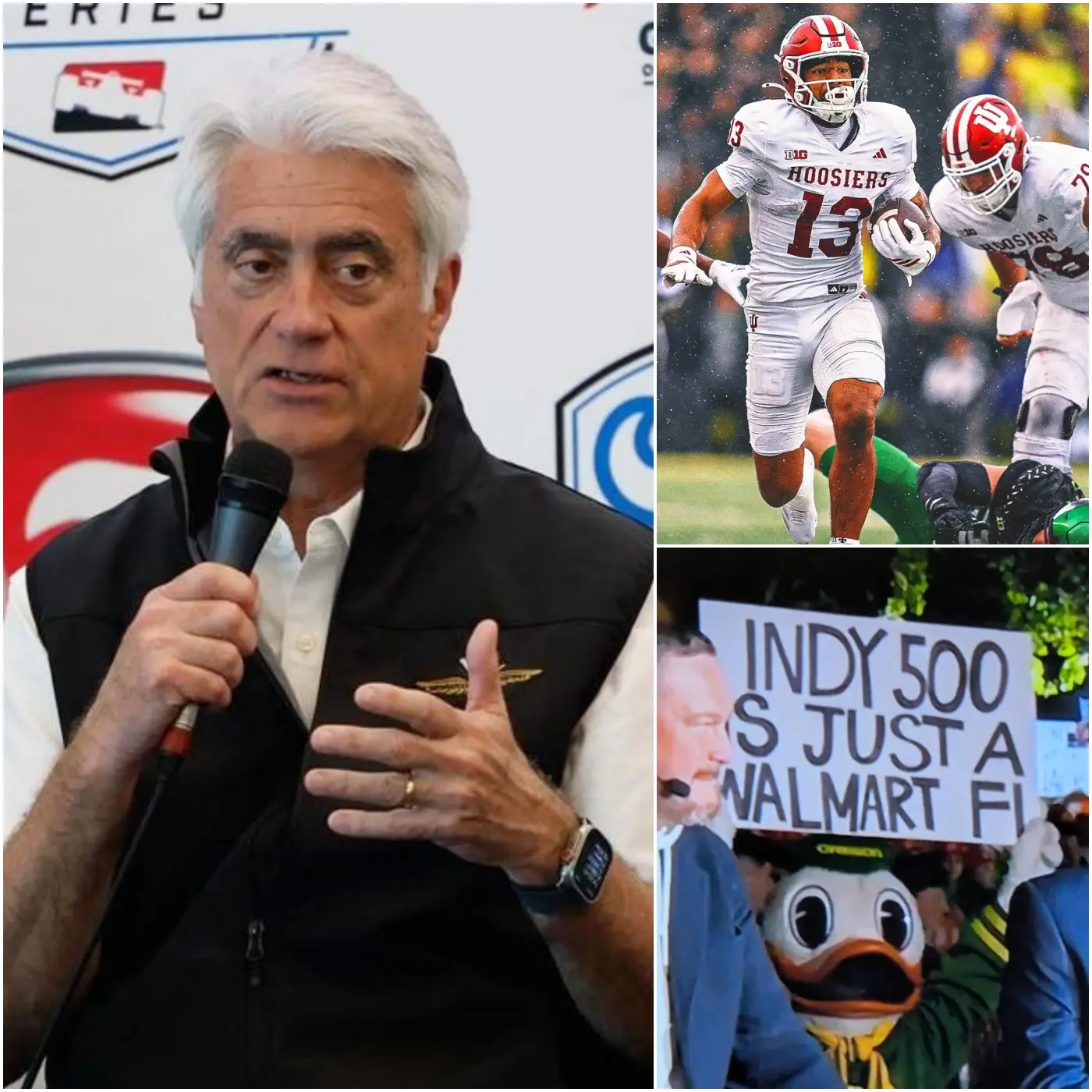
The conflict between IndyCar and the University of Oregon Ducks college football team began unexpectedly during a College GameDay broadcast in early October 2025. The Oregon Ducks mascot, known simply as “The Duck,” appeared on screen holding a sign that mocked the Indianapolis 500, one of America’s most iconic and historic motorsport events. The sign reportedly labeled the Indy 500 as “Walmart F1,” a jab implying that IndyCar’s premier race was a cheaper, less prestigious imitation of Formula 1 racing.
This lighthearted but pointed dig, delivered in the high-energy atmosphere of college football’s biggest pre-game show, quickly drew attention from motorsport fans.
The comment struck a nerve within the IndyCar community. The Indianapolis 500, often called “The Greatest Spectacle in Racing,” dates back to 1911 and draws hundreds of thousands of spectators to the historic 2.5-mile oval at Indianapolis Motor Speedway each May. It stands as a cornerstone of American sports culture, blending tradition, pageantry, and high-speed competition. For many fans and insiders, comparing it dismissively to a discount version of Formula 1 felt like an unnecessary slight against a legacy event that predates modern F1 by decades and holds its own unique place in global motorsport.
Social media erupted almost immediately. On platforms like Reddit, X (formerly Twitter), Instagram, and Threads, IndyCar enthusiasts shared screenshots of the sign and fired back with memes, jokes, and defenses of the Indy 500’s prestige. Posts highlighted the race’s historical significance, its role in American culture—complete with traditions like the milk victory celebration and “Back Home Again in Indiana”—and its massive viewership compared to many other events. Hashtags and threads circulated rapidly, turning the mascot’s sign into a viral moment that crossed over from college football circles into racing discussions.
The escalation reached a new level when IndyCar president Mark Miles decided to respond directly. In a post on X, Miles fired back using a similar format to the original insult. He quipped that something along the lines of Oregon being the “community college version” of a major football program or a comparable low-blow comparison, framing it as a playful yet pointed retort to what many in the IndyCar world viewed as disrespectful trash-talk. His reply amplified the exchange, drawing widespread attention and approval from racing loyalists who appreciated the series leadership defending the sport’s honor.
The back-and-forth transformed what started as a one-off mascot gag into a full-blown online storm. Motorsport media outlets picked up the story, with headlines emphasizing the unexpected crossover between open-wheel racing and college football. Sportskeeda published an explainer detailing the feud, noting how Miles’ response kept the momentum going and turned the tables on the Ducks. Fans on both sides weighed in: some college football supporters dismissed it as harmless fun typical of mascot antics, while IndyCar advocates argued that the Indy 500 deserved more respect given its status as “America’s most prestigious race.”
Adding fuel to the fire, the timing aligned with real-world results on the field. Shortly after the sign incident, the Indiana Hoosiers football team faced off against Oregon in a game that saw Indiana come out on top, defeating the Ducks decisively. Social media users from the racing side wasted no time connecting the dots, posting variations of “talk shit, get hit” and celebrating the football win as poetic justice or “roasted duck” served by Indiana. Accounts and pages dedicated to motorsport shared images and clips, joking that the streets—or in this case, the scoreboard—had not forgotten the earlier mockery.
The feud highlighted broader themes in modern sports culture: the power of social media to amplify minor incidents into major narratives, the tribal loyalties that fans bring to their respective sports, and the occasional unexpected intersections between seemingly unrelated worlds. IndyCar, which has been working to expand its audience through better television deals and high-profile events, found an unlikely spotlight through this spat. For Oregon, the Ducks’ program—known for flashy uniforms, big recruits under coach Dan Lanning, and a presence in national title conversations—suddenly had to contend with backlash from an entirely different fanbase.
As the online chatter continued into late 2025 and beyond, references to the incident popped up sporadically. Months later, posts recalled the mascot’s sign and the subsequent clapback, with some noting how the memory lingered in racing circles. The episode remained a lighthearted but telling example of how pride in one’s sport can spark unlikely rivalries. No formal apologies or resolutions emerged, as both sides treated it largely as banter, but it underscored the passion that surrounds the Indy 500 and the willingness of its stewards to push back against perceived slights.
In the end, what nobody anticipated was how a simple prop sign during a college football segment could ignite such cross-sport drama, spreading across timelines, platforms, and fan communities. The war of words served as a reminder that in the age of viral content, even mascots can start fires—and racing presidents are more than willing to fan the flames in defense of their crown jewel event.