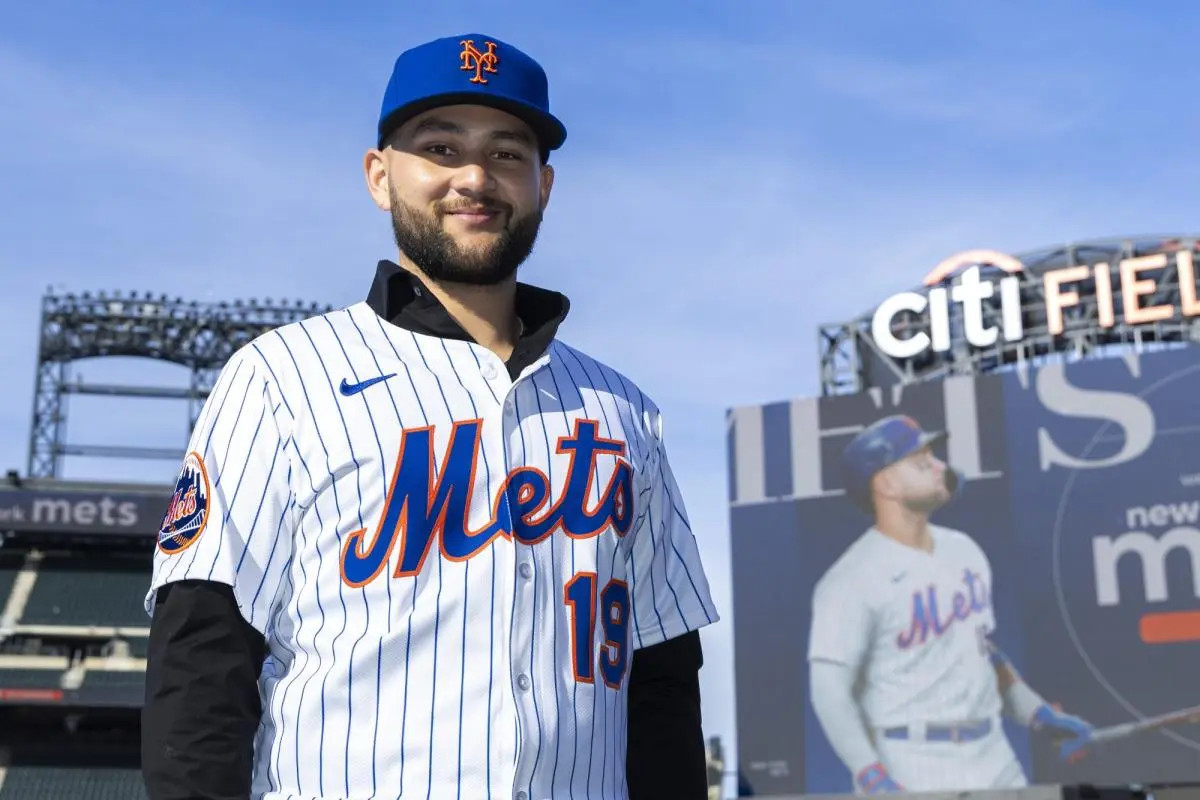
The New York Mets pulled off one of the most surprising moves of the MLB offseason when they agreed to terms with infielder Bo Bichette on a three-year, $126 million contract. The deal, which includes player opt-outs after the first and second seasons, came just hours after the Mets missed out on outfielder Kyle Tucker, who opted for a four-year, $240 million pact with the Los Angeles Dodgers.
Bichette’s signing not only represented a quick pivot for New York but also sent shockwaves through the league, particularly in Boston, where the Red Sox had been viewed as serious contenders for the former Toronto Blue Jays star.

Bichette, 27, entered free agency after declining the Blue Jays’ $22.025 million qualifying offer following the 2025 season. His departure from Toronto marked the end of an era for the club that drafted him in the second round in 2016 and watched him develop into a perennial All-Star. Known for his powerful bat and smooth swing, Bichette has been one of the most consistent hitters in baseball when healthy, posting a .290 career average with strong power and on-base numbers. However, recent injury concerns and a desire for a fresh start appeared to drive his decision-making in free agency.
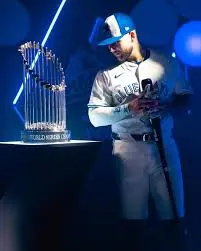
Reports indicated that multiple teams pursued Bichette aggressively, including the Philadelphia Phillies, who reportedly offered a seven-year deal worth around $200 million, and the Red Sox, who had been linked to him throughout the winter as they sought to bolster their infield. Boston’s interest made sense on paper: the team needed a right-handed bat with star potential to complement their young core, and Bichette’s ability to hit for average and power could have slotted perfectly into their lineup.
Yet, despite the reported pursuit, Bichette ultimately chose the Mets, a decision that stunned many observers given Boston’s storied history and passionate fanbase.
In the wake of the signing, Bichette addressed his choice in interviews, emphasizing his ambition to chase championships. He explained that his ultimate goal was to position himself on a team with the resources and momentum to contend for titles consistently. “My dream is to be a champion, that’s why I didn’t join the team,” Bichette reportedly said when reflecting on turning down other offers, including Boston’s.
The comment highlighted his focus on winning over sentimentality or geography, even if it meant passing on opportunities with franchises that had long-standing ties to his game or family legacy—his father, Dante Bichette, had a notable career in the majors.
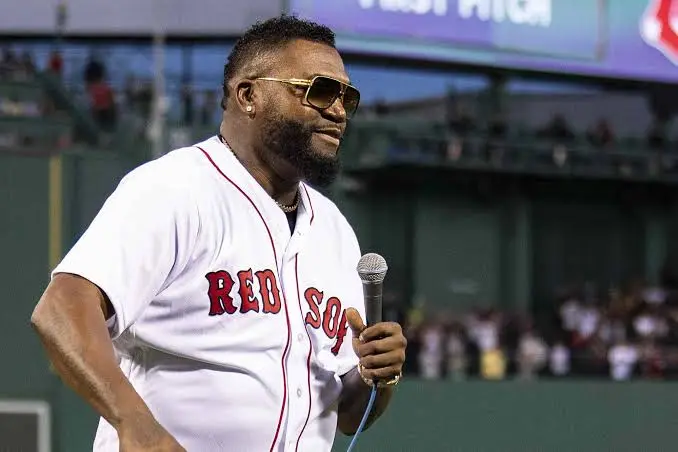
The remark stirred immediate reactions across the baseball world, but none carried more weight than the response from Boston Red Sox legend David Ortiz. Big Papi, a three-time World Series champion with the Red Sox and one of the most beloved figures in franchise history, took to social media with a pointed 12-word message that many interpreted as a subtle jab at Bichette’s reasoning. While the exact wording circulated widely among fans and analysts, Ortiz’s comment was seen by some as highlighting the perceived arrogance in prioritizing rings over loyalty or fit, especially when rejecting a storied organization like Boston.
The message left Bichette “embarrassed,” according to various reports and fan discussions, as it underscored the emotional weight of turning down the Red Sox in favor of a quick pivot to the Mets.
Ortiz’s reaction resonated deeply with Red Sox Nation, a fanbase that prides itself on passion, history, and the pursuit of championships. Boston has endured its share of near-misses in recent years, and the idea that a player might view the Red Sox as not championship-caliber enough stung. Yet, the reality of the situation was more nuanced. Bichette’s contract with the Mets includes significant flexibility, allowing him to test free agency again after 2026 or 2027 if he performs well.
This structure, similar to Alex Bregman’s deal with Boston the previous offseason, suggests Bichette bet on himself to secure an even larger long-term payday down the road. The Mets, aggressive in their spending under owner Steve Cohen, provided the platform: a massive annual value of $42 million, no deferred money, and a chance to play third base in a lineup bolstered by recent additions.
For the Mets, landing Bichette was a statement move. After losing Tucker, the team needed a high-impact bat to pair with their revamped roster. Bichette’s addition strengthens the infield and gives New York a proven run-producer who can thrive in the pressure cooker of New York baseball. Critics pointed out the risks—Bichette’s injury history and defensive questions at a new position—but the upside was undeniable. If he stays healthy and produces, the Mets could have a cornerstone piece for a deep playoff run.
Meanwhile, the Red Sox moved forward without him, focusing on trade avenues and other acquisitions like pitcher Ranger Suárez on a five-year deal. Boston’s front office appeared content to avoid the opt-out-heavy structure that Bichette secured, praising restraint in the face of inflated short-term commitments. Some analysts even commended the Red Sox for dodging what could become a burdensome contract if Bichette’s performance dips or he opts out after a strong year.
Bichette’s decision and the ensuing fallout illustrate the high-stakes nature of modern free agency. Players chase not just money but the best chance at rings, while franchises weigh risk, payroll, and long-term fit. For Bichette, the move to Queens represents a bold step toward realizing his championship aspirations. Whether it pays off remains to be seen, but the drama surrounding his choice—and Ortiz’s sharp response—ensured the signing would be remembered as one of the most talked-about moments of the offseason.
As spring training approaches, all eyes will be on how Bichette adapts to his new surroundings. The pressure in New York is immense, but so is the opportunity. For a player who has always dreamed of hoisting a trophy, this contract could be the launchpad—or, if things go awry, a short detour before another pursuit. In the meantime, Boston fans will watch from afar, wondering what might have been, while cherishing the reminder from their legend that championship pedigree still matters in the eyes of those who have lived it.