In one of the most talked-about moves of the MLB offseason, outfielder Kyle Tucker stunned the baseball world by turning down a lucrative long-term contract from the Toronto Blue Jays to join the back-to-back World Series champion Los Angeles Dodgers. The decision sent ripples through the league, highlighting the growing allure of contending teams with championship pedigrees and the willingness of star players to prioritize rings over guaranteed security.

Tucker, a four-time All-Star known for his elite power, speed, and defensive prowess in the outfield, entered free agency as the consensus top available talent. After a solid season with the Chicago Cubs where he hit .273 with 22 home runs, 73 RBIs, 91 runs scored, and 25 stolen bases, expectations were high for a massive payday. Projections had him in line for a deal potentially exceeding $400 million over a decade or more. Instead, he opted for a shorter, high-value agreement that maximized his annual earnings and preserved future flexibility.
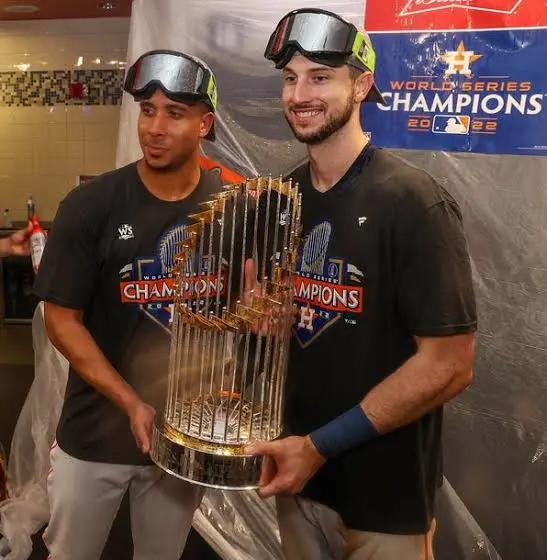
The Dodgers swooped in with a four-year, $240 million contract that shattered records for average annual value (AAV). At $60 million per year (factoring in present-day value after some deferrals), it ranks among the highest in MLB history, trailing only a few elite deals like Shohei Ohtani’s unique structure. The pact includes opt-outs after the second and third seasons, allowing Tucker to return to free agency as early as 2028 if he performs at his expected level or seeks even greater security later.
This structure appealed to the 29-year-old slugger, who has consistently expressed a desire to compete for titles immediately rather than wait for a rebuilding project to mature.
Reports quickly surfaced that the Blue Jays had tabled one of the most generous offers on the table: a 10-year, $350 million proposal that would have provided long-term financial stability. Toronto, coming off a strong but ultimately unsuccessful push to the World Series, appeared ready to make Tucker the centerpiece of their lineup alongside stars like Vladimir Guerrero Jr. and Bo Bichette. The Jays’ willingness to go long-term set them apart from most suitors, including the New York Mets, who reportedly floated shorter deals in the $220-250 million range over four years.
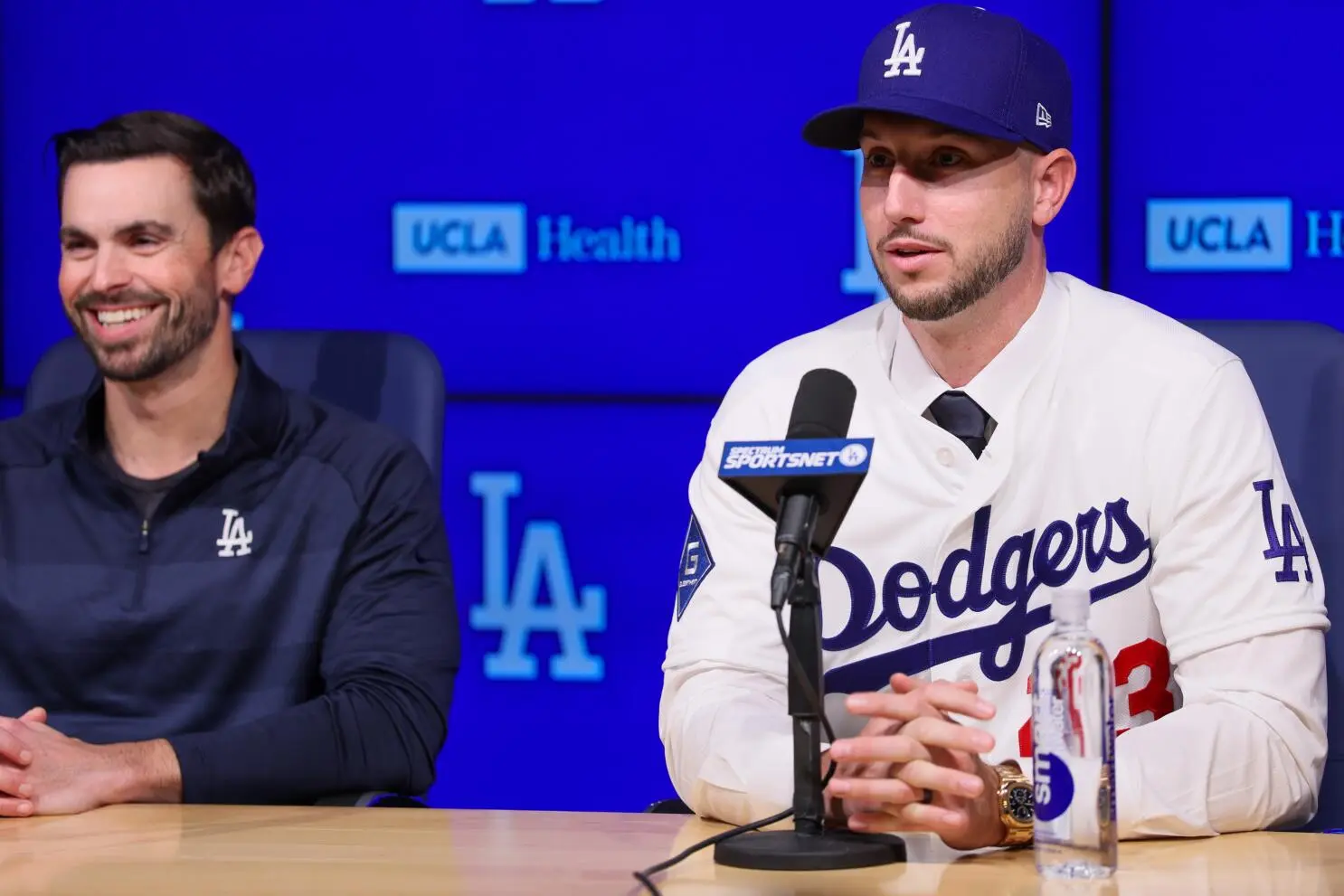
Yet Tucker walked away from the bigger total sum and the security it promised. In post-signing interviews and press conferences, he made his reasoning clear: championships were the priority. “My wish is to be a champion, that’s why I didn’t join the team,” Tucker reportedly stated in reference to bypassing Toronto’s offer. He emphasized how the Dodgers’ recent dominance—securing back-to-back titles and building a roster stacked with talent like Ohtani, Mookie Betts, Freddie Freeman, and now bolstered further by closer Edwin Díaz—made the decision straightforward.
Joining a team already positioned for a three-peat felt like the ideal path to fulfilling his ultimate goal.
The move instantly elevated the Dodgers’ already formidable lineup. Tucker slots in as a premier run-producer and defender, addressing any remaining questions about outfield depth. Dodgers president of baseball operations Andrew Friedman called Tucker the player who most dramatically improved their World Series odds for 2026. The front office’s aggressive approach paid off again, turning what many saw as a long-shot pursuit into reality despite Tucker’s initial openness to Toronto.
The Blue Jays’ pursuit had generated significant buzz earlier in the winter. Guerrero Jr., Toronto’s charismatic first baseman and face of the franchise, had even engaged with Tucker on social media during the rumor mill phase. A cryptic Instagram exchange—where Tucker posted “full throttle” with a fire emoji, and Guerrero responded with wide-eyed surprise—fueled speculation that a deal was imminent. Fans interpreted it as recruitment, with Guerrero seemingly signaling excitement about a potential pairing.
When Tucker ultimately chose Los Angeles, the narrative shifted dramatically. Some outlets and fans framed his comments about prioritizing championships as a subtle dig at Toronto’s status, implying the Blue Jays weren’t viewed as true contenders despite their recent playoff success. This perception sparked backlash, with critics labeling Tucker’s remarks as arrogant or dismissive of the effort Toronto put forth.
In response, Guerrero Jr. posted a pointed 12-word message on social media shortly after the signing became official: “Championships are earned on the field, not bought with opt-outs and headlines.” The comment, viewed by many as a direct rebuttal to Tucker’s stated reasoning, went viral and left Tucker facing widespread criticism. Observers noted the irony—Tucker had chosen the Dodgers, a team that has spent aggressively to build a juggernaut, yet Guerrero’s words highlighted the perception that LA’s success stems more from financial muscle than organic development.
Tucker, who has remained relatively quiet on the exchange, appeared caught off guard by the intensity of the reaction, with some reports suggesting he felt embarrassed by how his words were spun.
The episode underscores broader tensions in modern MLB. Free agency increasingly favors short-term, high-AAV deals with opt-outs, allowing players to bet on themselves while teams like the Dodgers leverage their market size and winning culture to attract talent. For Toronto, missing out on Tucker represented a major setback in their quest to return to championship contention. The team now turns its focus elsewhere, potentially to trades or other free agents to bolster their roster around core pieces like Guerrero.
Meanwhile, Tucker heads to spring training in a Dodgers uniform, ready to contribute to what could be one of the most stacked teams in recent memory. His decision reflects a calculated gamble: sacrifice long-term guarantees for immediate glory. Whether it leads to the ring he craves remains to be seen, but in a league where dynasties are built through bold moves, Tucker’s choice has already cemented his place in the 2026 offseason storylines.
As the new season approaches, all eyes will be on how Tucker integrates into the Dodgers’ star-studded lineup and whether Guerrero’s words prove prophetic or merely a moment of frustration. One thing is certain: the pursuit of championships continues to drive decisions at the highest levels of the game, often at the expense of everything else.