EXTINGUISHING HOPE IN AN INSTANT
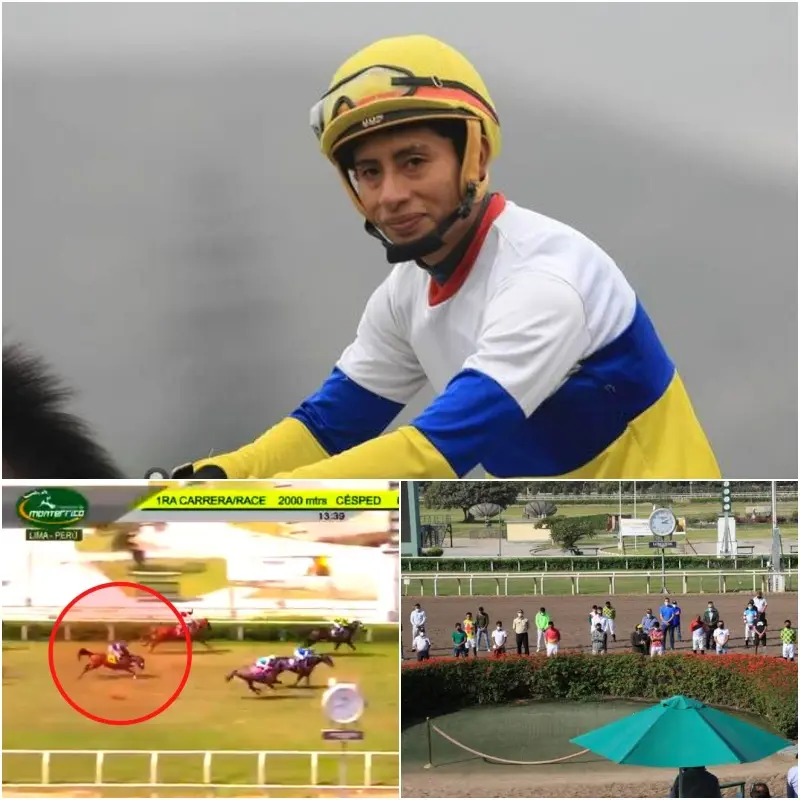
In the world of competitive cycling, where every pedal stroke is a battle against fatigue, rivals, and the unforgiving road, triumph and tragedy can be separated by mere seconds. On a sun-drenched afternoon in Peru, that cruel reality struck with devastating force. Juan Eugenio Enríquez, a 27-year-old cyclist known for his determination and rising talent, lost his life in a horrific crash just 20 meters from the finish line of a televised race.
The incident, broadcast live to viewers across the country, left the cycling community and fans in a state of profound shock and disbelief, serving as a stark reminder of the sport’s inherent dangers.

The race itself had been a grueling test of endurance, winding through challenging terrain that demanded both physical prowess and mental resilience. Enríquez had positioned himself well throughout the event, staying in contention as the peloton thinned and the final kilometers approached. Spectators and commentators alike sensed that a strong finish was within reach for the young rider. He was pushing hard, eyes fixed on the line that represented not just the end of the race but a potential victory or valuable points in a season that held promise for his career.
With the crowd cheering and the cameras capturing every moment, the finish line loomed tantalizingly close.

Then, in an instant, everything changed. Reports from those who witnessed the event describe a sudden loss of control—perhaps a momentary lapse in concentration, a mechanical failure, or contact with another rider—as Enríquez’s bike veered sharply. He was catapulted forward, slamming into the pavement with tremendous force just 20 meters short of completing the stage. The impact was catastrophic. Medical teams rushed to the scene immediately, but despite their swift efforts to provide aid on the roadside and during transport to a nearby hospital, Enríquez could not be saved.
He was pronounced dead shortly after arrival, leaving behind a grieving family, teammates, and an entire sport mourning one of its own.

Enríquez was more than just another competitor on the circuit. At 27, he had already shown flashes of brilliance that suggested a bright future ahead. Born and raised in Peru, he had dedicated years to honing his skills in a country where cycling infrastructure and support can be limited compared to traditional powerhouses in Europe or elsewhere in Latin America. His passion for the bike began early, fueled by local races and the dream of representing his nation on bigger stages. Colleagues described him as hardworking, humble, and always willing to help younger riders find their way in the peloton.
He had competed in various national events and was building a reputation for consistency and grit.
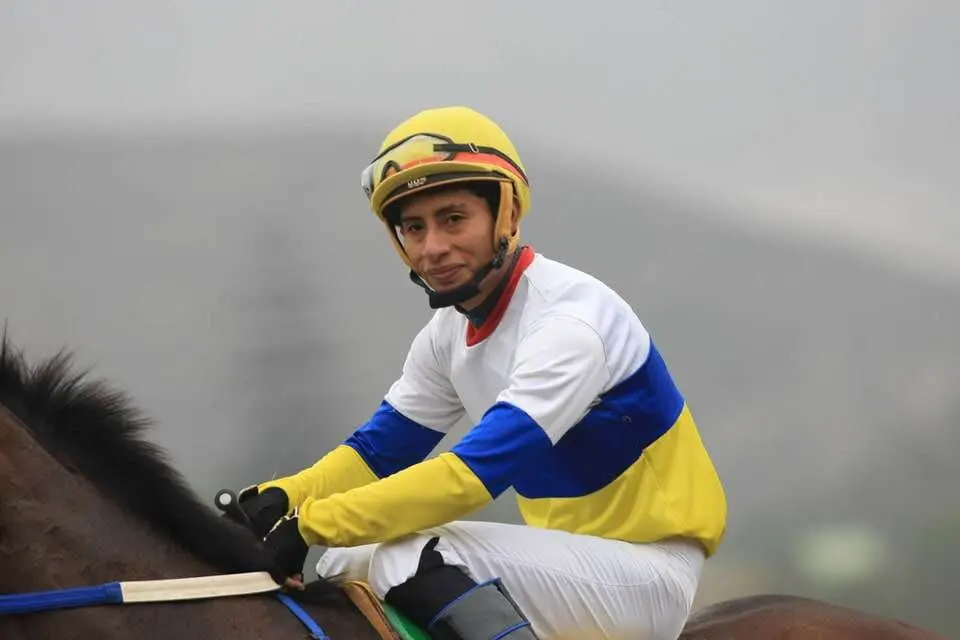
The tragedy unfolded live on television, amplifying its impact. Viewers at home watched in horror as what should have been a moment of celebration turned into unimaginable sorrow. Social media erupted almost immediately with messages of condolence, disbelief, and tributes. Fellow cyclists, some who had raced alongside him that day, posted heartfelt statements expressing their devastation. “He was right there, so close,” one teammate wrote. “It’s hard to process that hope can be extinguished so suddenly.” Fans shared memories of his aggressive racing style and his infectious smile in post-race interviews.
The cycling federation in Peru issued an official statement expressing deep sorrow and extending sympathies to his family, while calling for a review of safety protocols in future events.
This is not the first time cycling has been forced to confront such heartbreak. The sport has a long history of riders meeting untimely ends in crashes, from high-profile incidents in major tours to lesser-known tragedies in regional races. The pursuit of speed on narrow roads, often flanked by barriers, spectators, or uneven surfaces, carries risks that no amount of preparation can fully eliminate. Helmets, improved bike technology, and stricter race regulations have saved lives, but the element of unpredictability remains. A single pothole, a swerve to avoid debris, or a momentary touch of wheels can turn ambition into catastrophe.
In Enríquez’s case, the proximity to the finish line made the loss feel even more poignant. Twenty meters—little more than the length of a large living room—separated success from oblivion. It was a distance that symbolized the razor-thin margin between glory and grief in professional cycling. Many in the community reflected on how often riders push themselves to the absolute limit in those closing moments, adrenaline masking exhaustion, only for disaster to strike when relief seems imminent.
The image of Enríquez’s final seconds has lingered in the minds of those who saw it, a haunting illustration of vulnerability in a sport that celebrates human endurance.
Beyond the immediate shock, the incident has prompted broader conversations about rider safety in Peru and similar regions. While major international races benefit from extensive medical coverage, road closures, and advanced communication systems, domestic events sometimes operate with fewer resources. Calls have grown for better enforcement of safety standards, including mandatory neutral support vehicles, enhanced barrier protections near finish lines, and more rigorous pre-race course inspections. Advocates argue that while risk can never be removed entirely from a high-speed sport, preventable factors must be addressed to honor those who have paid the ultimate price.
Enríquez’s death has also united the cycling world in grief. Messages poured in from across Latin America and beyond, with riders from neighboring countries sharing stories of competing against him or admiring his tenacity from afar. Tributes highlighted not just his achievements but his character—the quiet dedication, the respect he showed competitors, the joy he found in the simple act of riding. In a sport often defined by statistics and standings, it was his humanity that resonated most deeply in the aftermath.
For his family, the pain is immeasurable. A young life full of potential cut short, dreams deferred forever. Friends and loved ones have spoken of his love for cycling as more than a career; it was a passion that defined him. Plans for memorials and perhaps a foundation in his name have already begun to take shape, aimed at supporting young Peruvian cyclists and promoting safer racing conditions.
As the cycling community processes this loss, the question lingers: how to move forward when hope is extinguished in an instant? There are no easy answers. Races will continue, riders will line up again, chasing the same dreams that drove Enríquez. But each time they approach that final stretch, they will carry a quiet awareness of the fragility beneath the exhilaration. Juan Eugenio Enríquez’s story, though tragically brief, serves as both a lament and a call to cherish every moment on the bike—and to work tirelessly to protect those who dare to push the limits.
In the end, his legacy may not be measured in wins or podiums alone, but in the inspiration he provided to others and the reminder that behind every thrilling finish is a human life deserving of care and protection. The road ahead for Peruvian cycling will be traveled with heavier hearts, forever marked by the rider who came so close, only to be taken too soon.