A moment on AEW Dynamite has sent shockwaves far beyond the wrestling world, igniting a heated national conversation about politics, protest, and the boundaries of live television. During a recent broadcast, loud and unmistakable chants of “F*** ICE” erupted from the crowd, echoing through the arena and instantly going viral across social media. What began as a routine night of professional wrestling quickly transformed into a flashpoint that has fans, critics, and commentators fiercely debating what happened, why it happened, and what it means for AEW moving forward.
The chants were not part of a storyline, a promo, or any scripted segment. They came directly from the audience, growing louder and more unified within seconds. Viewers watching live could hear the words clearly before the broadcast attempted to shift focus back to the action in the ring. Still, the moment had already landed. Clips spread rapidly online, sparking reactions from all sides of the political and cultural spectrum.

For many fans in attendance, the chant appeared to be an expression of frustration and protest, reflecting broader anger toward U.S. Immigration and Customs Enforcement and its role in immigration enforcement. Wrestling crowds have long been known for their unpredictability and willingness to express opinions loudly, whether directed at performers, storylines, or real-world issues. AEW, since its inception, has cultivated a fanbase that prides itself on being outspoken, rebellious, and unfiltered, often blurring the line between entertainment and social commentary.
Others, however, were stunned that such explicit political chants made it onto a national television broadcast. Critics argue that professional wrestling, regardless of its edgy reputation, should remain focused on entertainment rather than serving as a platform for political slogans. Some questioned whether AEW should have cut the audio more quickly or taken steps to prevent the chant from being heard so clearly by viewers at home.
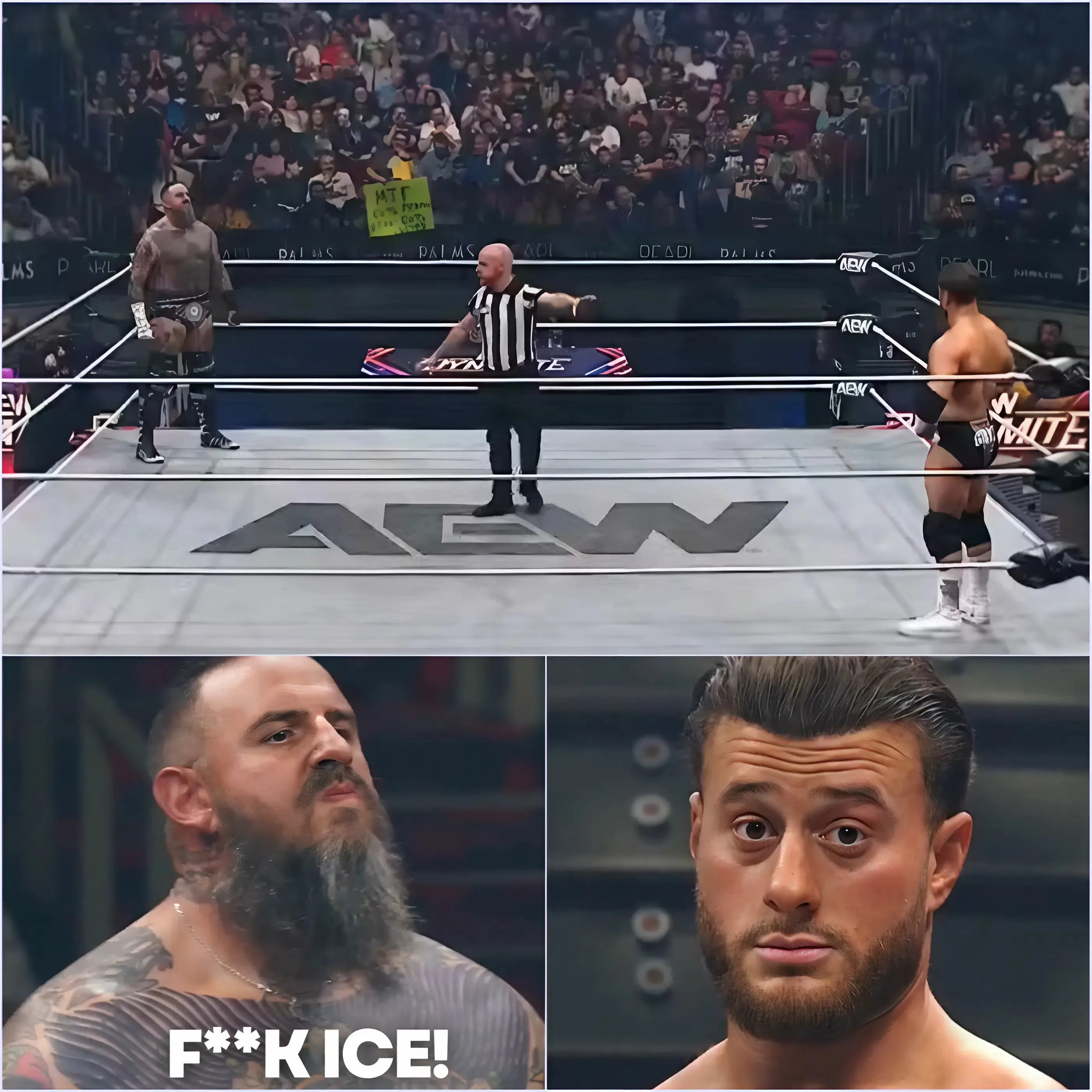
Within minutes, “AEW Dynamite” and “F*** ICE” were trending topics online. Supporters praised the crowd for speaking their minds and using a public platform to express dissent. They pointed out that sports and entertainment events have increasingly become spaces where fans voice political opinions, whether through chants, signs, or gestures. From this perspective, the moment was not shocking but inevitable, a reflection of the polarized times in which people are eager to be heard.
On the other side, detractors accused AEW of allowing its show to be hijacked by political outrage. Some fans expressed discomfort, saying they tune in to wrestling as an escape from real-world conflict and division. Others worried about potential consequences, including backlash from advertisers, broadcasters, or sponsors who may not want their brands associated with controversial political statements.
AEW itself has not issued an immediate official statement addressing the chants. Historically, the promotion has positioned itself as more permissive and fan-driven compared to other wrestling companies, often allowing crowds greater freedom to react organically. That philosophy has helped build AEW’s identity as a raw and authentic alternative, but it also means moments like this can spiral quickly beyond anyone’s control.
Wrestlers backstage were reportedly caught off guard by the intensity of the chant. While none visibly reacted on camera, sources close to the production indicated there was internal discussion about how to handle similar situations in the future. The challenge, as some insiders described it, is balancing the live, unpredictable nature of wrestling with the realities of broadcasting to a national audience in an era of heightened political sensitivity.
The incident also reignited long-standing debates about whether entertainment can ever truly be separated from politics. Wrestling, despite its scripted outcomes, has always been influenced by real-world themes, from Cold War-era villains to modern storylines that mirror social tensions. Fans chanting a political slogan, some argue, is simply another evolution of that tradition, albeit one that makes corporate partners nervous.
Media analysts noted that while the chant was explicit, it was not directed at an individual performer or intended to incite violence within the arena. Instead, it functioned as a blunt statement of opposition toward a government agency. That distinction matters, they say, when evaluating the broader implications and potential responses.
Still, the question remains: where does AEW draw the line? Allowing total freedom risks alienating parts of the audience, while cracking down too hard could undermine the promotion’s core identity. The incident has put AEW leadership in a difficult position, forced to navigate between creative freedom, fan expression, and commercial responsibility.
As the dust settles, one thing is clear: the moment struck a nerve. Fans continue to argue passionately online, some calling the chant courageous, others calling it inappropriate. For AEW Dynamite, a show designed to generate buzz and excitement, this particular kind of attention may be both a blessing and a burden.
Whether this incident becomes a one-time flashpoint or a turning point in how AEW manages its live crowds remains to be seen. What cannot be denied is that for a brief moment, professional wrestling once again collided head-on with real-world controversy, reminding everyone that even inside the ring, the outside world is never far away.