‘More amazing than any dream I ever had as a kid’: Indy 500 winner Alex Palou gets emotional after revealing face on Borg-Warner Trophy
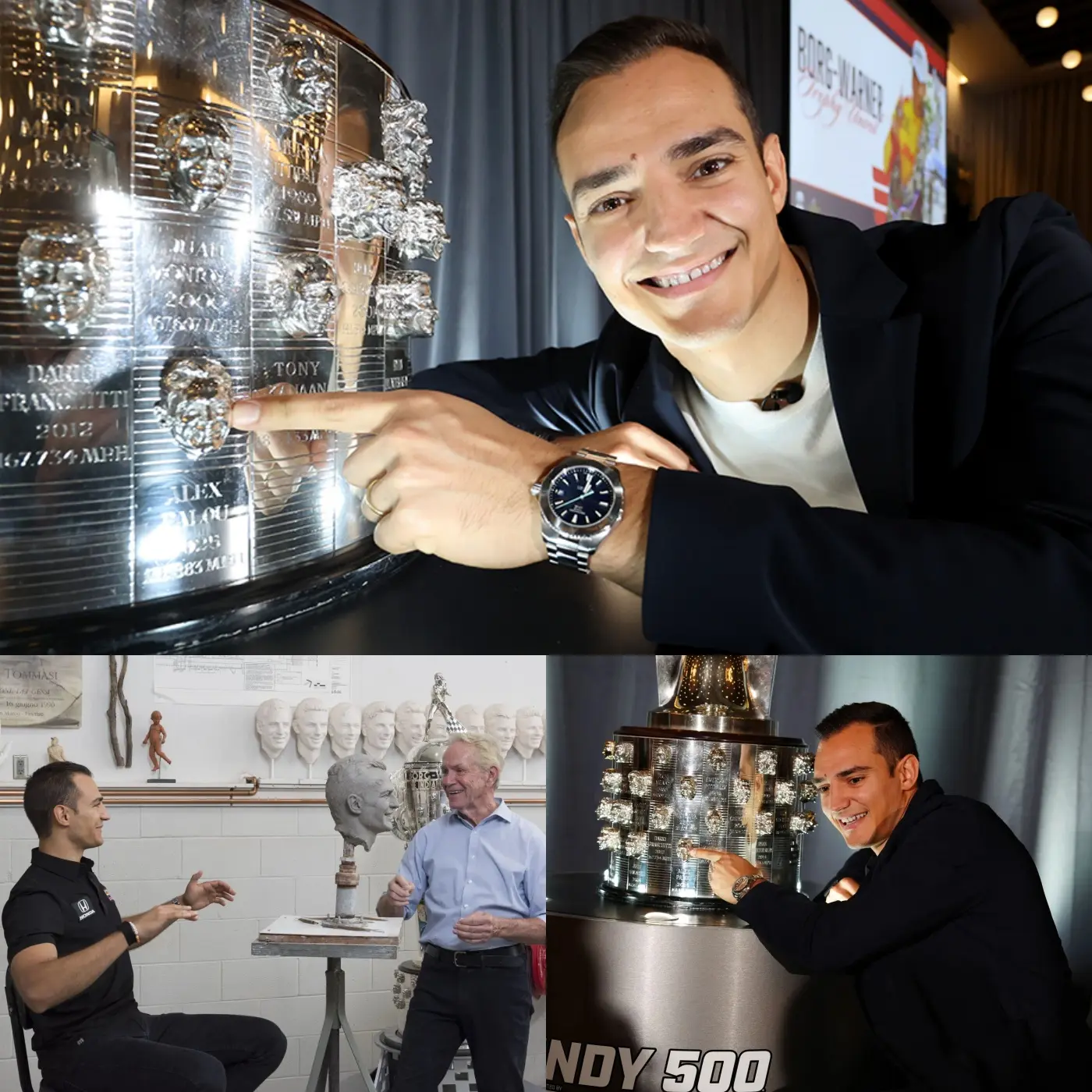
In a moment that blended triumph, history, and raw emotion, Alex Palou stood before the iconic Borg-Warner Trophy on November 19, 2025, and watched as the sterling silver bas-relief of his face was unveiled to the public for the first time. The ceremony, held in downtown Indianapolis, marked the permanent addition of the 2025 Indianapolis 500 winner to one of motorsport’s most revered artifacts.
For Palou, the Spanish driver who had already etched his name into IndyCar lore multiple times, this was more than a ceremonial milestone—it was a deeply personal affirmation of a childhood aspiration realized beyond anything he had ever imagined.
Palou, the four-time NTT INDYCAR SERIES champion (2021, 2023, 2024, and 2025), captured the 109th Running of the Indianapolis 500 presented by Gainbridge on May 25, 2025, driving the No. 10 DHL Chip Ganassi Racing Honda. In doing so, he became the first Spaniard to win “The Greatest Spectacle in Racing,” securing his first career victory on an oval track and delivering Chip Ganassi Racing its seventh Indy 500 triumph as an owner.
The race itself was a masterclass in strategy and composure: Palou overtook Marcus Ericsson on Lap 187 and held off challenges from David Malukas and Pato O’Ward to cross the finish line first amid roaring cheers from over 240,000 fans at the Indianapolis Motor Speedway.
The journey to the Borg-Warner Trophy began long before that dramatic finish. Months after the victory, sculptor William Behrends worked meticulously from photographs and in-person sessions to capture Palou’s likeness in clay, later cast in sterling silver. The face, described by some observers as strikingly lifelike—almost eerily so—joins 111 previous additions on the trophy’s famed “kissing circle” of winners. At 112th overall and representing the 76th different driver, Palou’s image stands as a timeless symbol of perseverance and excellence.
The unveiling event carried an air of reverence and celebration. Attended by representatives from Indianapolis Motor Speedway, BorgWarner, and Chip Ganassi Racing, it highlighted not only Palou’s achievement but also the enduring legacy of the trophy, which has honored Indy 500 champions since 1936. As the cover was lifted, Palou’s reaction spoke volumes. His eyes welled up, his voice cracked slightly, and he struggled to find words adequate for the weight of the moment.
“This is more amazing than any dream I ever had as a kid,” he said, the quote capturing the profound humility and wonder that defined his demeanor. He paused often, gazing at the sculpture as if seeing a version of himself from another life—one forever linked to the legends who came before him.
Palou reflected on the surreal nature of immortality in racing. “This is one of those days that I knew I wanted to be part of at some point in my career,” he shared. “I knew it was going to take a lot of work, and finally to be here and to get to see the trophy for the first time, it’s amazing.” He emphasized the permanence: no matter how many more seasons he races—whether one or 50—his face would remain on the trophy, a constant reminder amid the evolving history of IndyCar.
“To know that I can come to the IMS Museum in like 40 or 50 years… and see my face and hopefully remember the memories I’ve created this year, it makes it super special.”
The emotion stemmed from more than personal glory. Palou’s path to IndyCar stardom was unconventional. Born in Barcelona in 1997, he rose through European karting and single-seater series before finding his footing in America. His breakthrough came with the 2021 championship, followed by dominant title runs that established him as one of the sport’s elite talents. Yet the Indy 500 had eluded him until 2025, when everything aligned: a strong car, flawless execution, and the intangible momentum of a champion season.
Crossing the yard of bricks and drinking the traditional bottle of milk in Victory Lane was euphoric, but seeing his likeness join icons like A.J. Foyt, Mario Andretti, and Helio Castroneves elevated the experience to something transcendent.
Following the ceremony, Palou carried the Borg-Warner Trophy to an Indiana Pacers game, a full-circle nod to his post-race celebrations earlier in the year. The trophy, standing nearly four feet tall and weighing around 150 pounds when fully adorned, served as a gleaming centerpiece courtside, drawing admiration from fans and players alike. For Palou, the evening underscored how his victory resonated far beyond the racetrack, bridging motorsport with the broader cultural fabric of Indianapolis.
As the 2026 season looms—with Palou defending both his series title and Indy 500 crown—the unveiling serves as a poignant bookmark. It reminds the racing world that true greatness is measured not just in checkered flags but in legacies preserved in silver. For a driver who once dreamed of such heights as a child in Spain, the reality proved infinitely sweeter. Palou’s tears and words at the ceremony were not those of someone who had merely won a race; they were the expression of a man who had transcended his own imagination, forever part of racing’s most cherished tradition.