In a moment that left the Quarter Horse racing community in profound sorrow, veteran jockey Cruz Mendez fought back tears as he announced his retirement from the saddle. The 40-year-old rider, once a dominant force at Los Alamitos Race Course, revealed that he had become completely paralyzed in both legs following a devastating racing accident earlier this year. The emotional announcement came during a heartfelt interview from his hospital bedside, where Mendez reflected on a career defined by grit, determination, and an unbreakable bond with the horses he rode.
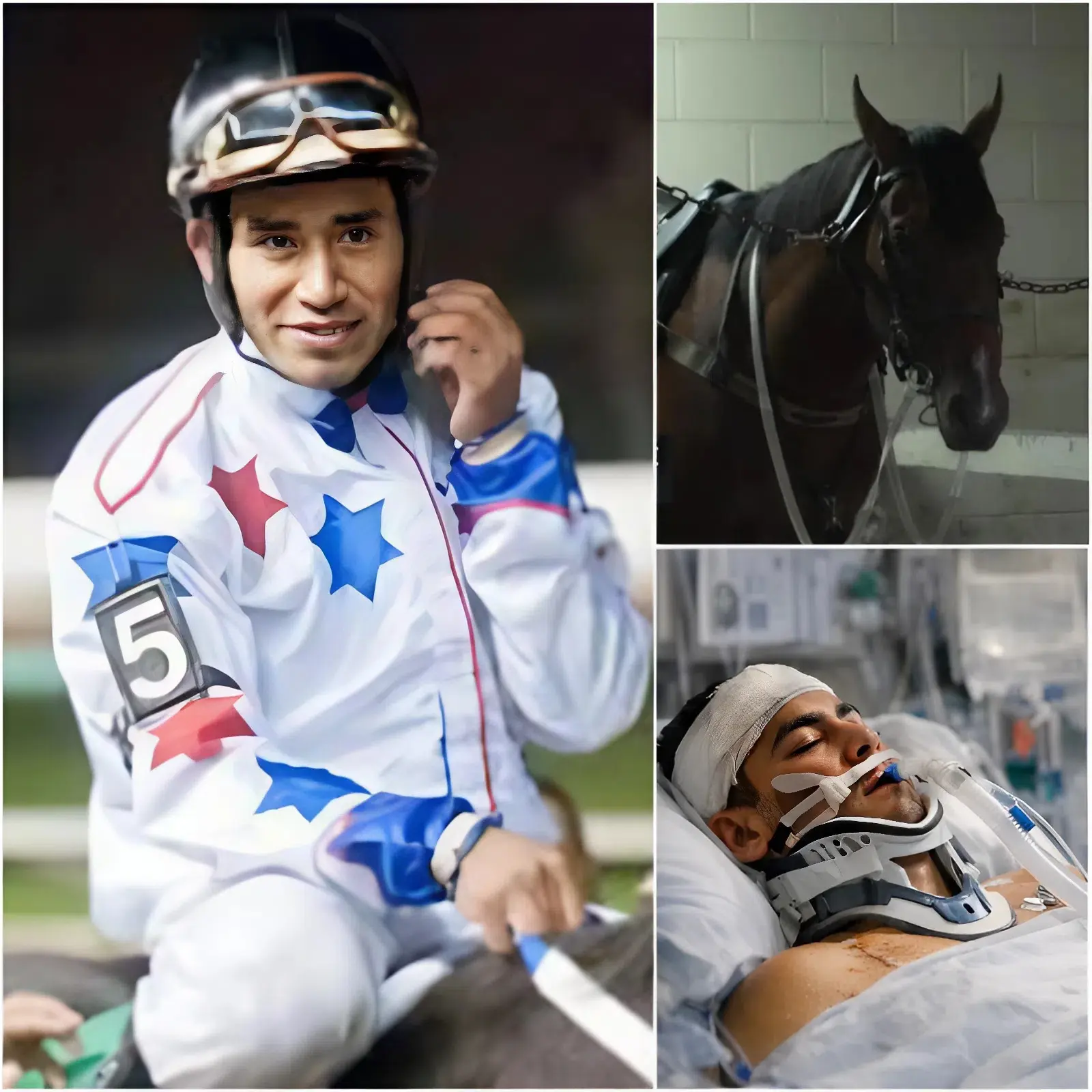
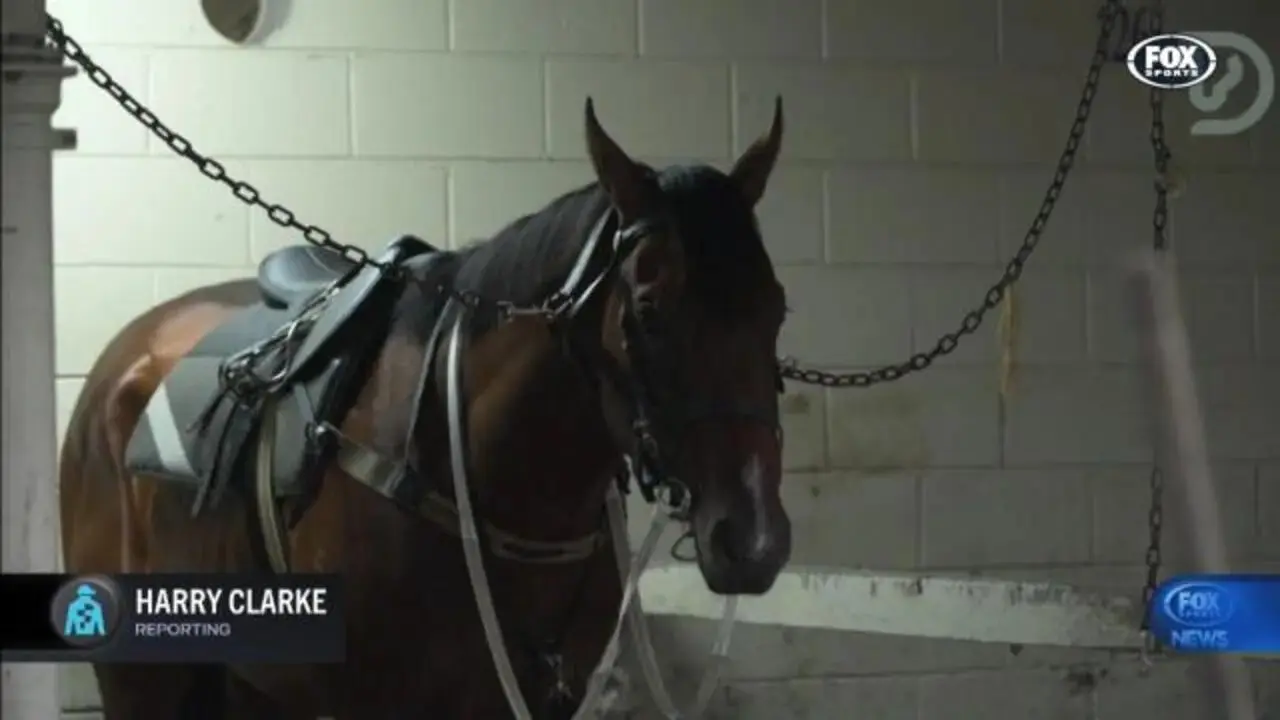
The incident occurred on January 24, 2026, during the fifth race at Los Alamitos. Mendez was aboard Imm Relentless, a 3-year-old filly trained by Sergio Morgin. Late in the race, the filly suddenly “lost action,” stumbled, and fell heavily, resulting in fatal injuries that necessitated immediate euthanasia due to a severe back injury. Mendez was thrown from the saddle in the violent spill and sustained a serious spinal cord injury. He was rushed to Long Beach Memorial Hospital, where he underwent spinal surgery the following day.
Initial reports from friends and racing officials expressed deep concern over potential permanent paralysis in his legs, a fear that was tragically confirmed in the weeks that followed despite intensive medical intervention and rehabilitation efforts.
Mendez’s career in Quarter Horse racing spanned more than 15 years, beginning in 2010. According to Equibase statistics, he amassed 1,184 victories, including 17 Grade 1 wins—a testament to his skill in the high-speed, high-stakes world of quarter horse competition. At Los Alamitos, one of the premier venues for the sport, he claimed the leading rider title five times between 2012 and 2023, most recently topping the standings in 2023. In 2024, he was honored with the Sam Thompson Memorial Jockey Award, recognizing his excellence and contributions to the industry.
Colleagues often described him as a rider who brought unmatched intensity and professionalism to every mount, earning respect from trainers, owners, and fellow jockeys alike.
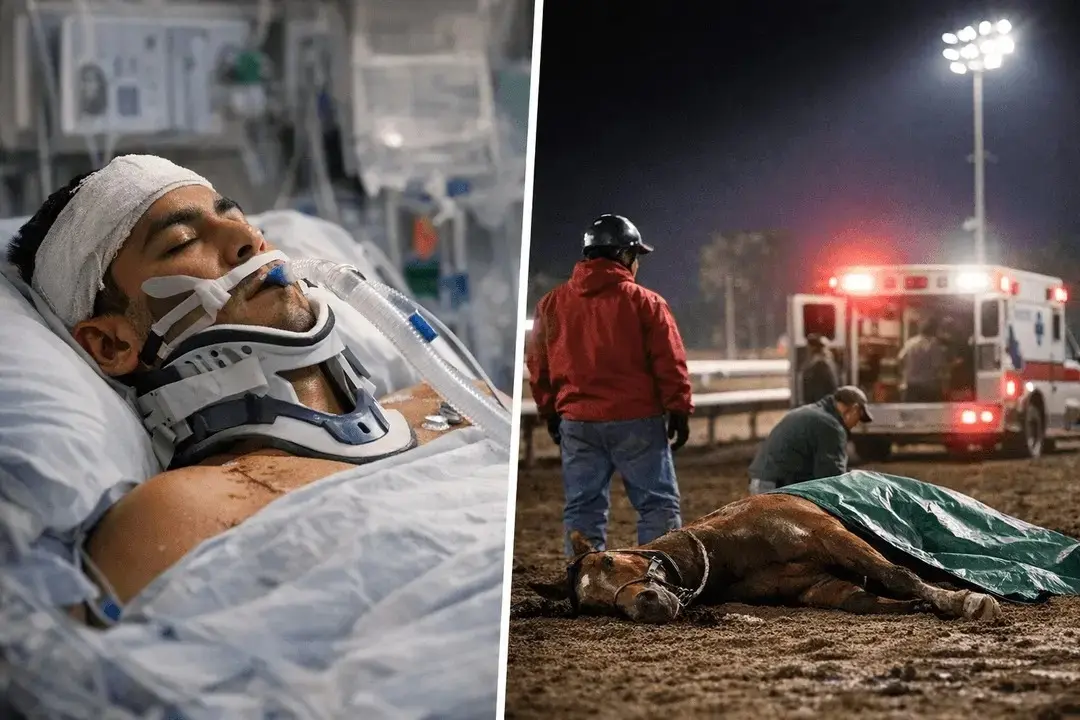
The fall not only ended Mendez’s riding days but also sent shockwaves through the tight-knit Quarter Horse racing community. Friends and trainers, including longtime collaborator Jose Flores—who had partnered with Mendez on numerous major victories since 2012—expressed hope for a “miracle” in the immediate aftermath, praying that swelling would subside and allow some recovery. As time passed, however, the reality set in: Mendez would never regain the use of his legs, forcing him to confront the end of a profession that had defined his life.
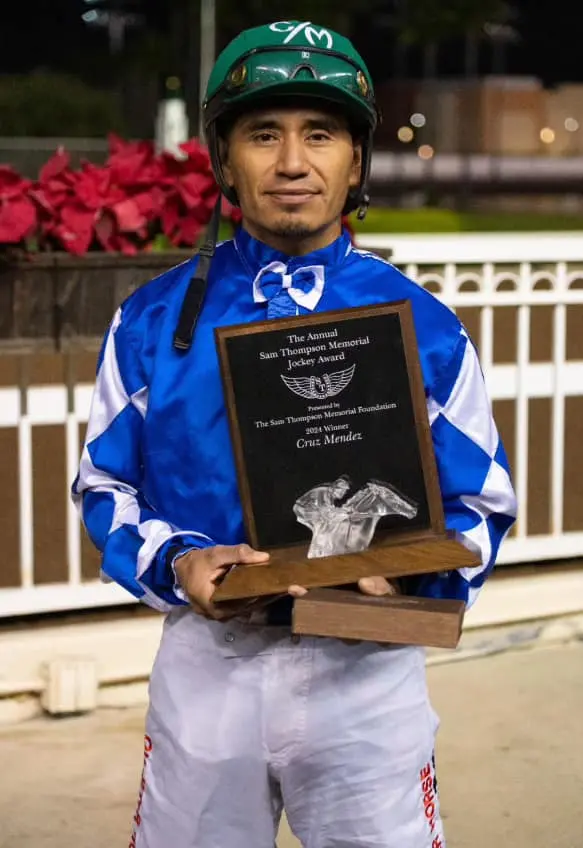
In his retirement announcement, Mendez’s voice cracked with emotion as he spoke about the sport that had given him so much. He recounted the adrenaline of bursting from the gate, the trust built with powerful equine athletes, and the camaraderie among riders who shared the risks daily. “This sport has been my everything,” he said, wiping away tears. “I’ve given it my body, my heart, and now it’s taken a part of me I’ll never get back.
But I wouldn’t trade the memories or the rides for anything.” He expressed gratitude to his family, the Los Alamitos team, trainers, owners, and fans who had supported him throughout his journey.
The tragedy has amplified ongoing discussions about rider safety in horse racing, particularly in the fast-paced Quarter Horse discipline where speeds often exceed those in Thoroughbred events over short distances, heightening the danger of catastrophic falls. Mendez’s injury has prompted renewed scrutiny of protective equipment. The International Federation of Horse Racing Authorities (IFHA), which sets global standards for the sport, has responded by accelerating efforts to tighten regulations on smart helmets and next-generation protective gear.
Smart helmets—equipped with impact sensors, telemetry for real-time data transmission, and enhanced energy-absorption materials—have been a point of contention for years. Proponents argue they provide critical head protection and can alert medical teams instantly to concussions or severe trauma. Critics, however, have raised concerns about added weight, reduced ventilation leading to discomfort during intense races, restricted peripheral vision, and potential interference with a rider’s balance and feel. Some jockeys have resisted mandatory adoption, citing preferences for lighter, traditional designs that prioritize comfort in the heat of competition.
In the wake of Mendez’s accident, the IFHA has moved to address these debates head-on. New guidelines are being finalized to mandate upgraded standards for approved helmets, incorporating advanced composite materials and smart technology where feasible, while balancing safety with practicality. The federation is also encouraging member jurisdictions to invest in research and testing for body protectors and vests that offer superior spinal support without compromising mobility. These changes aim to prevent or mitigate similar injuries, honoring Mendez’s legacy by prioritizing the well-being of those who risk their lives every time they climb aboard.
Mendez’s retirement marks the close of an era for Los Alamitos and the broader Quarter Horse racing world. His absence from the jockeys’ room will be felt deeply, as will his quiet strength and positive spirit. Trainers and riders have already begun fundraising efforts to support his long-term care and adaptation to life beyond the track. Mendez himself remains optimistic about the future, vowing to stay connected to the sport—perhaps through mentoring young riders or sharing his experiences to advocate for safety improvements.
As the racing community processes this heartbreaking chapter, Mendez’s story serves as a stark reminder of the fragility of life in the saddle and the courage required to pursue such a demanding passion. His tears were not just those of loss, but of profound gratitude for a career that, though cut short, burned brightly and inspired many. The sport he loved will carry on, forever changed by his sacrifice and the reforms it has spurred.