The Hall of Fame Collapse: NFL Commissioner Roger Goodell Faces Massive Boycott Backlash After Bill Belichick and Robert Kraft Miss Induction
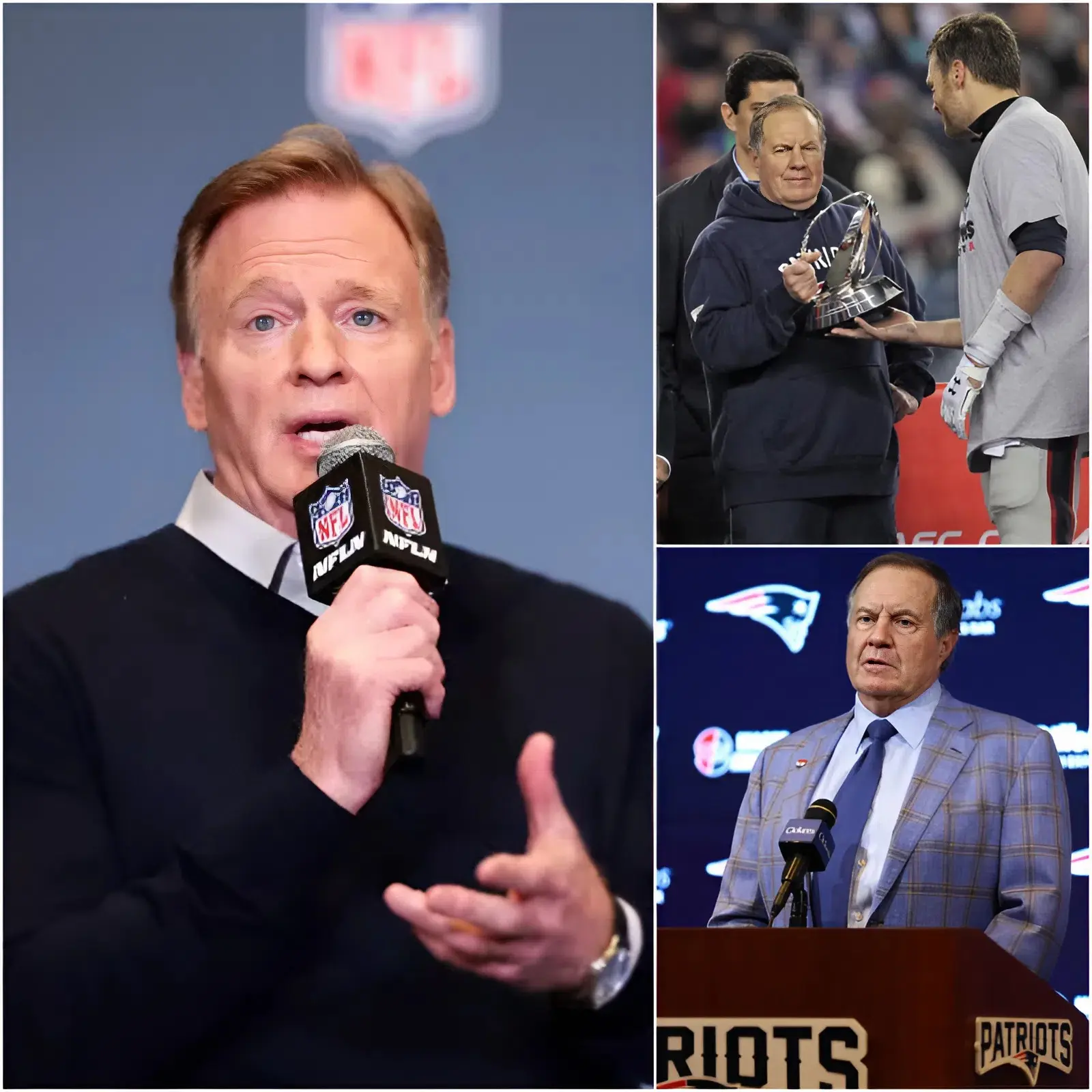
In one of the most shocking developments in recent NFL history, the Pro Football Hall of Fame’s Class of 2026 will not include two of the most pivotal figures from the league’s most dominant dynasty: legendary coach Bill Belichick and New England Patriots owner Robert Kraft. The exclusions have ignited widespread outrage among fans, players, and analysts, sparking calls for boycotts and renewed scrutiny of the Hall’s voting process. At the center of the storm stands NFL Commissioner Roger Goodell, whose recent press conference comments have only intensified the controversy rather than defusing it.
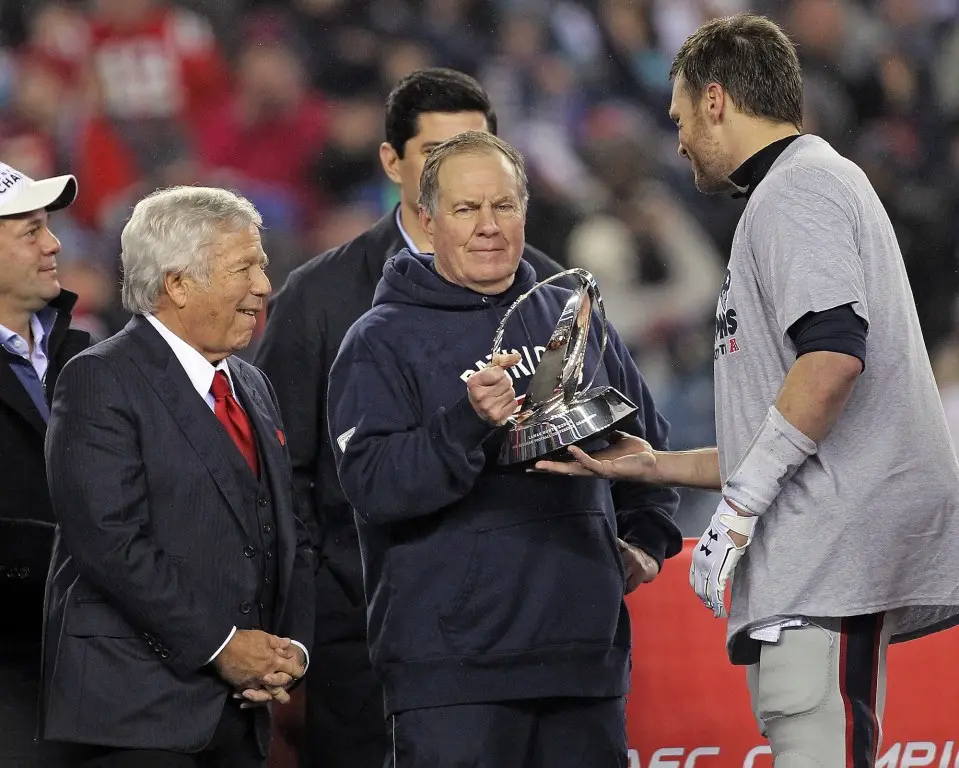
The saga began late last month when reports emerged that Belichick, in his first year of eligibility, failed to secure the required 40 votes out of 50 from the selection committee. Belichick’s resume is unparalleled: he orchestrated six Super Bowl victories as head coach of the Patriots, adding two more as defensive coordinator with the New York Giants for a total of eight rings. His 333 career wins (including playoffs) rank second all-time behind only Don Shula. Many viewed him as a lock for first-ballot enshrinement, making the snub feel like an affront to the sport’s history.
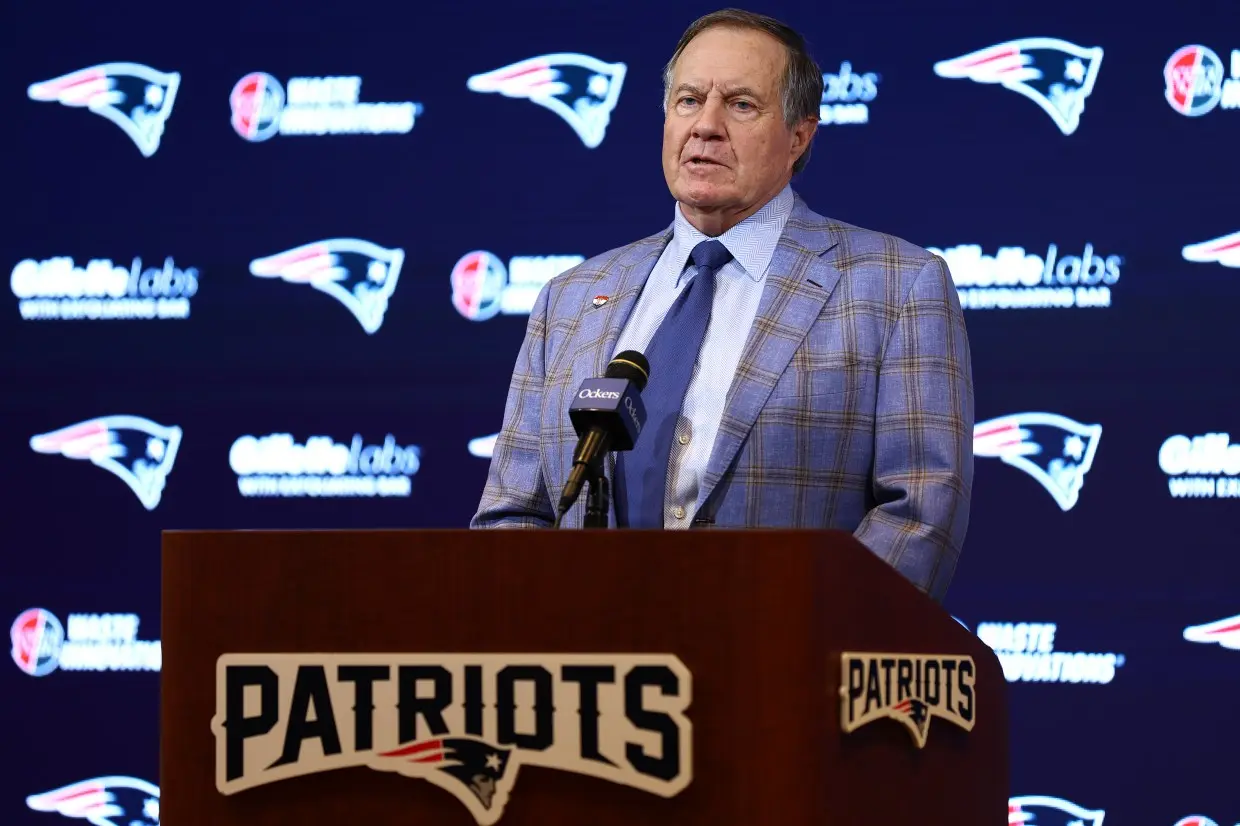
Compounding the disbelief, sources confirmed on February 3, 2026, that Kraft—a first-time finalist this year—also fell short of induction. Kraft, who has owned the Patriots since 1994, transformed a struggling franchise into a model of sustained success, overseeing those same six championships. Only five owners have ever been inducted into the Hall, underscoring the rarity of the honor for contributors in his category. The dual omission has left Patriots Nation reeling, with many seeing it as a deliberate slight against the entire New England era.
The Hall’s process itself has come under fire. Voters, a 50-person panel of media members and Hall of Famers, operate independently of the NFL, but lingering controversies from the Patriots’ past—such as Spygate in 2007 and Deflategate—have been cited in anonymous reports as potential influences. Some voters reportedly advocated for Belichick to “wait a year” as a form of penance, despite his unassailable on-field achievements. Kraft’s case, meanwhile, suffered from the category’s limitations, where only a select few can advance each cycle.
The backlash reached a fever pitch ahead of the official Class of 2026 announcement, set for Thursday night during NFL Honors in San Francisco. Social media erupted with hashtags demanding justice for Belichick and Kraft, and fan groups floated boycott ideas ranging from skipping the upcoming Super Bowl festivities to withholding support from NFL sponsors. Former players and coaches weighed in, with some calling the decision “embarrassing” and “a stain on the Hall’s credibility.”
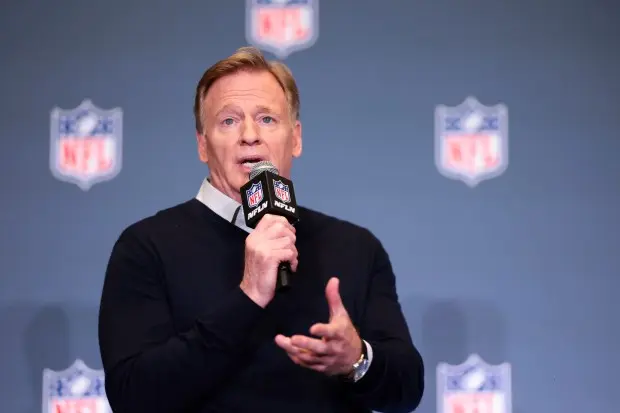
Commissioner Goodell addressed the uproar during a pre-Super Bowl LX press conference on February 3 in San Jose. Speaking to reporters, he emphasized the league’s complete separation from the Hall’s operations. “The Pro Football Hall of Fame is not in any way controlled by the NFL,” Goodell stated. “We have no say in the voting process, we don’t participate in the voting process.” He went on to praise the snubbed duo effusively: “Bill Belichick’s record goes without saying. Same with the Patriots and Robert Kraft. They are spectacular.
They have contributed so much to this game, and I believe they will be Hall of Famers.”
Yet Goodell’s measured, almost detached tone struck many as inadequate. Critics pointed to his repeated insistence on non-involvement as evasive, especially given the NFL’s broader influence over the sport’s narrative. The commissioner’s refusal to directly condemn the voting outcome or call for transparency in the process only fueled accusations of indifference. Some observers interpreted his words as a subtle acknowledgment of the inevitability of eventual induction—perhaps alongside Tom Brady in a future class—but without addressing the immediate pain felt by fans who see the dynasty’s architects being disrespected.
The fallout has extended beyond New England. League-wide discussions have highlighted inconsistencies in Hall standards, with comparisons drawn to other first-ballot locks who sailed through. Belichick’s exclusion, in particular, has been labeled by some as the biggest snub in modern history, surpassing even past oversights like Terrell Owens or Randy Moss in their initial years. Kraft’s absence adds another layer, raising questions about how ownership contributions are valued compared to on-field performance.
As the NFL prepares for its showcase event, the controversy shows no signs of fading. Boycott threats, while symbolic for many, reflect deeper frustration with perceived gatekeeping in the sport’s highest honor. If Belichick and Kraft are indeed enshrined later—perhaps in 2027, potentially with Brady—the delay may only heighten the sense of injustice. For now, the “Hall of Fame Collapse” has become a rallying cry, with Goodell’s awkward navigation of the issue making him an unwitting focal point.
The commissioner, long a lightning rod for criticism on everything from player safety to labor disputes, now faces a new wave of ire tied to legacy and fairness. Whether this sparks meaningful reform in the Hall’s opaque voting remains to be seen. What is clear is that the exclusion of Belichick and Kraft has exposed fault lines in how the NFL immortalizes its greatest contributors, and Goodell’s response has done little to mend them. The sport’s most storied partnership may yet enter Canton together—just not on the timeline many believed was inevitable.