In the high-stakes world of the NFL, where athletic prowess and relentless determination define success, few stories capture the essence of resilience quite like that of Seattle Seahawks linebacker Derick Hall. Dubbed the “Super Bowl Miracle Baby” ahead of the league’s championship showcase, Hall’s journey from a precarious beginning to the pinnacle of professional football stands as a testament to unbreakable maternal love, medical perseverance, and sheer human will. His mother, Stacy Gooden-Crandle, refused to accept the grim prognosis handed to her newborn son, turning what doctors described as a near-impossible situation into a life of extraordinary achievement.

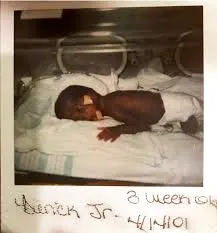
Born in March 2001 in Gulfport, Mississippi, Derick arrived four months prematurely at just 23.5 weeks gestation. Weighing a mere 2 pounds, 9 ounces—and dipping as low as 1 pound, 13 ounces during his hospital stay—he entered the world without a heartbeat. Medical teams resuscitated him, but the challenges mounted quickly. He suffered a grade-three brain hemorrhage, required life support, battled jaundice, and endured underdeveloped lungs that would pose ongoing health concerns. Doctors informed Stacy that her son had only a 1% chance of survival.
They presented the option of a Do Not Resuscitate order, warning of potential severe developmental delays or lifelong disabilities if he pulled through. Yet Stacy, unwavering in her faith and determination, chose to fight. “We decided we wanted to fight for him,” she later recalled, a decision that would redefine everything.
Derick spent the first five months of his life in the Neonatal Intensive Care Unit, a period filled with anxious waiting, countless medical interventions, and a mother’s vigilant presence. Tubes drained fluid from around his brain, feeding tubes sustained him, and monitors tracked every fragile breath. The brain bleed and prematurity complications raised fears of permanent impairments, but slowly, miraculously, Derick began to stabilize. Released after months of intensive care, he faced years of follow-up treatments for asthma, underdeveloped lungs, and other issues stemming from his early arrival.
Despite these hurdles, his mother guided him through doctor visits, therapies, and the everyday battles of childhood health struggles. Football became a recommended outlet—not just for fun, but to build strength in his still-developing lungs. What started as a therapeutic activity soon revealed a natural talent and fierce competitiveness.
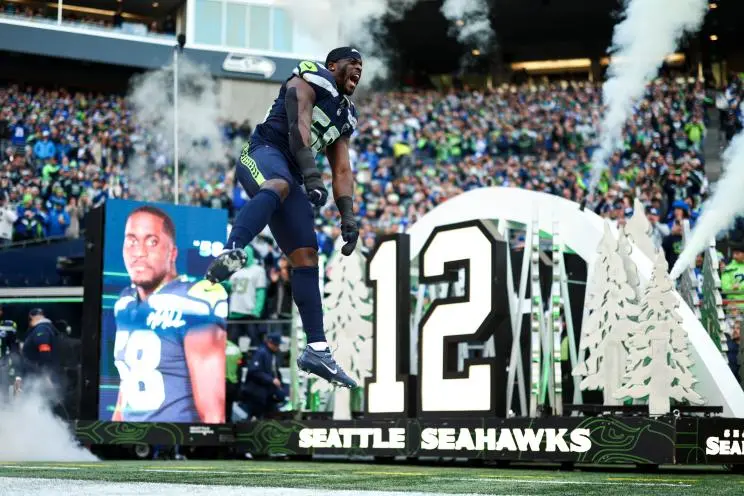
Growing up, Derick channeled his energy into the sport, starring at Gulfport High School before earning a scholarship to Auburn University. There, he emerged as one of the Southeastern Conference’s top defensive ends, showcasing explosive speed, power, and an unrelenting motor. His college performance caught the eye of NFL scouts, culminating in his selection by the Seattle Seahawks in the second round (37th overall) of the 2023 NFL Draft. The moment was poetic: a child once given 1% odds of living now stepping onto the professional stage as a prized rookie.
Hall’s entry into the league was not without adjustment. His 2023 rookie season showed flashes of potential but was limited by the learning curve and competition on the defensive line. By 2024, however, he broke out with 8.0 sacks, establishing himself as a key pass-rusher and earning praise for his work ethic. Entering the 2025 season, expectations were high. Despite a brief one-game suspension for unnecessary roughness and unsportsmanlike conduct late in the year—an incident he appealed but ultimately served—Hall contributed solidly.
He notched sacks, including a key one upon his return from suspension in a divisional matchup, and played crucial snaps in Seattle’s push toward the playoffs. Injuries, such as a hand issue that briefly sidelined him, tested his durability, but he bounced back, proving his resilience extended beyond his infancy.
As the Seahawks advanced deep into the postseason, culminating in their Super Bowl appearance, Hall’s story gained renewed attention. Media outlets highlighted how the once-micro preemie, who doctors said might never walk, talk, or breathe independently, was now a 6-foot-3, 254-pound force disrupting quarterbacks on the biggest stage.
His mother, who visited during rookie minicamp and has remained a constant source of support, described him simply: “a walking, talking, breathing miracle.” Derick himself has embraced the narrative, founding the Derick Hall One Percent Foundation to aid premature babies and their families, combat food insecurity, and address childhood obesity in underserved communities. The foundation’s name draws from both the slim odds of making the NFL and the survival chances he defied at birth.
Hall often speaks of gratitude, noting how he wakes up each day with a smile, viewing his life as a blessing. The physical reminders of his prematurity linger—his lungs remain somewhat underdeveloped—but they no longer limit him. Instead, they fuel his drive. On the field, he plays with the intensity of someone who knows every snap is a gift. Off it, he advocates for those facing similar battles, turning personal triumph into communal hope.
In the lead-up to the Super Bowl, Hall’s presence on the Seahawks’ roster symbolizes more than athletic talent. It represents destiny’s unpredictable hand, a mother’s refusal to surrender, and the power of perseverance against overwhelming odds. From a tiny incubator in Mississippi to the glare of the NFL’s grandest stage, Derick Hall embodies the idea that miracles are not just possible—they can become extraordinary realities. His story reminds fans and players alike that true greatness often begins in the most fragile moments, forged through love, faith, and unyielding resolve.
As the confetti potentially falls in celebration, one thing remains clear: destiny, indeed, made it wonderful.