The future may have arrived as Addison Barger establishes himself as Toronto’s primary right winger ⚡

In the ever-evolving landscape of the Toronto Blue Jays, few developments have generated as much quiet excitement as the emergence of Addison Barger. What began as a versatile experiment in 2025—splitting time between third base and right field—has evolved into a clear vision for the club’s future. Heading into the 2026 season, Barger is positioning himself as the everyday right fielder, a role that aligns perfectly with Toronto’s strategic shifts and roster adjustments. The subtle transition is no longer subtle; it’s becoming the new reality in the outfield.
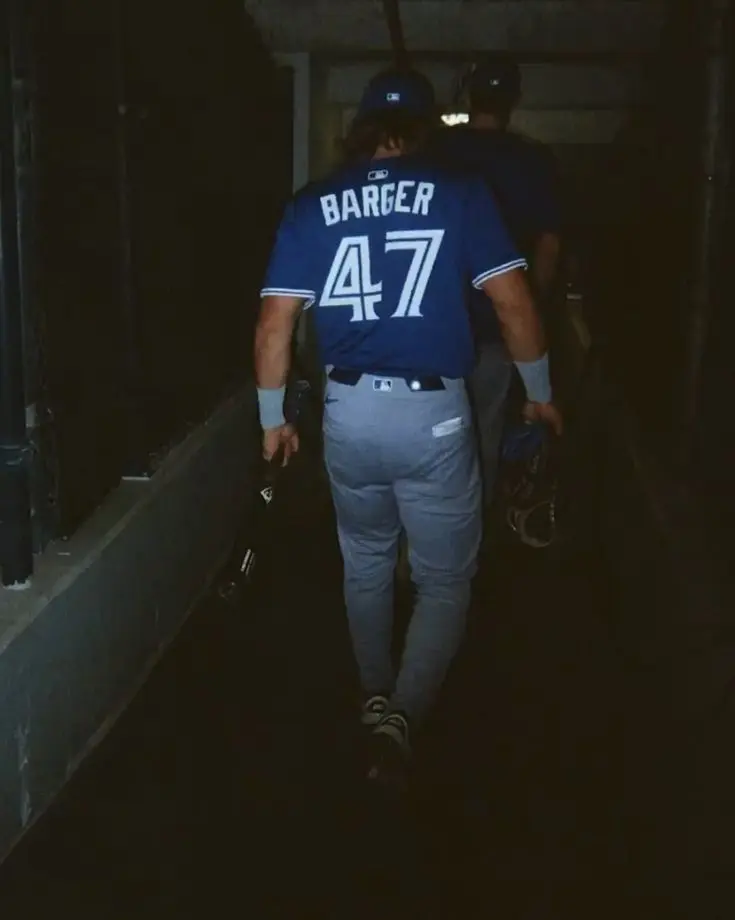
Barger’s 2025 campaign provided the foundation for this shift. In his first full major-league season, the 26-year-old appeared in 135 games, logging 460 at-bats while slashing .243/.301/.454 with an OPS of .755. He belted 21 home runs, drove in 74 runs, and scored 61 times, showcasing legitimate power from the left side of the plate. His hard-hit rate ranked in the top tier of the league, with an average exit velocity of 91.7 mph and a barrel percentage of 11.4%. These numbers, while not elite across the board, represented a significant step forward from his limited 2024 debut, where he hit just .197 in 69 games.

Defensively, Barger proved adaptable. He split his time with 91 games at third base and 57 in right field, posting a .970 fielding percentage in the outfield and a fielding run value of +1. His plus arm, a carryover from his earlier days as a middle infielder in the minors, has made him a reliable option in right, where the demands for strong throws to third base and home are frequent. While not a Gold Glove candidate, his athleticism and effort have silenced early doubts about his ability to handle the position long-term.

The Blue Jays’ offseason moves have accelerated Barger’s path to everyday status in right field. The signing of Japanese slugger Kazuma Okamoto to bolster the corner infield has crowded third base, pushing Barger toward the outfield full-time. With George Springer transitioning more toward designated hitter duties and the club missing out on high-profile outfield targets like Kyle Tucker or Cody Bellinger, the right-field spot opened up naturally. Projections and lineup forecasts now routinely place Barger in right field, often batting second or third in the order, behind Springer or alongside Vladimir Guerrero Jr.
This repositioning is more than convenience—it’s a bet on Barger’s upside. Analysts and fans alike see 2026 as a potential breakout year. ZiPS projections estimate him around .244/.313/.441 with 21 homers in over 500 plate appearances, while others highlight his ability to mash right-handed pitching and deliver consistent hard contact. Some bold predictions even compare his potential output to players who have eclipsed 100 RBIs in strong seasons. His postseason performance in 2025 added fuel to the fire: slashing .367/.441/.583 with three homers, including a historic pinch-hit grand slam in the World Series, showed he thrives under pressure.
The locker room has taken notice. Teammates describe Barger as hungry and adaptable, traits that mirror the Blue Jays’ current identity—a team rebuilding around youth, power, and versatility after key departures like Bo Bichette. Manager John Schneider has praised Barger’s work ethic and ability to handle the spotlight, noting how his confidence has grown with each start. In right field, Barger brings an edge: quick reads on fly balls, aggressive routes, and the willingness to dive or crash into walls when needed. His style fits Toronto’s ethos—unafraid to embrace the Rogers Centre’s bright lights and the passionate fanbase that fills it.
Of course, questions remain. Barger’s strikeout rate (around 26% in 2025) and modest walk totals suggest room for plate discipline growth. Can he sustain power against left-handers while improving his average? Will his defense hold up over a full season in right field, especially with the arm strength compensating for occasional route inefficiencies? The next few months of spring training and early 2026 games will provide answers. If Barger continues his upward trajectory, he could anchor the outfield for years, potentially freeing the Blue Jays to pursue other upgrades.
For now, the shift feels inevitable. What was once a temporary fill-in has become a cornerstone expectation. Addison Barger’s quiet ascent has Toronto looking ahead with optimism—the future isn’t just approaching; in right field, it’s already taking shape. As the Blue Jays prepare for a competitive 2026, Barger’s bat, glove, and presence could be the spark that propels them deeper into contention. The discussions have shifted from “if” to “how dominant,” and the answers will come one game at a time.