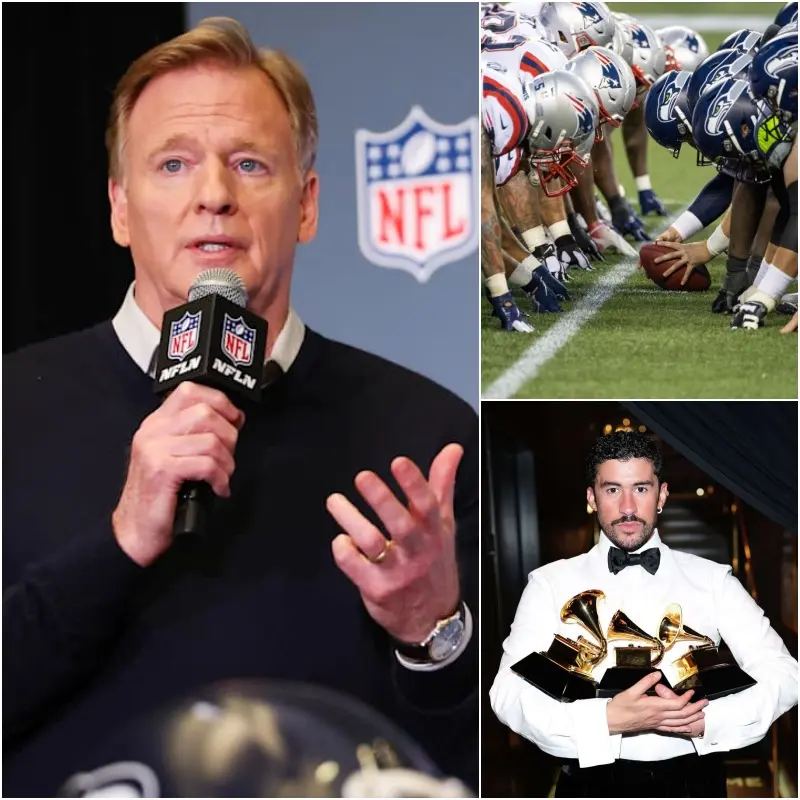
NFL Commissioner Roger Goodell is facing mounting criticism for selecting Bad Bunny as the main performer for this year’s Super Bowl halftime show.
The Puerto Rican rapper and global superstar, set to take the stage at Levi’s Stadium in Santa Clara, California, on February 8 for Super Bowl LX, has drawn sharp backlash from segments of the public who view him as “anti-American.” This controversy stems largely from Bad Bunny’s outspoken condemnation of the Immigration and Customs Enforcement (ICE) agency, particularly in the wake of tragic incidents in Minnesota earlier this year.
In January 2026, ICE operations in Minneapolis led to the fatal shootings of two American citizens: Renee Nicole Good on January 7 and Alex Pretti on January 24. Good, a 37-year-old poet and mother of three, was shot after attempting to drive away from federal agents surrounding her car.
Pretti, also 37 and an ICU nurse at a veterans’ hospital, was killed during an anti-ICE protest. These deaths sparked widespread protests across the country, with demonstrators decrying what they called excessive force and a lack of accountability in immigration enforcement.
The incidents fueled national outrage, highlighting tensions over aggressive deportation policies under the current administration.
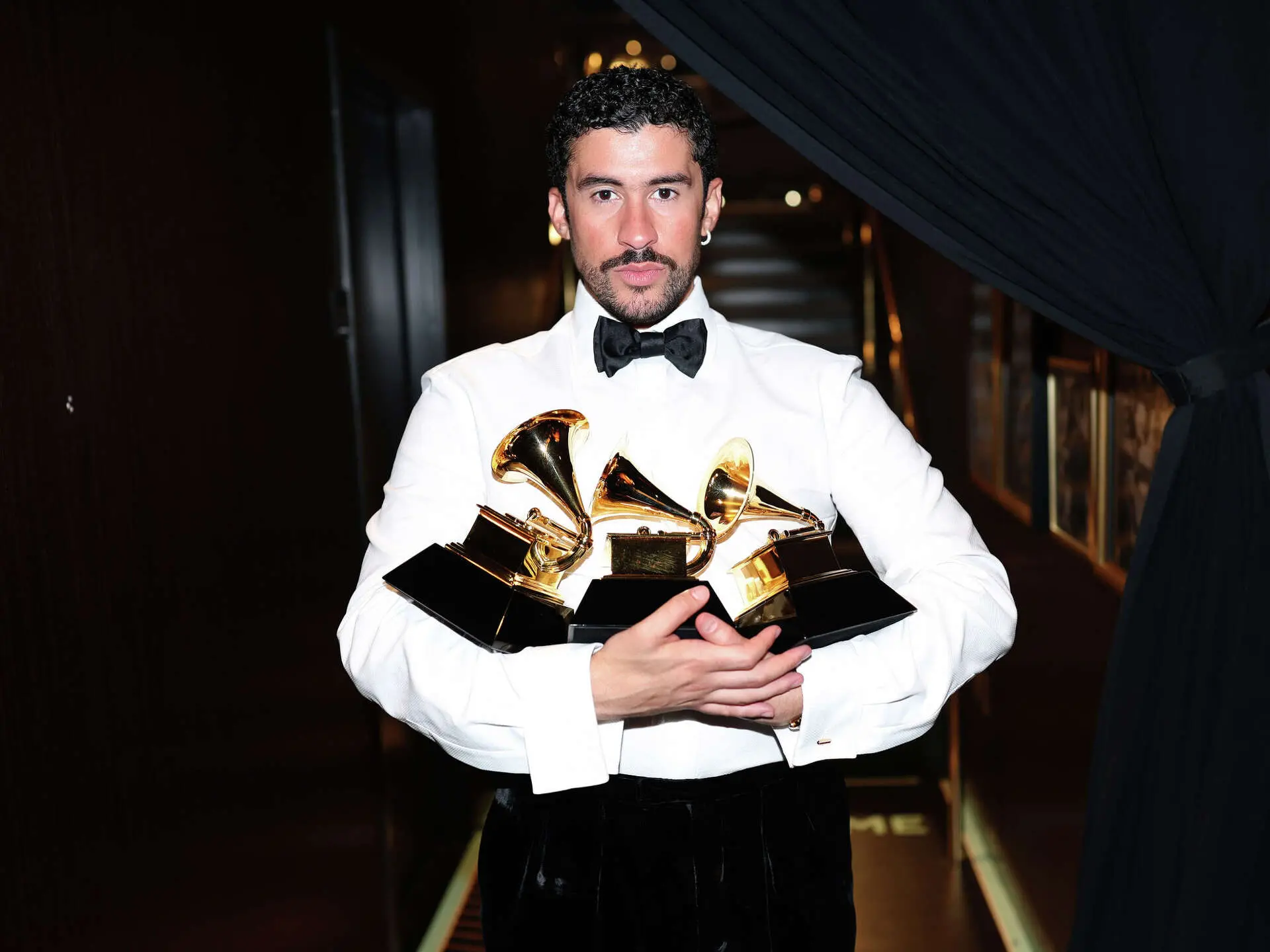
Bad Bunny, whose real name is Benito Antonio Martínez Ocasio, has long been vocal about immigration issues. As a proud Puerto Rican and American citizen, he has used his platform to advocate for humane treatment of immigrants.
At the 2026 Grammy Awards on February 1—just days before the Super Bowl—he accepted multiple awards, including Album of the Year for an all-Spanish-language album, a historic first.
In his acceptance speech, he declared, “Before I say thanks to God, I’m going to say ICE out!” He continued, “We’re not savages. We’re not animals. We’re not aliens.
We are humans and we are Americans.” He emphasized that “hate gets more powerful with more hate” and urged love as the stronger response, earning a standing ovation from the audience.
This moment amplified existing criticisms of his Super Bowl selection. Announced in September 2025 by the NFL, Apple Music, and Roc Nation, Bad Bunny’s headlining role marked him as the first solo Latino artist to perform at the halftime show.
The decision was celebrated by many for its cultural significance and global appeal—Bad Bunny has been a dominant force in music, named Billboard’s Artist of the Year in 2022 and boasting massive streaming numbers.
Supporters see his performance as a celebration of Latin music’s influence and a way to unite diverse audiences.
However, critics argue that giving such a prominent platform to someone who has repeatedly criticized ICE and immigration policies is a misstep by the NFL. Some conservative voices, including figures close to the administration, labeled Bad Bunny as hating America or being ungrateful.
Reports emerged of calls for boycotts if the league did not reconsider, with accusations that his views undermine national institutions. The timing of his Grammy remarks, coming amid ongoing unrest over the Minnesota deaths, intensified the debate.
President Trump’s allies and others questioned why the NFL would platform an artist who has mocked policies and even avoided U.S. tour dates over fears related to ICE presence.
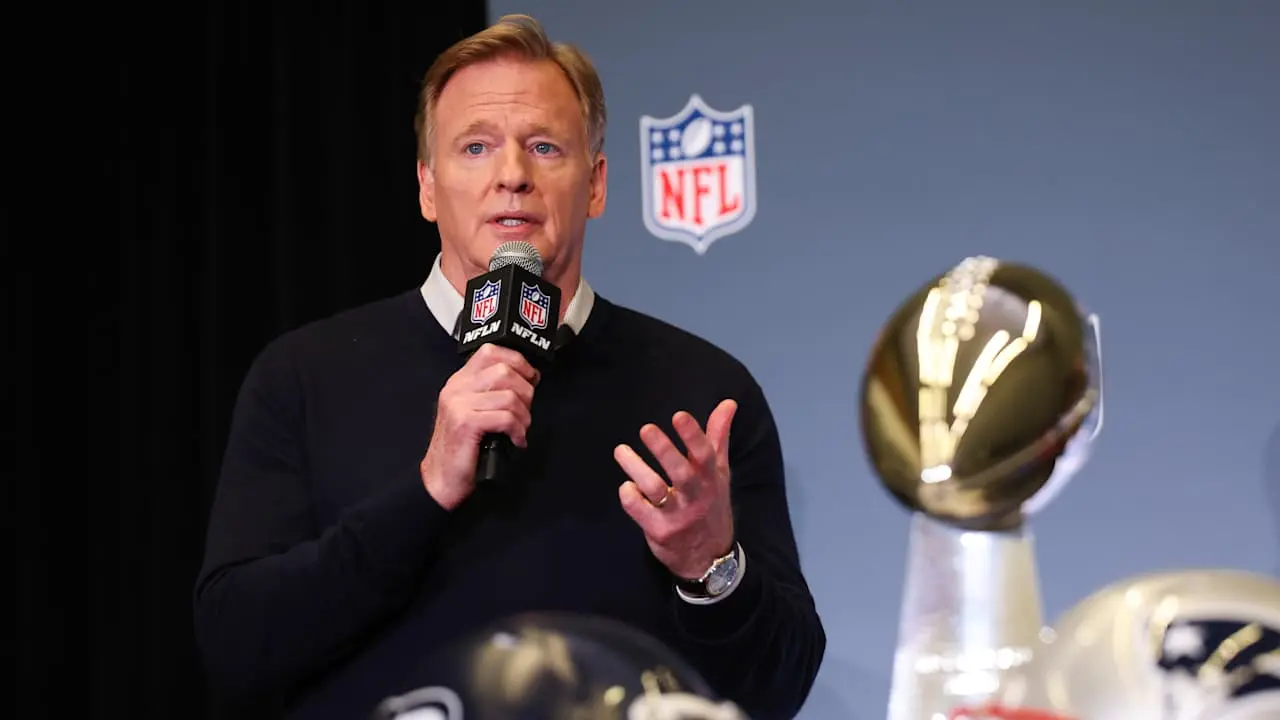
Roger Goodell has stood firm. In recent press interactions ahead of the game, the commissioner defended the choice, describing Bad Bunny as “one of the great artists of the world” and emphasizing that the halftime show is meant to unite people through creativity and talent.
Goodell expressed confidence that the performer understands the platform’s role in bringing fans together, predicting a memorable show without divisive statements. He has not backed down despite pressure from Washington and public outcry, framing the decision as part of the league’s commitment to diverse entertainment.
The backlash reflects broader cultural divides in America. For some, Bad Bunny’s criticism of ICE is a principled stand against perceived overreach, especially after incidents resulting in American deaths.
Others see it as unpatriotic, particularly when tied to a high-profile event like the Super Bowl, which attracts over 100 million viewers and serves as a symbol of national unity.
Sponsors and league partners have remained largely silent, but the controversy has sparked discussions about the intersection of sports, music, and politics.
Bad Bunny himself has addressed the scrutiny indirectly, teasing his performance with joy and unity in trailers and statements. He has highlighted that music can combat hate and defend homelands in positive ways.
As the Super Bowl approaches, anticipation builds—not just for the game, but for whether the halftime show will deliver pure entertainment or become another flashpoint in ongoing debates.
The NFL’s selection process, involving months of planning with partners like Jay-Z’s Roc Nation, aimed for a “global entertainment moment.” Bad Bunny’s massive following and innovative style promise high energy and cultural representation.
Yet, for critics, the choice overlooks the sensitivities around immigration enforcement at a time when such issues dominate headlines.
Whether this proves a bold, forward-thinking move or a regrettable error remains to be seen. As fans tune in on February 8, the performance will test the NFL’s ability to navigate these tensions while delivering the spectacle audiences expect.
Goodell’s defense suggests the league is betting on music’s power to transcend divisions, but the criticism shows how deeply polarized views on immigration and patriotism have become.
In granting Bad Bunny this opportunity, the NFL has undeniably sparked a conversation far beyond football—one that touches on identity, justice, and what it means to be American in 2026.