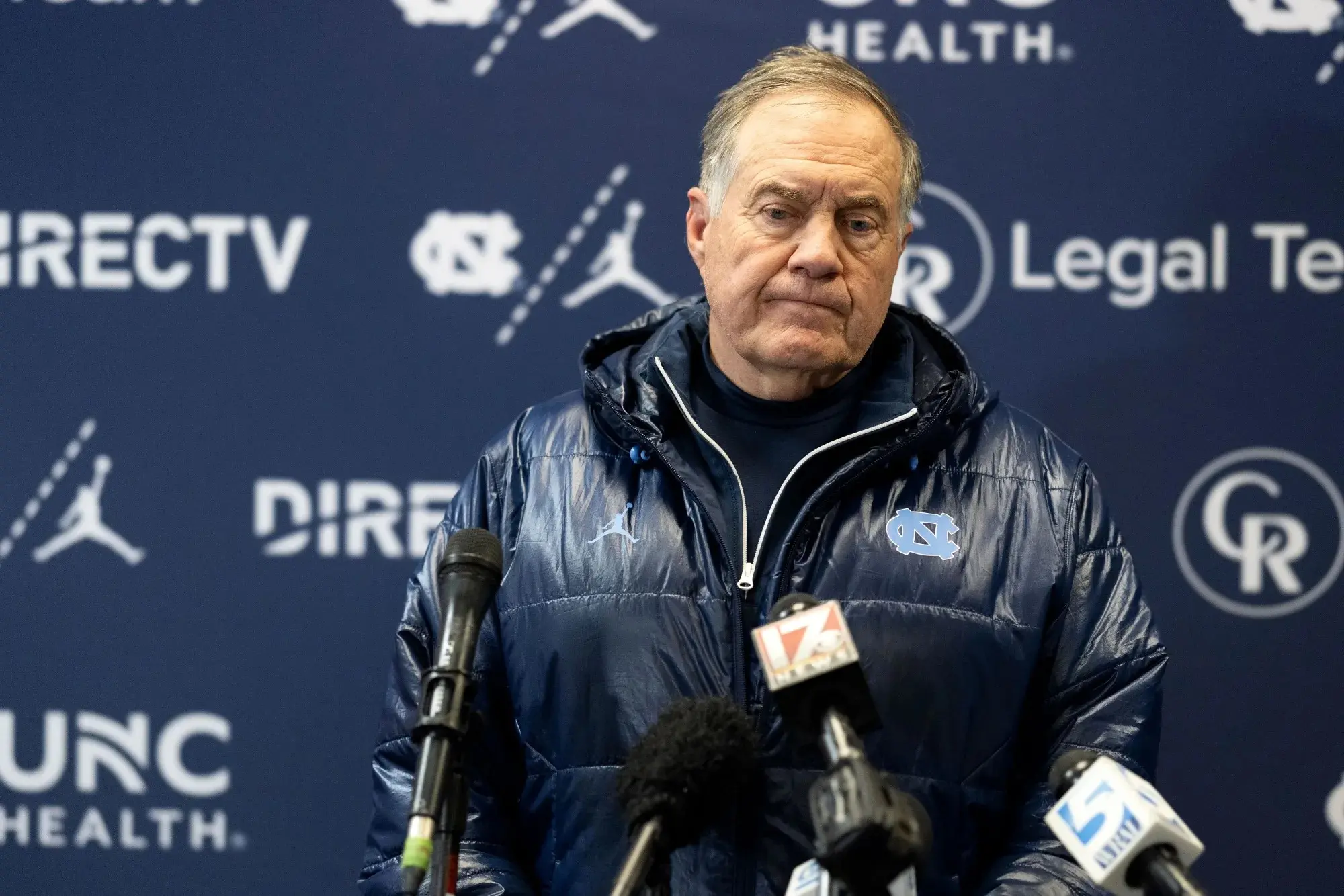
The shocking news that Bill Belichick, the most successful head coach in NFL history with a record six Super Bowl victories, was not selected as a first-ballot inductee into the Pro Football Hall of Fame for the Class of 2026 has sent ripples of disbelief and outrage through the league. Reports from ESPN and other outlets confirmed that Belichick fell short of the required 40 votes out of 50 from the selection committee during deliberations earlier this month.
The decision, announced indirectly through leaks and followed by an official non-comment from the Hall ahead of the formal reveal at NFL Honors, has ignited fierce debate about legacy, accountability, and the role of past controversies in enshrinement.
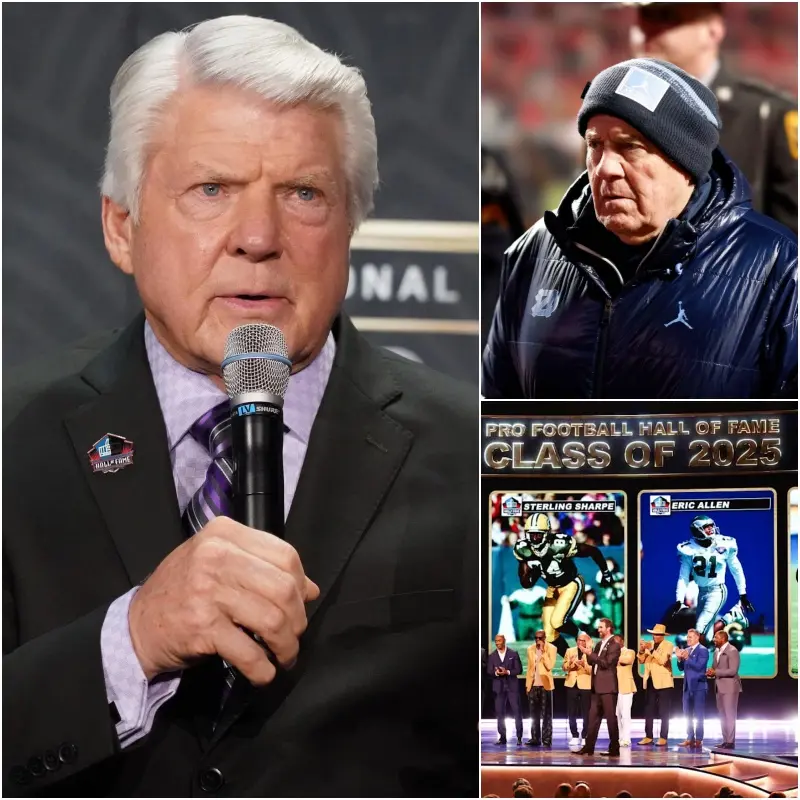
Among the most vocal critics is legendary coach Jimmy Johnson, a Hall of Famer himself who led the Dallas Cowboys to back-to-back Super Bowl titles in the early 1990s. Johnson, never one to mince words, unleashed a series of impassioned statements on social media and in interviews, defending Belichick’s unparalleled achievements and lambasting those who withheld their votes.
“They’re using the ‘espionage’ excuse to justify it, which is ridiculous,” Johnson declared, directly addressing the persistent shadow of Spygate—the 2007 scandal in which the New England Patriots were caught videotaping opposing coaches’ signals from an unauthorized location, resulting in a $500,000 fine for Belichick and the stripping of a first-round draft pick.
Johnson did not stop at criticism. In a striking admission that has amplified the controversy, he revealed that his own Cowboys teams experimented with similar tactics during his tenure. “Many teams tried it,” he wrote, explaining that the idea originated from Howard Mudd, then an offensive line coach with the Kansas City Chiefs who later worked under Bill Polian and Tony Dungy. Johnson described Mudd as “the best” at it, noting that the Cowboys attempted to film signals but ultimately found it unhelpful and discontinued the practice.
He emphasized that this was not an isolated incident but part of a broader, if unofficial, culture in the league at the time. “If they are using the EXCUSE of Spygate that’s ridiculous…many teams (including ourselves) tried it,” he posted, challenging the notion that Belichick’s actions were uniquely egregious or disqualifying.
The Spygate reference has been central to discussions surrounding Belichick’s exclusion. Sources close to the voting process indicated that the 2007 incident, along with the later Deflategate controversy involving underinflated footballs, weighed heavily on some selectors. Critics of Belichick have long argued that these violations represent a stain on his otherwise impeccable record, suggesting that first-ballot honors should reflect not just wins but unimpeachable integrity. Yet Johnson pushed back forcefully, arguing that penalizing Belichick for practices that were more widespread than acknowledged undermines fairness.
He pointed to Belichick’s dominance in the salary-cap era, his ability to sustain excellence with and without elite talent, and his sheer volume of success—eight Super Bowl rings total, including two as defensive coordinator—making him, in Johnson’s view, the greatest coach of all time.
Johnson’s frustration boiled over into sharper language as he called out the voters directly. He described some as “small jealous voters” and went further, labeling those who opposed Belichick as “assholes” and “cowards” in various appearances and posts. He demanded transparency, urging the committee members who voted no to reveal themselves publicly and explain their reasoning. “This is just WRONG,” he wrote early on, highlighting Belichick’s status as the all-time leader in wins among coaches, his unmatched number of division titles, and his profound love for the game.
In interviews, including on FOX Sports’ The Herd and The Pat McAfee Show, Johnson speculated on other potential influences, such as possible tensions between Belichick and Patriots owner Robert Kraft, suggesting that media access dynamics or personal grudges might have played a role in swaying votes.
The broader reaction has been one of widespread incredulity. Figures like Tom Brady, who won six rings under Belichick, called the snub “completely ridiculous” and questioned the entire process. Robert Kraft himself denounced the outcome, while players and analysts across the league expressed shock that a coach with Belichick’s resume could be denied immediate induction. Even some Hall of Fame voters later admitted regret, with one columnist confessing that the committee “blew it.” The vote’s mechanics—requiring 80% approval in a group that includes media and former contributors—have come under scrutiny, especially given the rarity of first-ballot coach inductions historically.
Johnson’s willingness to own his past involvement in sign-stealing attempts adds a layer of credibility to his defense. By admitting fault in a similar practice, he reframes Spygate not as an aberration but as a symptom of an era when competitive edges were aggressively pursued, often in gray areas. This confession has fueled a wave of opposition to the voters, with many seeing it as evidence that Belichick was singled out unfairly.
Johnson has gone so far as to say he is “pissed” and “livid,” emotions that underscore the depth of feeling among those who view Belichick’s body of work as beyond reproach.
Belichick, eligible after the league reduced the waiting period for coaches, will remain on the ballot for future classes, likely entering in 2027 or beyond. The controversy ensures his eventual induction will be debated, but few doubt it will happen. For now, the episode highlights the complexities of legacy evaluation in a sport where success and scandal often intertwine. Johnson’s outspoken stand—rooted in shared coaching history and a candid acknowledgment of league-wide practices—has crystallized the argument that Belichick’s on-field brilliance should eclipse any “excuse” tied to espionage.
As the football world awaits the official Class of 2026 announcement, the conversation Johnson ignited continues to challenge perceptions of fairness in the Hall’s hallowed halls.