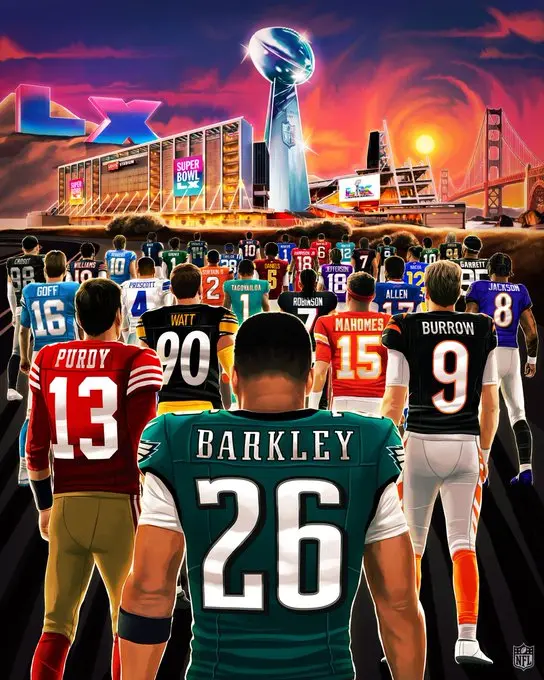
CONSPIRACY THEORY ABOUT “STAGED PLAY”: A graphic image posted by the NFL in September 2025 has unexpectedly resurfaced. In the image, the two players standing in the center, closest to the championship trophy, are Drake Maye (Patriots) and Sam Darnold (Seahawks). The fact that these two teams actually reached the finals has led many fans to suspect the tournament was “scripted” beforehand. An NFL spokesperson has officially denied these rumors, causing serious controversy and undermining the transparency of the sport.
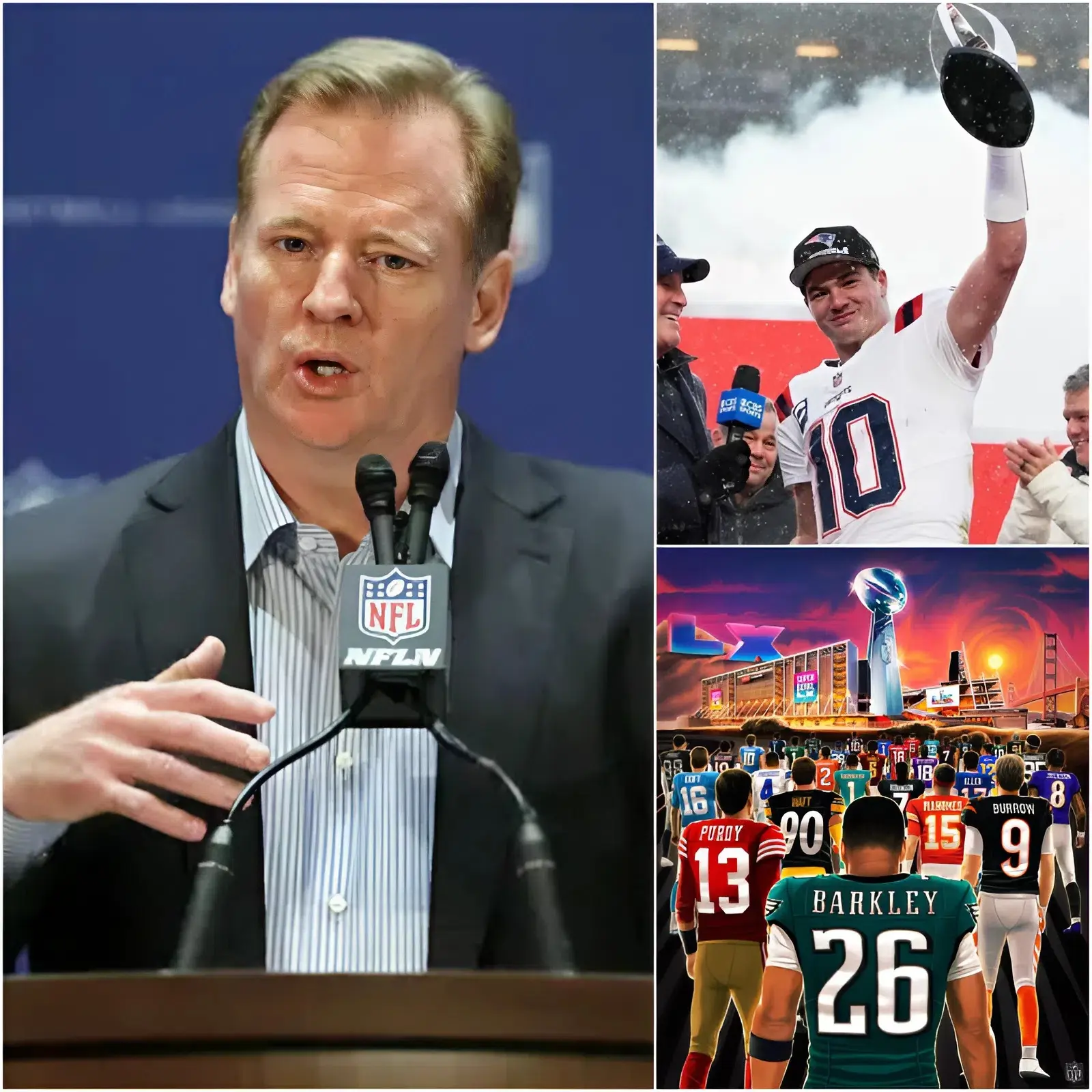
As the NFL prepares for Super Bowl LX on February 8, 2026, at Levi’s Stadium in Santa Clara, California, a surprising matchup has captured the attention of fans and skeptics alike: the New England Patriots facing off against the Seattle Seahawks. This rematch of Super Bowl XLIX from over a decade ago features two quarterbacks who were not widely expected to lead their teams to the championship stage at the start of the 2025 season.
Drake Maye, the young second-year signal-caller for the Patriots, and Sam Darnold, the veteran journeyman now thriving in Seattle, have defied preseason expectations by guiding their squads through grueling regular seasons and intense playoff runs.
The Patriots, coming off back-to-back disappointing 4-13 campaigns, entered the year with modest projections. Under new head coach Mike Vrabel, the team rebuilt around a stout defense and Maye’s dual-threat capabilities. Maye, selected in the first round of the 2024 draft, showed flashes of brilliance in his rookie season but faced questions about consistency. This year, he emerged as an MVP candidate, using his arm strength and mobility to lead New England back to relevance.
In the AFC Championship, the Patriots secured their spot with a gritty 10-7 victory over the Denver Broncos in snowy conditions at Mile High Stadium, where Maye’s rushing touchdown and the defense’s dominance proved decisive.
Meanwhile, the Seahawks, coached by Mike Macdonald, leaned on Darnold’s resurgence. After a strong stint with the Minnesota Vikings, Darnold signed with Seattle and delivered career-best performances. His arm talent and decision-making powered an explosive offense, culminating in a thrilling NFC Championship win over the Los Angeles Rams, where he threw for 346 yards and three touchdowns in a 31-27 victory. The Seahawks’ top-ranked defense complemented Darnold’s play, setting up a compelling clash of styles: New England’s ground-and-pound approach against Seattle’s aerial attack.
What has ignited widespread debate, however, is not the on-field storylines but a promotional graphic the NFL shared on social media back on September 4 or 5, 2025, coinciding with the opening of the regular season. The illustration depicted one representative player from each of the league’s 32 teams marching toward Levi’s Stadium, with the Lombardi Trophy prominently displayed in the background. The caption teased the upcoming Super Bowl dreams for all franchises, a standard hype piece to build excitement.
Upon closer inspection after the conference championships, fans noticed something striking: positioned at the very front of the pack, closest to the trophy and the stadium, were none other than Drake Maye and Sam Darnold. The two quarterbacks stood side by side, leading the “march” while players from other teams trailed behind. This detail went largely unnoticed at the time but exploded across platforms like X (formerly Twitter), Instagram, and Reddit once the Patriots-Seahawks matchup was confirmed.
Social media erupted with accusations of foreknowledge or manipulation. Posts zoomed in on the image, highlighting how Maye appeared slightly closer to the trophy in some interpretations, with captions like “The NFL gave us the script at the start of the season” gaining thousands of likes and shares. Barstool Sports amplified the buzz, joking about the league’s supposed writers. Conspiracy enthusiasts pointed to past incidents, such as debates over Super Bowl logo colors allegedly hinting at participants, to argue this was another clue in a pattern of “scripted” outcomes designed for maximum drama and viewership.
Theories ranged from playful to serious. Some suggested the graphic’s designers had insider information or used predictive analytics to place rising stars prominently. Others went further, claiming the entire season—including dramatic comebacks, injuries to key opponents, and referee decisions—was orchestrated to deliver this underdog narrative. The rematch angle with Super Bowl XLIX added fuel, evoking memories of the Seahawks’ heartbreaking loss and the chance for redemption.
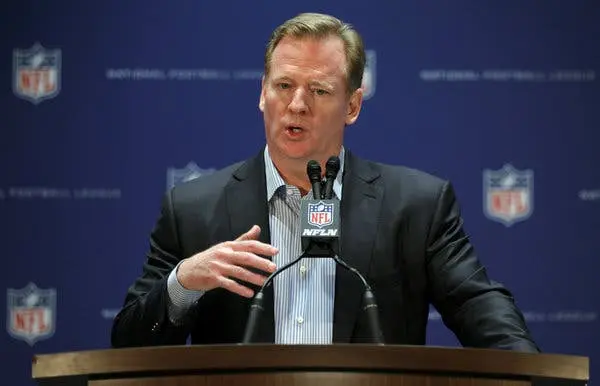
The speculation grew so intense that the NFL felt compelled to address it directly. Brian McCarthy, the league’s vice president of communications and a key spokesperson, responded on X by quoting a viral post about the graphic and writing simply, “Re: the ‘controversy’ over this image — no.” The one-word dismissal aimed to shut down the rumors, characterizing the alignment as nothing more than a coincidence. League officials have emphasized that promotional materials are created by marketing teams without influence from game operations or competitive outcomes.
Despite the official denial, the response has only amplified the controversy for some fans. Skeptics argue that a blanket rejection without further explanation fuels distrust, especially in an era where sports leagues face scrutiny over gambling partnerships, officiating consistency, and revenue-driven decisions. Critics point out that while no concrete evidence supports rigging claims, the NFL’s history of competitive imbalances and high-stakes entertainment invites suspicion. Others defend the league, noting that random placement in a group illustration involving 32 players is statistically plausible, and cherry-picking details after the fact creates false patterns.
This incident highlights broader tensions in modern sports fandom. Social media accelerates the spread of theories, turning harmless coincidences into viral sensations overnight. The graphic’s resurfacing has overshadowed much of the buildup to Super Bowl LX, shifting focus from Maye’s potential to become one of the youngest starting quarterbacks in championship history or Darnold’s redemption arc to questions of authenticity.
As kickoff approaches, the Patriots and Seahawks will aim to let their performances speak. Maye, at 23, seeks to etch his name in lore alongside legends, while Darnold looks to cap a remarkable revival. Whether viewed as destiny, luck, or something more sinister, the matchup promises high drama. For now, the “staged play” theory remains just that—a theory—yet it underscores how even the smallest details can spark debate in a league where every play is dissected and every image analyzed.
The truth, as always, will unfold on the field, where scripts don’t dictate outcomes, even if some fans wish they did.