The College Football Playoff National Championship game on January 19, 2026, at Hard Rock Stadium in Miami was supposed to be a crowning moment for the Hurricanes and their star quarterback Carson Beck. Instead, it became the backdrop for one of the most controversial endings to a college football career in recent memory. Miami fell to the Indiana Hoosiers 27-21 in a tightly contested battle that saw the Hurricanes’ hopes dashed by a late interception thrown by Beck himself.
But it was what happened immediately after the final whistle—and revelations that emerged shortly thereafter—that ignited widespread outrage among fans and observers across the sport.
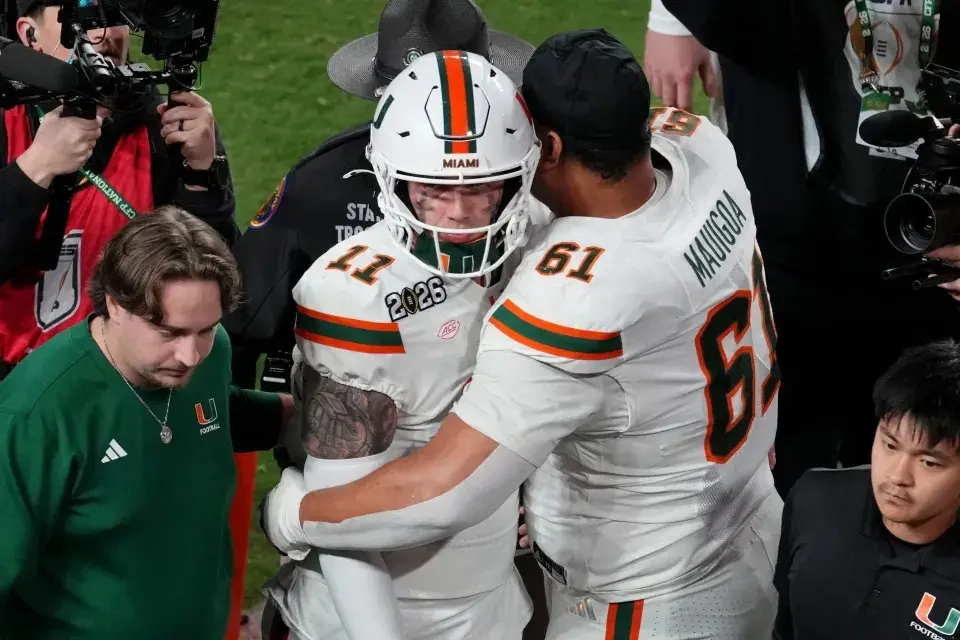
The game itself had all the makings of a classic. Indiana, the undefeated No. 1 seed led by quarterback Fernando Mendoza, had stormed through the playoff bracket with poise and determination. Miami, riding a resurgence under head coach Mario Cristobal and powered by the transfer addition of Beck from Georgia, had defied expectations to reach the title game on their home field. Beck, who had won two national championships as a backup with the Bulldogs earlier in his elongated college tenure, was poised to add a third as the starter and deliver Miami its first title since 2001.
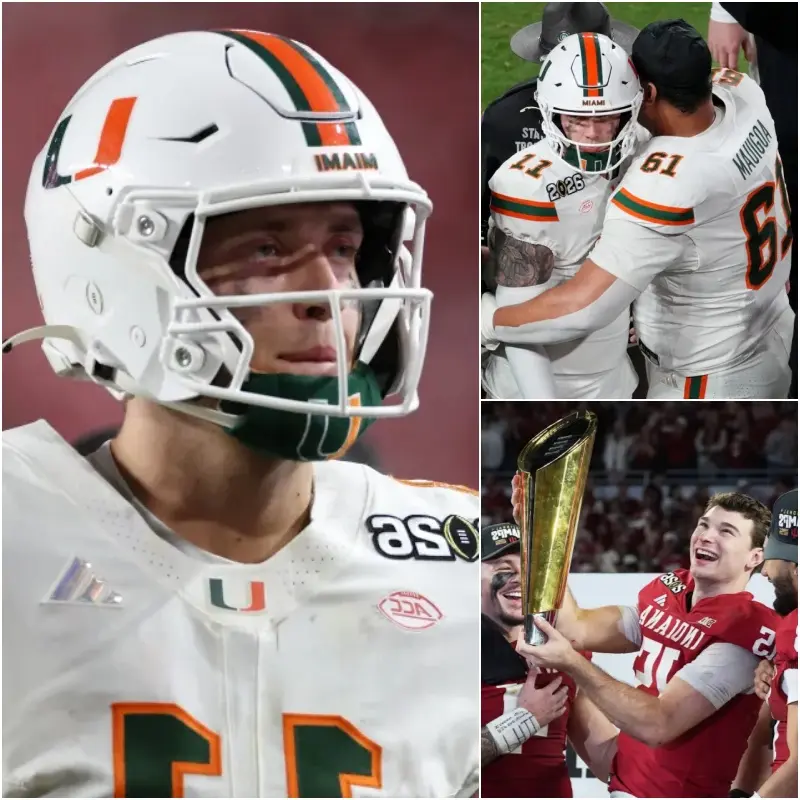
The contest remained close throughout. Miami trailed by just six points late in the fourth quarter when Beck orchestrated a drive that positioned the team for a potential game-tying or winning score. With time winding down and the crowd roaring, Beck attempted a deep pass down the left sideline into double coverage. The ball was intercepted by Indiana’s Jamari Sharpe, sealing the Hoosiers’ first-ever national championship. Beck later shouldered the blame in the locker room, admitting the miscommunication with his receiver and expressing visible emotion with tears streaking through his eye black.
He described the loss as heartbreaking, emphasizing the pain of falling short after such a long journey.
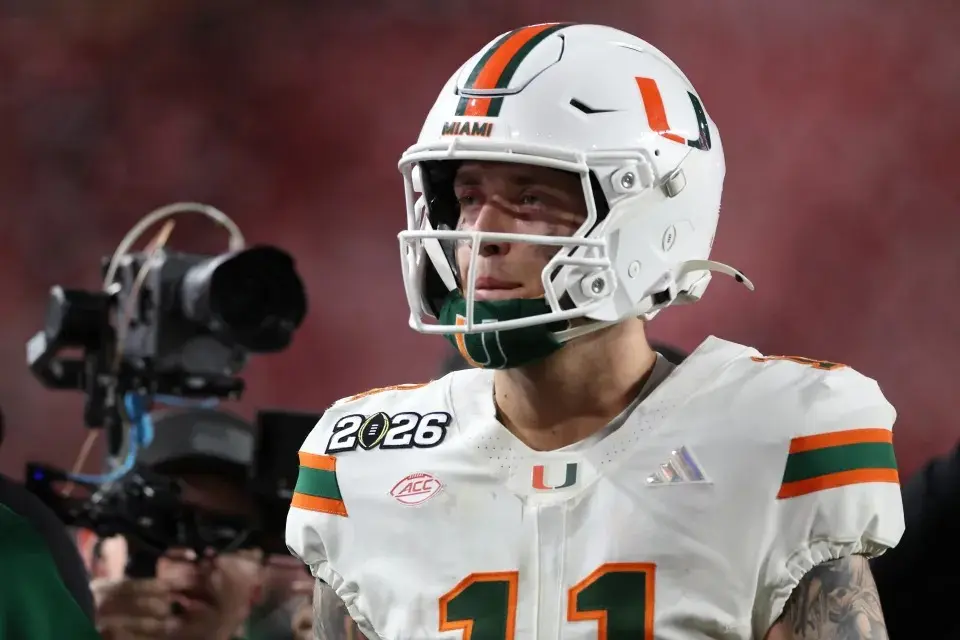
Yet the real storm brewed on the field as the confetti fell and Indiana celebrated. While Mendoza and his teammates embraced and exchanged handshakes with Miami players, Beck made a beeline for the tunnel. He walked straight off the field without approaching Mendoza or any Indiana players to offer congratulations or accept the customary postgame pleasantries. Video footage captured Mendoza appearing to pursue Beck briefly for a handshake, only for the Miami quarterback to continue toward the locker room, surrounded by staff and security. The moment was quickly shared across social media platforms, where it drew immediate and harsh condemnation.
Fans and analysts labeled Beck’s actions as “classless,” “disrespectful,” and “unsportsmanlike.” Comments flooded in calling out the lack of sportsmanship, with many pointing out that even in defeat, the tradition of shaking hands represents respect for the game and opponents. One widely circulated clip showed Mendoza left extending his hand while Beck departed without acknowledgment. Critics argued that such behavior undermined the values college athletics are meant to instill, especially from a veteran player in what was billed as his final collegiate appearance.
The backlash intensified when Beck addressed the media in a postgame press conference. Rather than expressing regret or reflecting on the moment, he stood firm on his decision. “I don’t owe anyone a handshake after losing a national championship,” Beck reportedly said. “I owe myself the standard I play to.” He focused on personal accountability for the interception and the team’s performance, dismissing the optics of the postgame interaction as secondary to his own disappointment.
Adding fuel to the fire was a revelation that surfaced in the days leading up to and following the game. In an interview shortly before the championship, Beck casually mentioned during a discussion about his preparation, “No class. I graduated two years ago.” The statement stunned many, as it confirmed what some had suspected but few had openly confronted: Beck had completed his undergraduate degree at Georgia in the summer of 2024, well before transferring to Miami for what turned out to be his final season of eligibility.
He had not attended traditional classes in years, instead pursuing other academic or professional interests while maintaining eligibility through graduate-level enrollment or other NCAA provisions that allow multi-year players to compete post-graduation.
Fans erupted online, decrying the situation as evidence that college football had “lost its way.” Comments ranged from frustration over perceived exploitation of the system—”Just come up with gimmicks to stay in school”—to broader critiques of how NIL deals, transfers, and extended eligibility had transformed the sport into something far removed from its amateur roots. Some pointed out the irony of a player who had been out of undergraduate studies for two years still competing as a “college” athlete, while others felt it diminished the significance of the achievement for true students.
The revelation reframed Beck’s long career—he had stretched eligibility across six years, including time at Georgia where he contributed to two titles before becoming a starter at Miami—as emblematic of the modern game’s priorities.
The combination of the on-field snub and the academic disclosure painted a picture that many found unpalatable. Social media threads exploded with calls for Beck to apologize or show more humility, with some fans contrasting his demeanor with Mendoza’s emotional, gracious postgame reflections. Mendoza, in tears during interviews, spoke of his journey from being overlooked to leading Indiana to glory, earning praise for his class and poise. Beck, meanwhile, faced accusations of arrogance, especially given his high-profile transfer and reported NIL earnings.
In the aftermath, the narrative around Beck’s college exit overshadowed Indiana’s historic triumph to some degree. While the Hoosiers celebrated their undefeated run and first national title, discussions about Beck’s behavior dominated headlines and talk shows. ESPN analysts debated whether the actions reflected poor sportsmanship or understandable raw emotion after a devastating personal failure. Some defended Beck, noting the intense pressure of the moment and the interception’s role in ending his collegiate dreams on a sour note. Others argued that leadership demands grace in defeat, regardless of circumstances.
As Beck prepares for what is expected to be a high draft pick in the upcoming NFL draft, the episode serves as a cautionary tale. His college career, which included impressive statistics, multiple championships (albeit two as a backup), and a high-stakes transfer, ended not with triumph but with controversy. The interception that sealed Miami’s fate was painful enough, but the refusal to engage in the time-honored postgame ritual—and the confirmation that he had long since moved beyond the traditional student-athlete experience—left a lasting mark.
College football fans, long accustomed to debates over the sport’s direction, found in this moment a symbol of their collective disillusionment. The title “A Horrible End to College Career” captured the sentiment perfectly: a talented quarterback’s journey concluded in a manner that felt impolite, detached, and emblematic of broader changes many wish had never occurred. Whether Beck’s actions were a momentary lapse or reflective of deeper attitudes, the backlash was swift and unforgiving, ensuring this chapter will linger in discussions long after the confetti has been swept away.