The incident involving British-born jockey Felix de Giles has sent shockwaves through the international horse racing community. On Sunday, October 12, 2025, during the Prix Jack Barbe hurdle race at Auteuil racecourse in Paris—often regarded as the French equivalent of Cheltenham—De Giles suffered catastrophic injuries in a horrifying fall. The 36-year-old rider, who has built a stellar career in France after beginning his journey in Britain, was riding Sunny Swing in a competitive 18-runner field when the accident occurred.
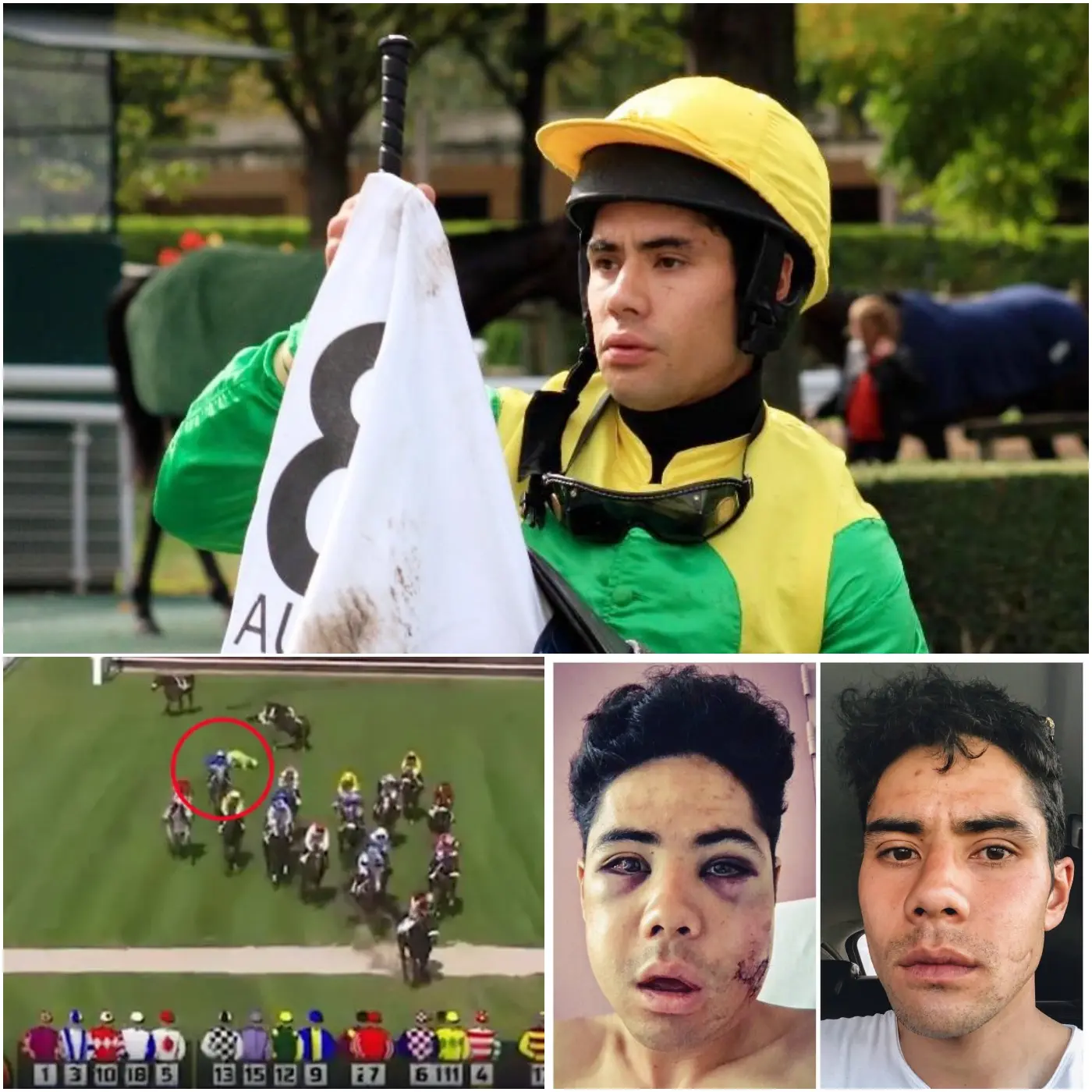
De Giles was positioned mid-pack as the race unfolded. Approaching the fourth hurdle opposite the grandstand—an area notorious for challenging ground conditions—Sunny Swing appeared to have sufficient space but suddenly took an awkward extra stride. The gelding flipped heavily to its right, unseating De Giles and hurling him onto the turf directly in the path of oncoming rivals. In the resulting melee, one horse was brought down, while another galloped over the fallen jockey, exacerbating the impact. De Giles remained conscious throughout the terrifying sequence, a detail that underscored the raw brutality of the moment.
The injuries sustained were severe and multifaceted. He broke both legs—specifically the tibia and fibula in his lower limbs—fractured the top of his femur, dislocated his hip, and broke an arm. Medical teams acted swiftly, performing a single comprehensive operation to address the arm fracture, repair both legs, and reposition the dislocated hip. Speaking from his bed at Georges Pompidou Hospital in Paris shortly afterward, De Giles described the immediate aftermath with a mix of resilience and realism. “The arm doesn’t feel too bad but the legs are pretty swollen,” he said.
He expressed hope that no further surgeries would be required, noting the extent of the initial procedure.
Recovery protocols have been stringent. De Giles was required to remain flat on his back for three weeks due to the hip dislocation, preventing even sitting upright in a wheelchair. Discussions were underway about potentially transferring him to a facility closer to home, though his exact location for ongoing rehabilitation remains uncertain. Medical estimates at the time indicated a recovery period of approximately six months, with cautious optimism that he could return to competitive riding for the spring campaign.
The timeline has sidelined him from contending for the French champion jockey title this season—a crown he captured in 2023 after relocating to France in 2015 and establishing himself as one of the leading figures in jump racing across the Channel.
De Giles’s background adds poignant context to the tragedy. He began his career at Nicky Henderson’s renowned Seven Barrows yard in Lambourn, England, where he rode a winner at the Cheltenham Festival in 2009. His move to France marked a bold chapter, culminating in championship success and consistent high-profile rides. The fall at Auteuil has not only halted his momentum but highlighted the ever-present dangers inherent in National Hunt racing.
The severity of the incident has reignited debates about rider safety in the sport. Fans and observers, particularly in Britain, have voiced outrage directed at the British Horseracing Authority (BHA), accusing it of inadequate measures to protect jockeys despite the high-risk nature of the profession. Social media and racing forums have seen calls for protests, with some arguing that governing bodies on both sides of the Channel have failed to implement sufficient safeguards against such devastating falls.
Critics point to recurring serious injuries in jump racing—falls at pace over obstacles remain a core risk—and demand enhanced track maintenance, better protective equipment, stricter veterinary protocols for horses, and more rigorous review processes for race conditions. While the BHA has historically introduced initiatives like improved medical response times and mandatory air vests, detractors contend these fall short in preventing multi-fracture incidents like De Giles’s.
Supporters of the sport counter that jump racing’s inherent thrills and traditions make absolute safety elusive, and that jockeys accept these risks knowingly. Yet the graphic nature of De Giles’s injuries—captured in race footage and widely shared—has amplified emotional responses. Many fans express solidarity with the jockey, wishing him a full recovery while using the moment to push for systemic change. De Giles himself has not publicly commented on regulatory failures, focusing instead on his physical rehabilitation and gratitude for the medical care received.
As the racing world processes this latest setback, De Giles’s story serves as a stark reminder of the fine line between triumph and tragedy in the saddle. His determination—evident in past comebacks and his post-accident composure—offers hope that he will return stronger. For now, the priority remains his healing, with the broader conversation on safety likely to intensify in the months ahead. The incident underscores that while horse racing captivates with its spectacle and athleticism, it demands continual vigilance to protect those who dedicate their lives to the sport.