The incident involving South Australian jockey Alice Lindsay has sent shockwaves through the horse racing community after she was officially found guilty of improper riding and handed a suspension following widely circulated television footage showing her whipping a rival horse. The event, which occurred during a race at Naracoorte, has reignited debates about rider conduct, animal welfare, and the enforcement of rules in thoroughbred racing.
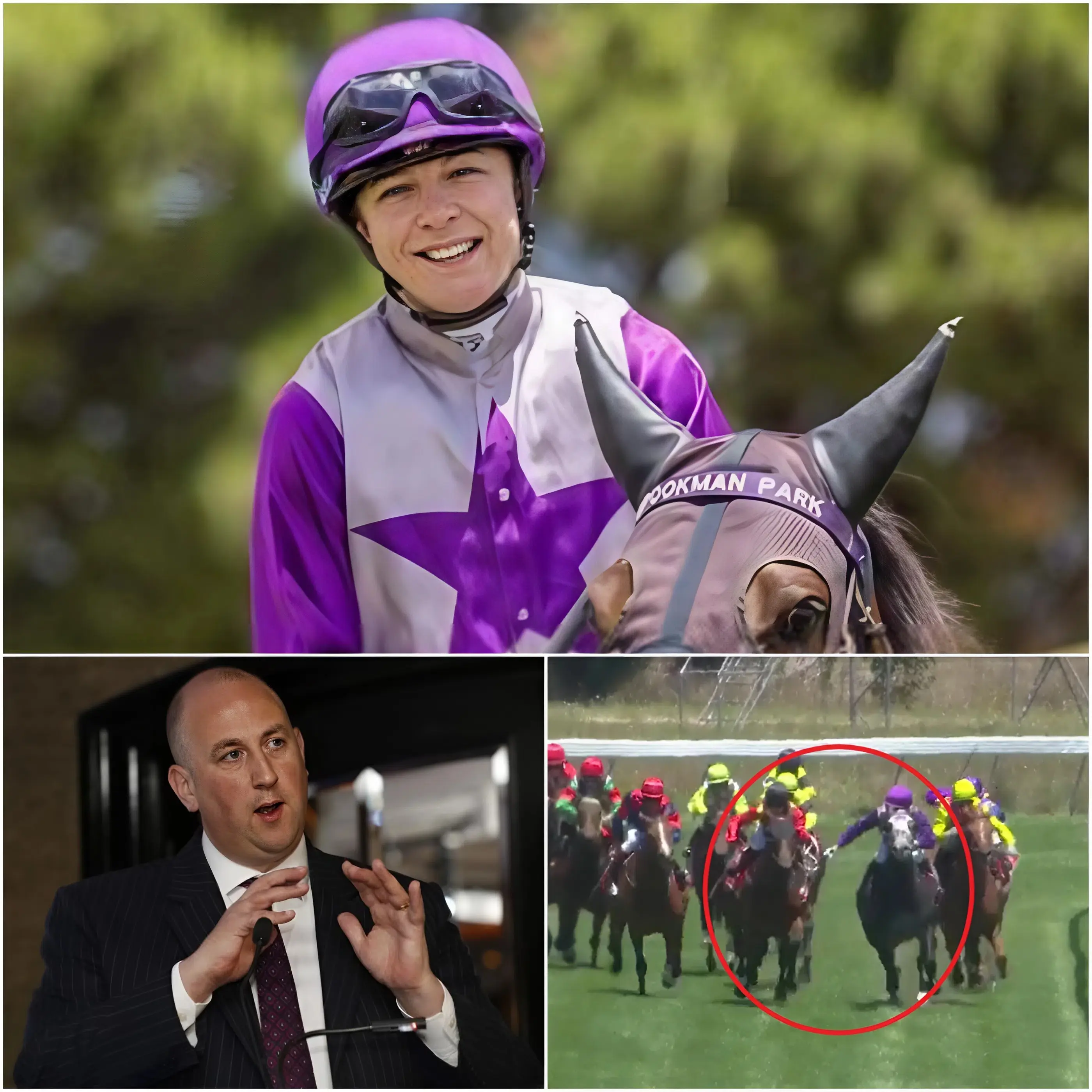
The footage, captured by broadcast cameras and quickly shared across social media and racing news outlets, depicts a startling moment in the closing stages of the race. As the field turned for home, Lindsay, riding her mount, appeared to turn her head to the right upon noticing a competitor closing on her outside. In a split-second action that stewards later described as deliberate, she swung her whip backward and struck the head of the approaching rival horse. The impact was clear on the replay, drawing immediate attention from viewers and officials alike.
Commentators at the time expressed disbelief, with one outlet labeling the act as “so dirty” in reference to the unsportsmanlike nature of the maneuver—a phrase that has since stuck in discussions surrounding the case.
Lindsay, a 30-year-old rider based in South Australia, was charged under Australian Rule of Racing 131(a), which covers improper riding. This rule prohibits actions that endanger other horses, riders, or compromise the integrity of the race. Stewards from Thoroughbred Racing South Australia (TRSA) reviewed the incident in detail, including multiple angles from the race broadcast. After a formal hearing, they found her guilty, determining that the strike was not accidental but a purposeful attempt to interfere with the rival’s progress.
The penalty imposed was an eight-meeting suspension, effectively sidelining her from competitive riding for a period that equates to roughly two weeks depending on the racing calendar.
The decision came swiftly, with the stewards’ report emphasizing the need to uphold standards of fair competition and protect equine welfare. In their findings, they noted that Lindsay had become aware of the horse on her outside and, rather than maintaining her line or focusing solely on her own mount, opted for an action that directly affected another animal. The whip, intended as a tool for encouragement and correction of one’s own horse under strict guidelines, was misused in a way that crossed into prohibited interference.
Racing authorities have increasingly tightened restrictions on whip use in recent years, with limits on the number of strikes, allowable positions on the horse’s body, and zero tolerance for strikes to the head in many jurisdictions. This case underscores how seriously such breaches are viewed, even when they occur in the heat of competition.
Reactions from the racing world have been swift and largely critical. Fellow jockeys, trainers, and industry commentators have condemned the behavior, pointing out that such actions risk not only the safety of horses but also the reputation of the sport. Animal welfare advocates, already vocal about whip rules, seized on the footage as evidence of ongoing issues in how horses are treated during races. Groups monitoring equine treatment highlighted the potential for pain and distress caused by a direct blow to the head, an area particularly sensitive due to the concentration of nerves and the lack of protective muscle.
While the struck horse appeared to continue without immediate visible injury, the incident raised questions about long-term effects and the psychological impact on animals in high-stress environments.
Lindsay herself has not issued a lengthy public statement, though reports indicate she accepted the stewards’ findings without appeal in the immediate aftermath. In racing circles, she is known as a competent rider with a solid record in provincial meetings, often competing at tracks across South Australia. The suspension marks a significant setback in her career, as missed meetings mean lost opportunities for rides, prize money, and maintaining form. For a jockey operating in a competitive field where momentum is key, an enforced break can disrupt partnerships with trainers and owners.
The broader implications for the sport are worth considering. Horse racing prides itself on being a disciplined, regulated industry with stringent safety protocols for both human and equine participants. Incidents like this test public trust, especially at a time when the sport faces scrutiny over welfare standards. Governing bodies have responded to past controversies by introducing reforms, such as padded whips, reduced allowable strikes, and mandatory veterinary checks. Yet cases of misuse remind stakeholders that enforcement must remain vigilant.
The quick resolution of Lindsay’s case—guilty finding, penalty applied, and public disclosure—demonstrates a commitment to transparency, though some critics argue penalties should be harsher to act as stronger deterrents.
In the days following the announcement, discussions on racing forums and social platforms reflected a mix of outrage and calls for understanding the pressures of race riding. Jockeys operate in split-second decision-making scenarios, where positioning, balance, and tactics can determine outcomes. Defenders noted that frustration or instinct might play a role, but the consensus leaned toward condemnation: the whip is not a weapon against competitors. The label “so dirty,” while sensational, captures the sentiment that this crossed an ethical line in a sport built on mutual respect among participants.
Looking ahead, Lindsay will serve her ban before being eligible to resume riding. Whether this becomes a defining moment in her career or a one-off lapse remains to be seen. For the industry, the episode serves as a reminder to reinforce education on rules, particularly whip protocols, and to continue prioritizing welfare. Racing thrives on excitement and competition, but only when conducted fairly and humanely.
The Naracoorte incident, though isolated, highlights the fine margins in a demanding profession. As stewards maintain strict oversight, the hope is that such events become rarer, preserving the integrity that fans and participants alike expect from the sport.