The interception Matthew Stafford threw against the Atlanta Falcons on December 29th initially looked like another painful turnover in a demanding NFL season, yet within moments it became clear that this single play carried a deeper historical significance far beyond the immediate result.
When the pass was intercepted and returned for a touchdown, it officially marked Stafford’s 32nd career interception returned for six points, tying a controversial NFL record long associated with Brett Favre, one of football’s most fearless and debated quarterbacks.
That number instantly sparked conversation, because Favre’s career symbolizes the extreme edge between brilliance and disaster, where daring decisions created legendary highlights while simultaneously producing mistakes that still define debates about quarterback responsibility
By equaling that milestone, Stafford unintentionally reopened a discussion that has lingered for decades, forcing fans and analysts to reconsider how risk, courage, and consequence should be weighed when evaluating elite quarterbacks.
Pick-sixes represent the most damaging type of interception, because they punish both decision-making and execution while immediately rewarding the opposing team with points and momentum that can shift the emotional balance of an entire game.
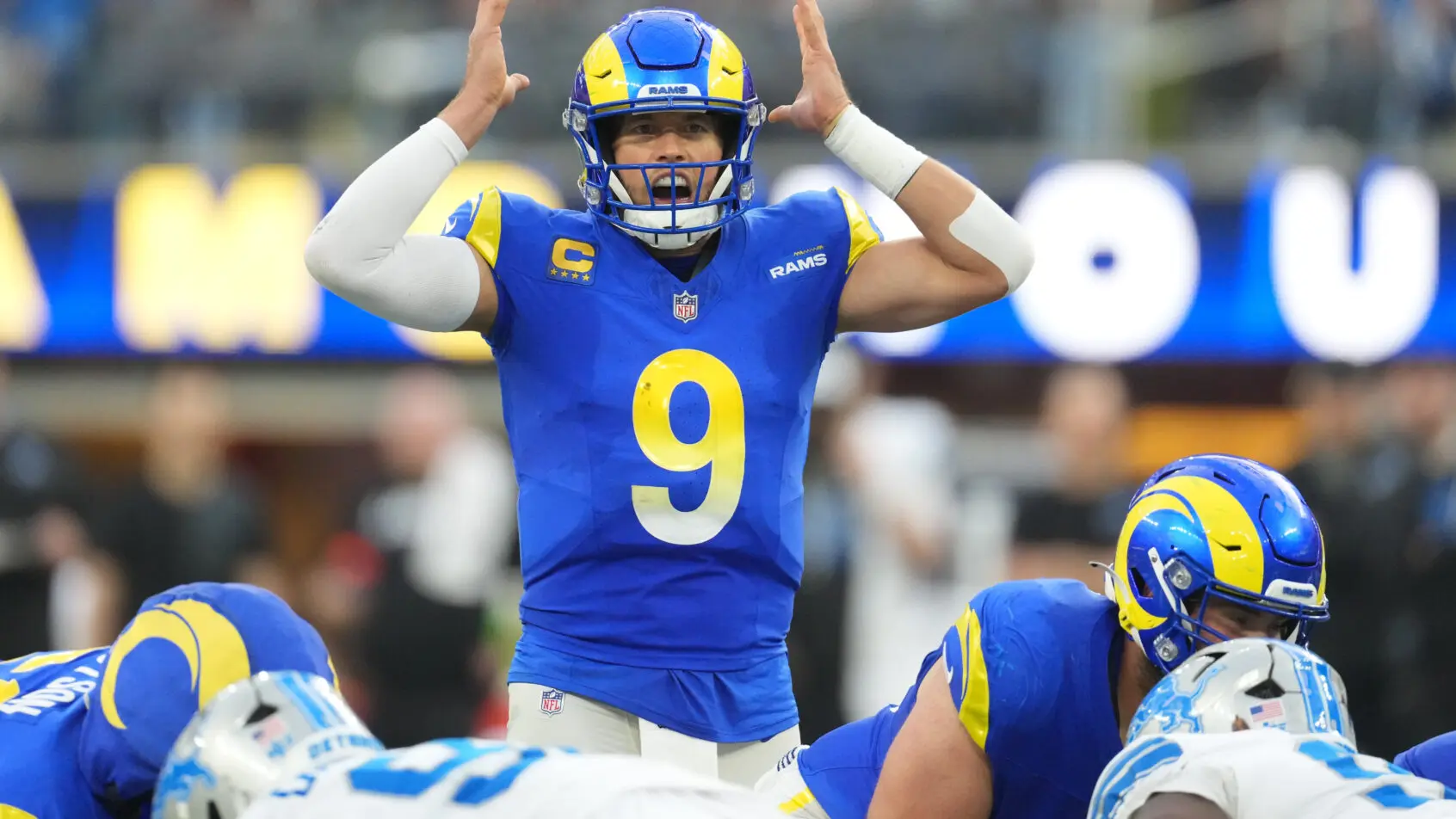
For quarterbacks, these plays linger far longer than ordinary turnovers, replayed endlessly on broadcasts and social media, becoming shorthand judgments of instinct and composure rather than context-driven evaluations of complex situations.
Stafford’s career has long existed within this tension, defined by exceptional arm talent, physical toughness, and an unwavering belief that tight windows can still be conquered with confidence and timing.
Against Atlanta, the throw itself followed a familiar pattern, a moment where trust in his arm outweighed caution, reflecting instincts refined over years of carrying offensive responsibility.
Critics argue that this milestone reinforces concerns about Stafford’s decision-making, suggesting that his aggressive tendencies have remained unchanged despite the league’s evolution toward efficiency and ball security.
Supporters counter that Stafford’s willingness to take risks is inseparable from his identity, the same mentality that fueled improbable comebacks and ultimately delivered a Super Bowl championship to Los Angeles.
The comparison to Brett Favre is therefore unavoidable, not because their careers are identical, but because they share a philosophical belief that hesitation can be more dangerous than interception.
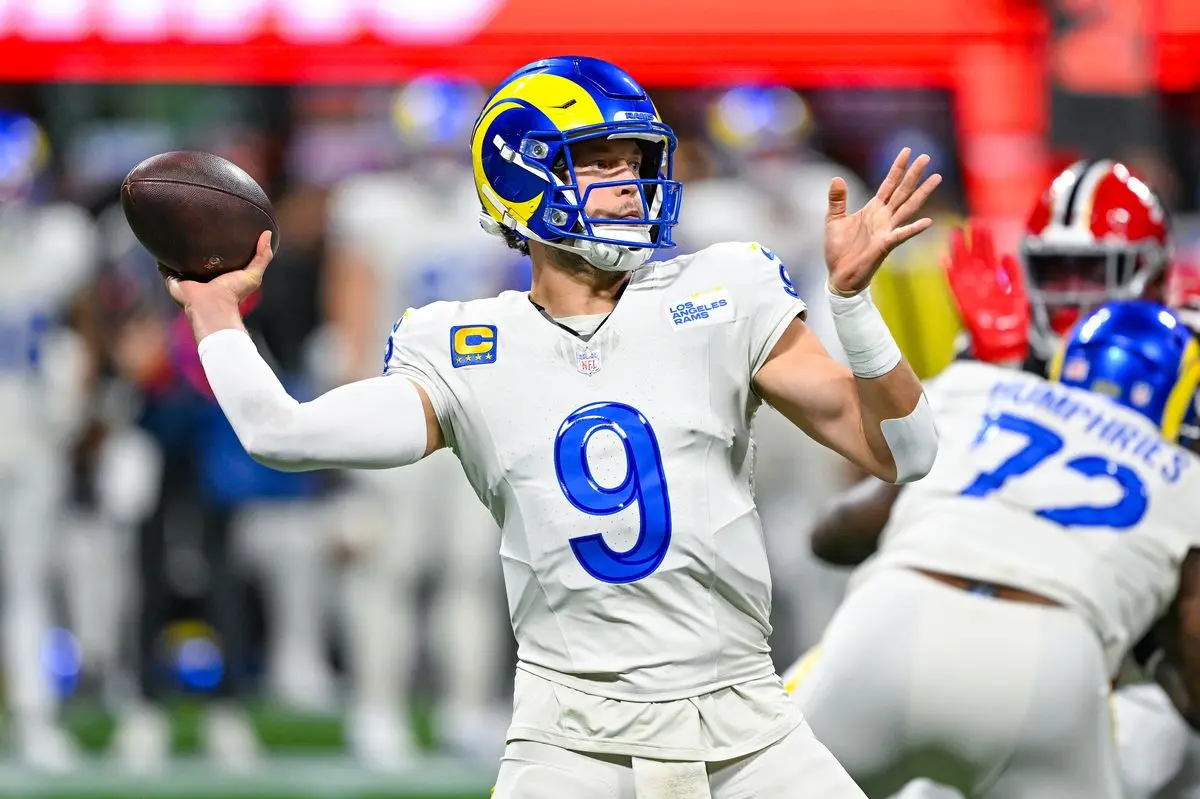
Favre famously trusted his instincts, throwing into coverage with confidence that his arm strength and timing could overcome defensive positioning, thrilling fans while frustrating coaches.
Stafford embodies a similar mindset, though his game unfolds within more structured schemes shaped by modern analytics and carefully designed offensive concepts.
In both cases, the reward for such aggression is access to offensive possibilities that conservative quarterbacks rarely explore, stretching defenses beyond conventional limits.
The cost, however, is visible in moments like pick-sixes, where one miscalculation becomes magnified into a defining statistic attached permanently to a quarterback’s legacy.
Modern NFL analysis increasingly prioritizes metrics like expected points added, interception probability, and turnover-worthy plays, frameworks that tend to discourage risk-taking above all else.
Within this analytical lens, Stafford’s milestone appears outdated, a reflection of a quarterbacking philosophy that clashes with contemporary ideals of efficiency and control.
Yet football remains deeply human, shaped by pressure, emotion, and split-second decisions that resist perfect calculation or algorithmic prediction.
Quarterbacks operate within collapsing pockets, decipher disguised coverages, and adjust to routes that change mid-play, relying on instinct as much as preparation.
Stafford’s interception against the Falcons illustrates how those instincts, even when honed by experience, can occasionally misfire under intense conditions.
The Rams’ offensive identity has often leaned into Stafford’s arm strength, encouraging vertical throws and contested catches that push defensive boundaries.
That trust has produced unforgettable moments, including postseason runs and clutch performances that validated the organization’s belief in his aggressive approach.
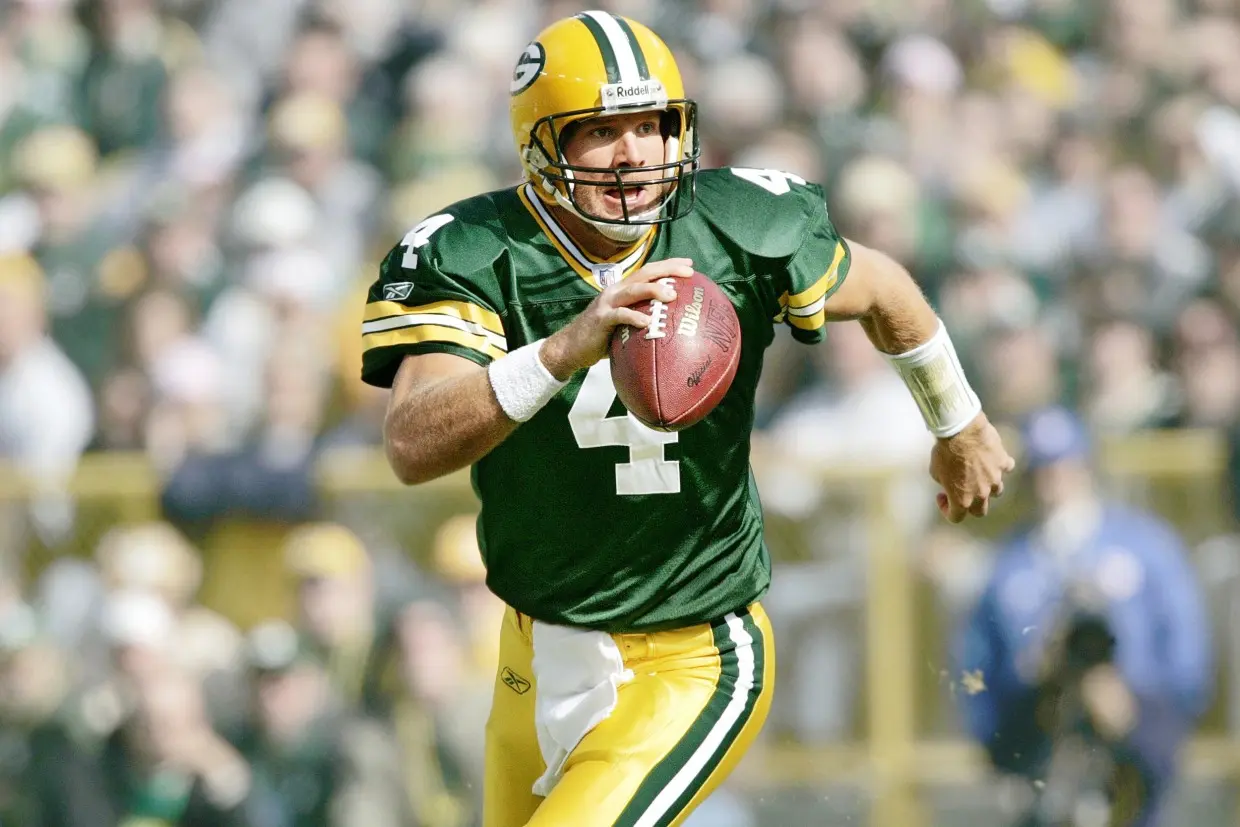
At the same time, it magnifies mistakes, transforming isolated errors into symbols of broader philosophical debates about how football should be played.
Fans watching the December 29th game experienced this emotional swing instantly, as anticipation gave way to frustration within a single snap.
For Stafford himself, equaling Favre’s record is unlikely to inspire pride, as quarterbacks rarely celebrate statistics rooted in turnovers and lost control.
Instead, it becomes another reminder of the burden placed on those entrusted with the game’s most influential position, where success and failure coexist within inches.
Brett Favre’s legacy eventually reframed perceptions of such records, showing that sustained excellence and daring risk-taking can coexist across a long career.
Stafford’s trajectory suggests a similar possibility, though modern scrutiny ensures every misstep is amplified through instant analysis and viral commentary.
Social media accelerates judgment, compressing years of performance into isolated clips that shape public perception faster than thoughtful evaluation.
The debate surrounding this milestone therefore extends beyond Stafford himself, touching on how the NFL defines greatness in an evolving strategic landscape.
Is quarterback excellence measured by minimizing mistakes, or by embracing calculated risk to create extraordinary outcomes when safer options fail.
Stafford’s career suggests that greatness often exists between those extremes, forged through resilience, confidence, and acceptance of consequence.
The interception against Atlanta will eventually fade into statistical databases, overshadowed by future games, seasons, and narratives.
Yet the conversation it reignited will persist, resurfacing whenever quarterbacks face similar moments of decision under relentless pressure.
It reminds fans that the position demands courage as much as caution, imagination as much as discipline, and belief even when outcomes are uncertain.
In equaling Brett Favre’s controversial milestone, Matthew Stafford did more than match a number, he reopened an enduring dialogue about recklessness, genius, and the true cost of daring to define games with a single throw.