Giants vs. Cowboys: Generational Pressure, Legacy, and the Weight Carried by Dak Prescott
Few rivalries in the National Football League generate emotion the way the clash between the Dallas Cowboys and the New York Giants does. For decades, meetings between the two franchises have represented more than just a battle for divisional standing.
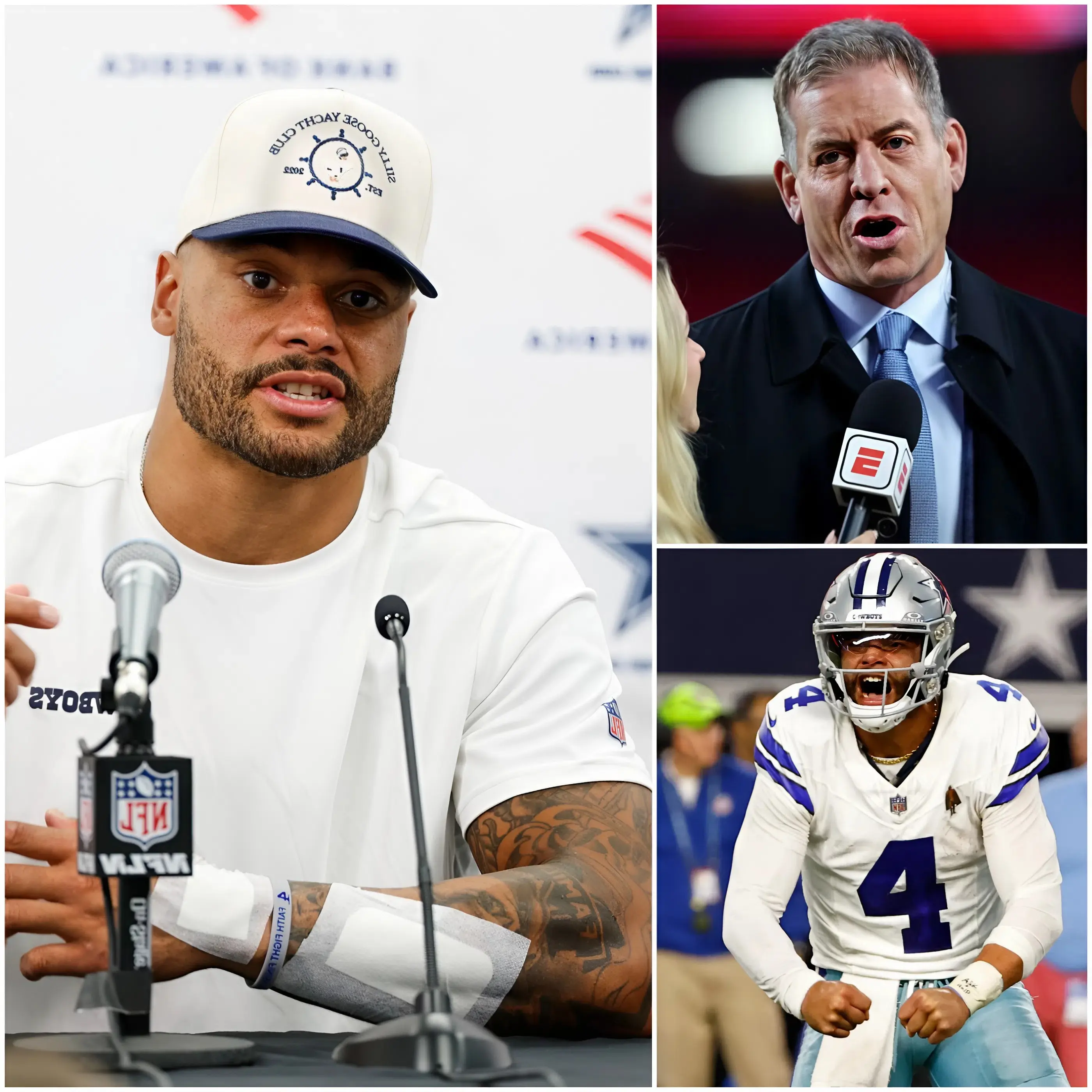
They have become markers of identity: pride for fanbases, symbols of eras, and reference points for greatness. From the days of Troy Aikman leading the Cowboys to Super Bowl glory to the modern era defined by Dak Prescott, the conversation surrounding leadership, expectations, and respect continues to evolve.
Troy Aikman’s name is engraved deeply in Cowboys history. As a Hall of Fame quarterback and a central figure in three Super Bowl championships during the 1990s, Aikman represents the golden age of Dallas dominance.
His career is associated with precision passing, calm under pressure, and the ability to guide a team loaded with talent — from Emmitt Smith to Michael Irvin — through intense postseason environments.
Today, Aikman is equally influential through his broadcasting career, where his analysis shapes public perception of teams and players across the league.
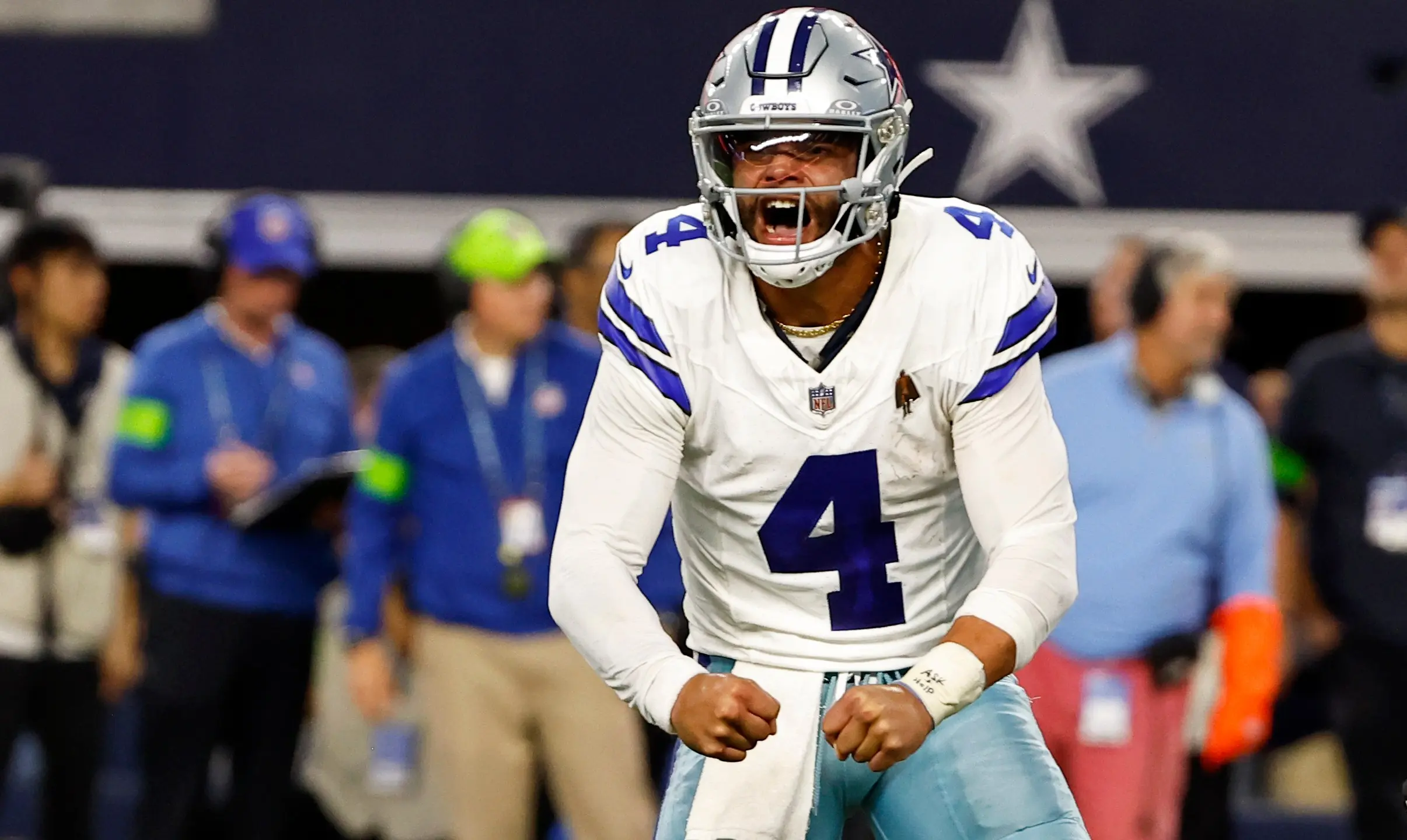
Meanwhile, Dak Prescott carries a very different kind of burden. Prescott arrived not as an anointed No. 1 overall pick but as a fourth-round selection who climbed into a starting role unexpectedly.
Yet he soon became the face of the franchise, navigating playoff expectations, injuries, coaching changes, and the immense spotlight that inevitably surrounds the Cowboys.
Every throw and every result is magnified because Dallas has long marketed itself as “America’s Team,” and the quarterback position in Dallas may be the most scrutinized role in American sports outside of heavyweight boxing champions and elite NBA superstars.
When the Cowboys and Giants meet, storylines multiply. The matchup embodies contrasts: different markets, different historical rhythms, and different philosophies. The Giants often evoke images of defensive toughness and underdog resilience — think of their Super Bowl runs that derailed dominant favorites.
The Cowboys are typically viewed as star power and high expectations. Games between them are therefore not just tactical contests; they are tests of narratives about identity and legitimacy.
With shifting eras comes tension over legacy and comparison. Whenever a legendary star from the past and a current player share the discussion space, debates naturally emerge. Fans compare statistics, playoff achievements, leadership styles, and the perceived “clutch” factor.
Yet context matters: Prescott competes in an NFL dominated by salary-cap complexity, hyper-mobile quarterbacks, social media pressure, and offenses designed to stretch the field horizontally and vertically. Aikman, by contrast, played in a league centered on power running and vertical strikes behind dominant offensive lines.
Evaluating them by identical standards ignores the evolution of the sport.
One of the most powerful themes in modern sports culture is the speed at which opinion spreads. A single comment, game outcome, or social-media post can spark debate across millions of people in minutes. Athletes today live at the intersection of performance and perpetual conversation.
Prescott’s leadership is judged not only by yardage and touchdowns but by how he carries himself publicly, how he responds to adversity, and how he manages the emotional and symbolic weight of representing a franchise known worldwide.
It is not surprising that discussions involving Prescott frequently ignite intense reactions, because fans project hopes, frustrations, and decades of history onto him.
Respect between generations of athletes is also more complex than it first appears. Legends from the past defend standards they helped set. Current players defend the legitimacy of their hardship and the validity of the modern era. In truth, both sides face pressures outsiders rarely see.
Aikman’s era demanded toughness and durability in a league with different rules on quarterback protection. Prescott’s era demands constant availability for commentary, relentless statistical comparison, and performance under a digital microscope. The humanity behind the helmet remains constant.
The Cowboys’ rivalry with the Giants amplifies all of this.
Every meeting becomes a referendum on direction: Are the Cowboys fulfilling their talent? Are the Giants rebuilding identity? Who controls the NFC East narrative? Stadium atmospheres during these games mix anxiety with anticipation, as fan bases whose histories are intertwined watch for turning points that may echo through seasons.
Beyond rivalry, a quieter truth deserves attention: athletes are not just characters in debate — they are people living immense pressure. Quarterbacks, especially, carry the emotional expectation of entire cities and ownership groups. Every interception or loss becomes the face of failure; every victory becomes a redemption story.
Prescott’s resilience through injuries and personal hardships has become part of his public identity. Aikman’s career, marked by physical punishment in the pocket, reflects another kind of perseverance. Respect, then, need not be framed as competition but as shared experience across eras.
As the league continues to evolve, Cowboys–Giants games will remain cultural markers. They are chapters in a larger saga stretching back more than half a century. Future quarterbacks will inherit the shadow of Aikman’s championships and the spotlight Prescott lives under today.
Analysts will continue dissecting performances; fans will continue arguing greatness; moments of brilliance and disappointment will continue shaping reputations.
What should remain at the center of the conversation is the appreciation of craft. The quarterback position is one of the most intellectually and physically demanding roles in professional sports. Reading defenses, absorbing hits, leading locker rooms, and representing franchises under relentless public attention requires uncommon composure.
Whether in the era of Troy Aikman or the present era of Dak Prescott, excellence has always been forged through pressure.
In the end, the rivalry between the Cowboys and Giants is a mirror reflecting the NFL itself — history colliding with the present, emotion intertwined with strategy, and legends standing beside current stars in a never-ending dialogue about greatness.
Titles, statistics, and opinions shift across time, but the passion surrounding these teams remains constant. From Super Bowl parades to divisional battles decided in the final minutes, the story of Dallas vs.
New York continues to expand, reminding fans why sport captures the imagination: it is not only about who wins, but about how eras define identity and how athletes carry the weight of expectation.