Ohio State head coach Ryan Day stood at the podium in the dimly lit press room at AT&T Stadium, the echoes of the Cotton Bowl crowd still faintly audible through the walls even hours after the final whistle.
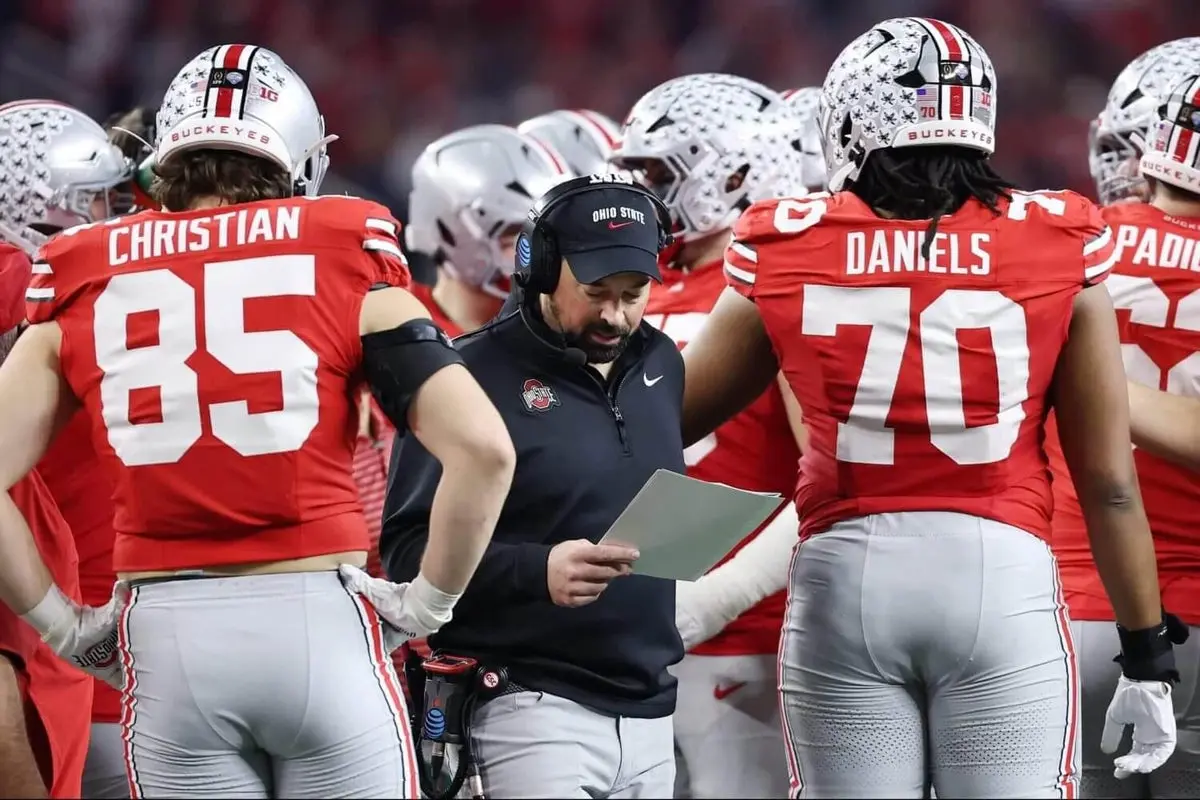
The scoreboard had long since gone dark, but the sting of the 24-14 loss to No. 10 Miami in the College Football Playoff quarterfinals lingered like smoke that refused to clear. For a program accustomed to hoisting trophies and dominating headlines, this early January exit felt like a gut punch.
Yet in the aftermath, Day chose not confrontation but composure, accountability, and a quiet defense of the young talent that had carried the Buckeyes so far.
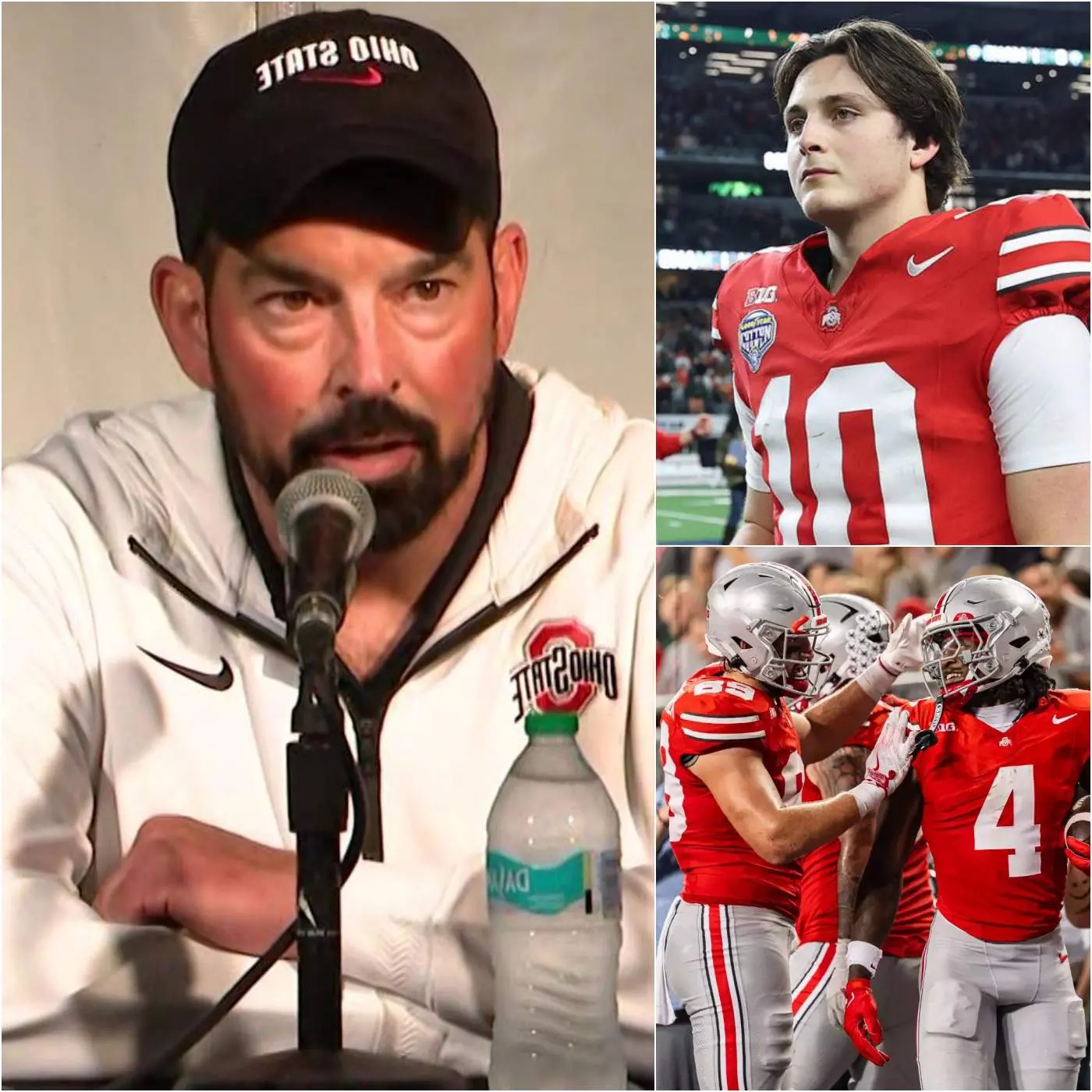
The game itself had unfolded in brutal fashion for Ohio State fans. After earning a first-round bye as the No. 2 seed and entering as heavy favorites, the Buckeyes appeared sluggish from the opening snap. Miami’s defense, led by relentless edge rushers, overwhelmed the Ohio State offensive line.
Quarterback Julian Sayin, the Heisman finalist and freshman sensation who had electrified the regular season, found himself under constant pressure. He was sacked five times and threw two interceptions, including a costly pick-six returned 72 yards for a touchdown by Miami cornerback Keionte Scott.
That single play in the second quarter swung momentum decisively, turning a tight contest into a 14-0 halftime deficit from which Ohio State never fully recovered.
Social media exploded in the immediate aftermath. Frustrated fans vented their disappointment, some calling for sweeping changes, others questioning everything from play-calling to preparation. Rumors swirled online—dramatized posts claiming Day had issued a fiery ultimatum to “fake fans,” defended Sayin while harshly criticizing and even threatening to dismiss three players.
Those stories spread quickly, fueled by the raw emotion of a shocking upset. But the reality, as captured in the official postgame press conference transcripts and video footage, painted a very different picture.
Day took the stage alongside safety Caleb Downs and Sayin himself. There was no dramatic Twitter tirade, no public shaming of individuals. Instead, Day shouldered the blame head-on.
“I take responsibility for not getting the guys ready to play,” he said plainly, addressing the slow start that saw Ohio State manage just one first down in the first quarter.
He acknowledged the 25-day layoff after the Big Ten Championship and the challenge of recapturing rhythm, but he refused to use it as an excuse.
“We worked really hard during the last three weeks leading up to this game to come out of the gates and win the first quarter, win the first half, be ready to go,” he explained. “That didn’t happen.”
When questions turned to Sayin, Day’s tone softened into one of genuine belief. The freshman quarterback had thrown for 287 yards and a touchdown on 22-of-35 passing despite the chaos around him. He had competed fiercely, even as sacks piled up and hurried decisions led to mistakes.
Day highlighted the inexperience factor without apology. “For Julian, this is somebody who hasn’t played a lot of football and he competes,” he said. “This guy right here has a very, very bright future ahead of him…
I think Julian has a chance to be as good as he wants to be. Now, he’s got to learn from this.” He pointed out that many of the sport’s elite quarterbacks at the highest levels arrive with far more game experience under their belts.
The message was clear: this loss was part of the growth process, not the end of it.
Sayin, seated beside his coach, echoed the sentiment with maturity beyond his years. “It starts with me,” he admitted.
“We’ve got to be better on offense from an execution standpoint.” He spoke candidly about holding the ball too long at times and missing chances to scramble, but there was no finger-pointing, only resolve.
Downs, the defensive standout, expressed similar frustration about the final drive that sealed Miami’s victory, yet the room remained focused on reflection rather than recrimination.
In the days that followed, the narrative of a supposed “shocking” internal purge never materialized. No reports emerged of Day publicly criticizing or firing any players.
The focus stayed on evaluation: Day mentioned he would “look at” the offensive game-planning structure and overall preparation, especially after taking over primary play-calling duties following Brian Hartline’s departure to become head coach at South Florida. Players, when asked, expressed continued trust in their leader.
One offensive lineman emphasized, “I trust his decisions completely. He’s done a great job as a playcaller in the past, and wherever that leads us in the offseason and next year, I’ll fully support him.”
The upset by Miami marked a humbling moment for a program that had just captured a national title the previous season. It also highlighted the unforgiving nature of the expanded 12-team College Football Playoff, where even top seeds with byes have faltered early.
Miami, under their coaching staff, had turned a roller-coaster regular season into a postseason surge, proving that momentum and physicality can overcome regular-season pedigree.
For Ohio State, the offseason now looms large. Questions about the offensive line’s performance, the kicking situation, and how to best develop Sayin—or potentially introduce competition—will dominate discussions. Yet through it all, Day’s response has been measured.
He defended his young quarterback not with bombast but with conviction, reminding everyone that greatness in college football often arrives after adversity.
As the Buckeyes pack up and head home, the sting of elimination remains fresh. But in the quiet moments after the chaos, Ryan Day chose leadership over division. He reminded the fanbase—and perhaps himself—that true support endures beyond wins and losses.
The road back to the top starts now, with lessons learned in the Cotton Bowl lighting the way forward for a program that refuses to stay down for long. (Word count: 1024)