After decades defined by frustration and forgettable Saturdays, Indiana football has erupted into a force no one can ignore. The Hoosiers are no longer a punchline. They are a warning, forged by pain, discipline, and a violent refusal to accept comfort.
Pat Coogan’s voice cuts through the locker room like a blade. His declaration of fearing complacency is not rhetoric but doctrine. Indiana’s transformation is rooted in an obsession with hunger, where every snap is treated like survival rather than celebration.
This team carries the weight of more than 700 historical losses, a number etched into its identity. Instead of running from that legacy, the Hoosiers weaponized it, turning decades of ridicule into a relentless drive that fuels every collision.
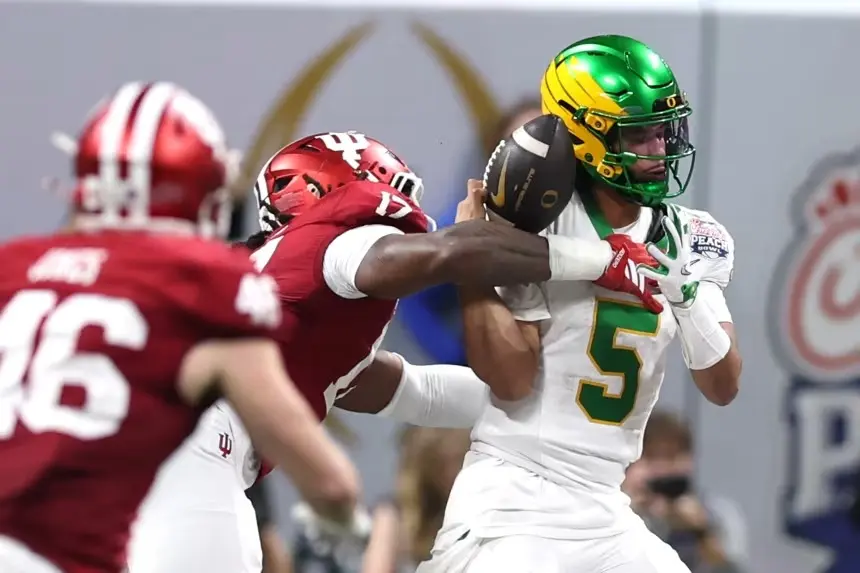
The playoff massacre of Alabama shocked the college football world. Indiana’s defense swarmed with ruthless precision, collapsing pockets, stripping footballs, and turning mistakes into points. The Tide, accustomed to dominance, looked stunned by the Hoosiers’ speed and cruelty.
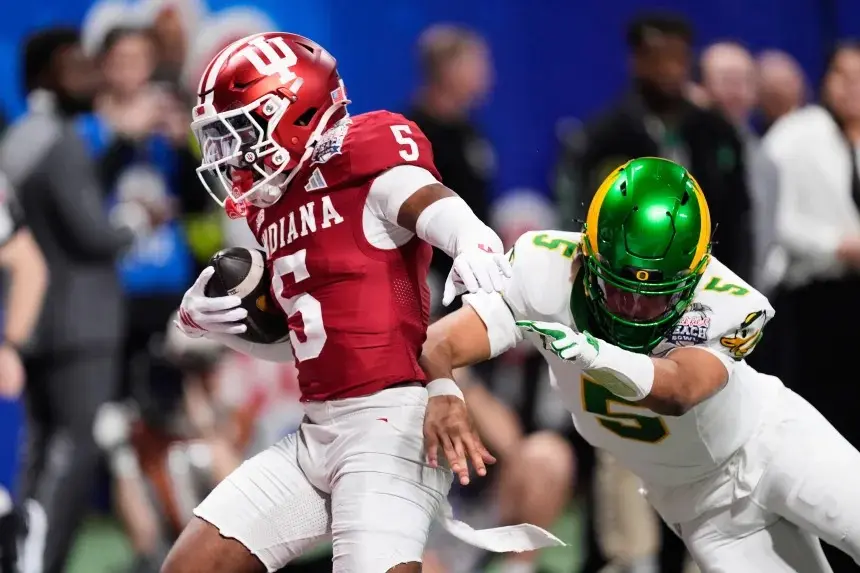
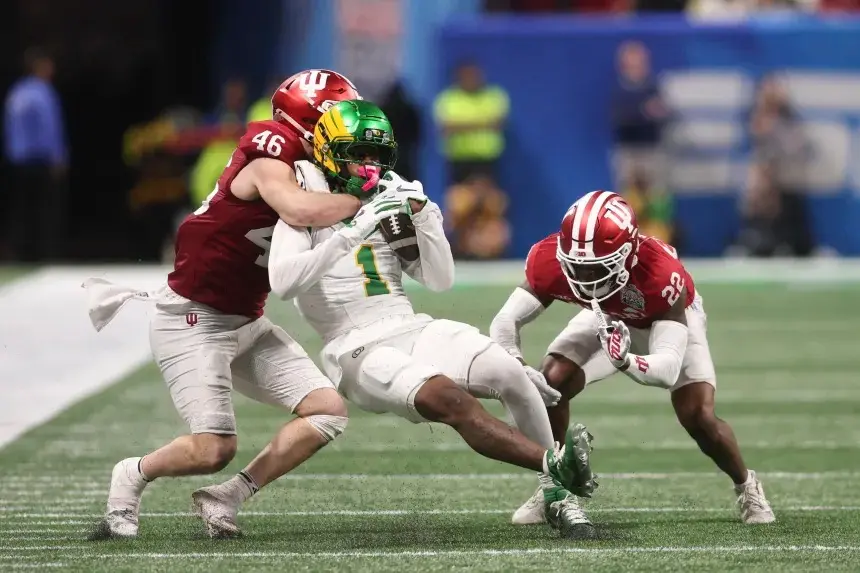
Against Oregon, the statement grew louder. Indiana dictated tempo, bullied the line of scrimmage, and erased the Ducks’ explosive offense. Each sack felt symbolic, as if the Hoosiers were burying the notion that blue bloods alone own January football.
Defense defines this team’s soul. Quarterbacks are hunted without mercy, routes are jumped with anticipation, and special teams strike like lightning. Blocked punts returned for touchdowns ignited stadiums and crushed opponents’ momentum in seconds.
There is no single star to scheme against, no obvious weakness to exploit. Indiana’s strength lies in its balance, where every unit feeds the other. Offense sustains, defense suffocates, and discipline eliminates the self-inflicted wounds of past eras.
Coaches preach violence with intelligence. Assignments are executed with surgical accuracy, turning chaos into control. The Hoosiers do not rely on miracles; they manufacture inevitability through preparation, repetition, and an uncompromising standard of effort.
Veterans anchor the locker room with scar tissue earned through losing seasons. They speak quietly, knowing pain better than praise. Younger players absorb that mentality, understanding that success is rented daily and complacency triggers immediate eviction.
Fans across Indiana feel something unfamiliar yet intoxicating. Hope has transformed into belief, and belief into expectation. Memorial Stadium vibrates with noise once reserved for basketball, as football finally commands statewide devotion and pride.
The cultural shift is unmistakable. High school prospects now view Bloomington as a destination, not a detour. Indiana’s brand has hardened, projecting toughness, unity, and opportunity instead of apologies and rebuilding timelines.
Media narratives scramble to catch up. Analysts once dismissed Indiana as a feel-good story, but playoff brutality changed that tone. Respect has replaced surprise, and opponents now prepare with caution rather than condescension.

Coogan embodies the program’s rebirth. His iron-willed presence reflects a roster that refuses shortcuts. Practices are brutal, accountability public, and standards unwavering. The Hoosiers do not chase headlines; they chase dominance earned through suffering.
The road to Miami looms as the final proving ground. Indiana approaches it without awe, understanding that immortality demands one more act of discipline. The opponent matters less than the mission: finish what decades of failure began.
Preparation for the championship mirrors preparation for September. Coaches strip emotion from meetings, drilling fundamentals and situational awareness. The message remains consistent: fear complacency more than any opponent wearing a different uniform.
Players speak of brotherhood forged in obscurity. Losing seasons built trust, not fracture. That shared hardship now manifests as unity under pressure, where no moment feels too large because worse moments already survived together.
Opponents describe Indiana as exhausting. Every play requires maximum effort, every inch contested. The Hoosiers drain confidence as effectively as stamina, forcing rivals into desperation mistakes that Indiana punishes without hesitation.
Special teams continue to tilt games violently. Punts are attacked, kicks challenged, lanes filled with reckless precision. Momentum swings abruptly, leaving crowds roaring and opponents searching for stability that never arrives.
Indiana’s offense complements the chaos with composure. Sustained drives protect the defense while punishing physicality wears opponents down. Clock control becomes psychological warfare, shrinking hope with every first down converted.
The Hoosiers’ rise resonates nationally because it defies college football’s hierarchy. Tradition-rich giants fell not through trickery, but through being outworked, out-hit, and out-prepared by a program tired of knowing its place.
Statewide celebrations erupt after each victory. Bars overflow, strangers embrace, and generations who endured disappointment finally witness validation. Indiana football has united communities long divided by skepticism and low expectations.
Former players watch with pride and disbelief. Many endured seasons of struggle, yet see their sacrifices honored through this renaissance. Their losses were not wasted; they became the foundation for this unforgiving, disciplined powerhouse.
Critics search for cracks but find none. Injuries are absorbed, adjustments seamless. Indiana’s depth reflects a program built holistically rather than dependent on singular brilliance destined to fade under pressure.
The Hoosiers’ confidence is quiet, dangerous. They speak less, hit harder, and walk away without theatrics. Celebration is postponed, reserved for a moment that requires no words because history itself will speak.
As Miami awaits, Indiana sharpens its edge. The mission is clear: complete the transformation, claim immortality, and ensure this run is remembered not as a miracle, but as a warning shot to college football.
Win or lose, the Hoosiers have altered perception permanently. Indiana is no longer a stepping stone. It is a destination, a threat, and a standard of what obsession, humility, and fear of complacency can build.
For Pat Coogan and his brothers, the past is fuel, not baggage. Every loss sharpened today’s blade. National glory now feels earned, not borrowed, carved from decades of dismissal and relentless internal demand.
Indiana football stands on the edge of history, unblinking. The state roars, rivals tremble, and a once-forgotten program marches forward, determined to finish its violent, beautiful ascent with a final, unforgettable statement.