Detroit’s “Sonic and Knuckles” Era May Be Ending: David Montgomery Trade Talks Signal a Backfield Reset
The Detroit Lions have spent the last two seasons building one of the NFL’s most balanced, punishing, and beloved backfields. The combination of David Montgomery and Jahmyr Gibbs — affectionately nicknamed “Sonic and Knuckles” — gave Detroit a rare luxury: power and explosiveness operating in perfect harmony.
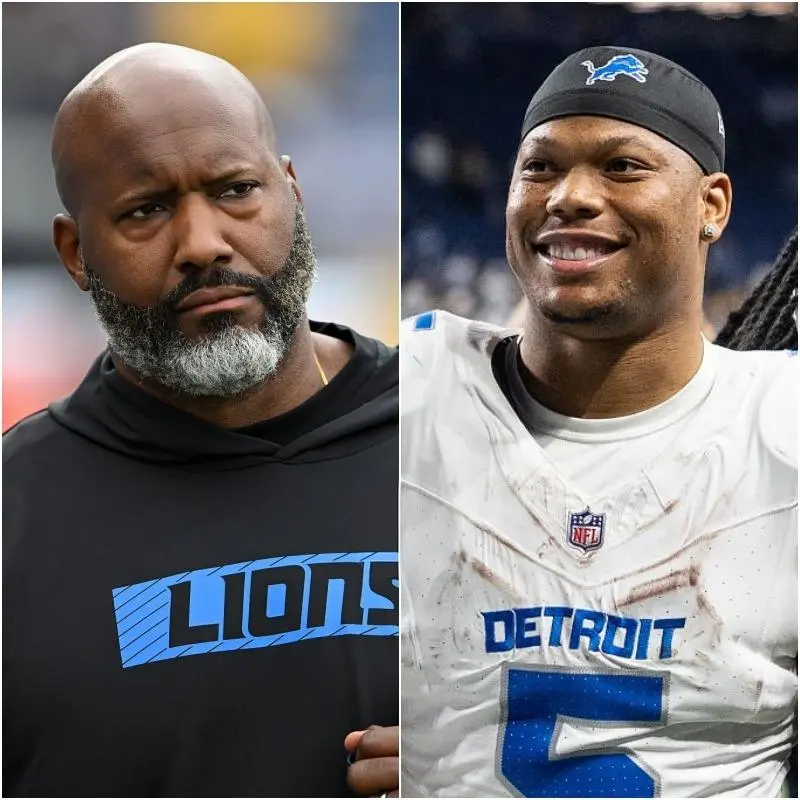
But that harmony may not survive the offseason.
In comments that immediately raised eyebrows across the league, Lions general manager Brad Holmes openly acknowledged that trade discussions involving David Montgomery are now on the table. While the tone was respectful and measured, the message was unmistakable.
Detroit’s backfield identity is changing, and no player — no matter how beloved — is immune to the shift.
“We have a lot of respect for David and what he brings,” Holmes said. “Our goal is always to put players in the best position to succeed. Sometimes that means tough conversations.”
In NFL language, that wasn’t idle chatter. It was a signal.
The Rise of Jahmyr Gibbs Changes Everything
When the Lions selected Jahmyr Gibbs in the first round, the move sparked debate. Running backs are rarely drafted that high anymore, and Detroit already had Montgomery under contract.
But the vision was clear: Gibbs would be the engine, the space-creator, the modern offensive weapon who could redefine how defenses play Detroit.
That vision has now fully materialized.
Gibbs has emerged as the focal point of the offense — not just as a runner, but as a matchup nightmare in the passing game. His explosiveness, versatility, and efficiency have made him impossible to take off the field. As his workload has increased, the math has changed.
There are only so many touches to go around.
In a league where roster construction is dictated by cap flexibility and positional value, it was only a matter of time before Detroit had to ask a difficult question: can you justify paying a premium for a secondary running back when your offense now flows through one dynamic star?
David Montgomery: Still Productive, Still Valuable
This is not a story about decline.
David Montgomery has been everything Detroit hoped for when they signed him. He brought toughness, reliability, and tone-setting physicality. In short-yardage situations, cold-weather games, and late-game scenarios, Montgomery embodied the Lions’ identity under Dan Campbell.
Teammates trust him. Coaches value him. Fans adore him.
That is precisely why Brad Holmes’ comments landed with such weight. If Montgomery were struggling or replaceable, this would be easy. But he isn’t. He’s productive, respected, and still very much capable of being a lead back — just perhaps not in Detroit anymore.
Holmes emphasized the desire to see Montgomery’s skill set “fully utilized.” That phrasing matters. In a backfield increasingly dominated by Gibbs’ snap share, Montgomery’s role has quietly narrowed. What once felt like a perfect balance now risks becoming inefficiency.
The Economics of the Modern NFL Backfield
The Lions are not operating in a vacuum. Across the league, teams are rethinking how they invest in running backs. Committees are common, but financial commitment is selective.
Detroit is approaching a critical window: extensions for core players, looming cap decisions, and a roster that is transitioning from rebuilding to contending.
Allocating significant resources to a position where one player is clearly ascending forces hard choices.
Trading Montgomery isn’t about disrespect — it’s about optimization.
For Detroit, moving him could free up cap space, draft capital, or positional depth elsewhere. For Montgomery, it could offer something just as valuable: a chance to be a true centerpiece again.
“Sonic and Knuckles”: A Duo Fans Didn’t Want to Lose
Few nicknames in recent NFL memory captured the imagination like “Sonic and Knuckles.” It wasn’t just clever branding — it reflected how the duo functioned. Gibbs provided speed, electricity, and unpredictability. Montgomery delivered force, control, and inevitability.
Together, they wore defenses down.
That’s why the idea of the duo breaking up feels emotional, not just strategic. Fans don’t just root for production; they root for stories. And “Sonic and Knuckles” felt like one Detroit could carry for years.
But the NFL rarely allows sentimentality to override momentum.
As workloads tilt and offensive philosophy evolves, duos often become transitional chapters rather than permanent fixtures.
A Subtle But Loud Message from the Front Office
Brad Holmes did not announce a trade. He did not shop Montgomery publicly. He did something more deliberate: he normalized the idea.
By acknowledging discussions openly, Holmes set expectations. He allowed fans, players, and league executives to read between the lines. This wasn’t rumor-mill noise — it was organizational signaling.
Detroit is resetting its offense around speed, versatility, and explosive playmaking. Jahmyr Gibbs is the centerpiece. Everything else must align with that reality.
What Comes Next for Detroit — and Montgomery
If a trade materializes, Montgomery will not lack suitors. Teams in need of a reliable, physical runner — contenders looking for playoff toughness or rebuilding teams seeking leadership — will be interested.
For Detroit, the next phase likely involves a cheaper complement to Gibbs: a situational back, a draft pick, or a rotational piece who fits the evolving system without constraining flexibility.
This isn’t a teardown. It’s refinement.
The End of an Era, Even If Quietly
No dramatic exit. No falling-out. No headlines filled with tension.
Just a slow, pragmatic realization that one of Detroit’s most beloved duos may have reached its natural endpoint.
If “Sonic and Knuckles” truly doesn’t survive the offseason, it will be remembered fondly — as a symbol of Detroit’s rise, not its fracture.
But make no mistake: this felt less like speculation and more like the first crack.
In the NFL, that’s usually how change begins.