In the aftermath of one of the most lopsided semifinal defeats in recent College Football Playoff history, frustration boiled over on the Oregon Ducks sideline. The No.
5 Ducks suffered a stunning 56-22 loss to the top-seeded Indiana Hoosiers in the Peach Bowl on January 9, 2026, at Mercedes-Benz Stadium in Atlanta, ending their season and dashing hopes of a national title run.
What followed was a mix of disbelief, anger, and ultimately, quiet resignation among the Oregon players.
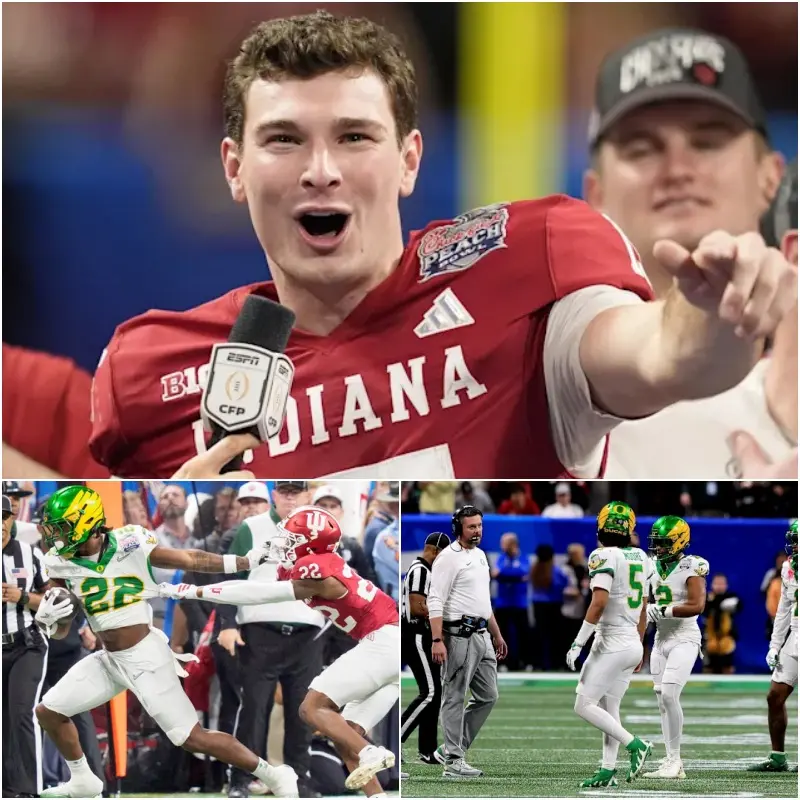
The game began disastrously for Oregon. On the very first play from scrimmage, Indiana cornerback D’Angelo Ponds intercepted Ducks quarterback Dante Moore and returned it 25 yards for a touchdown, staking the Hoosiers to an immediate 7-0 lead just 11 seconds in. From there, Indiana’s dominance was unrelenting.
Heisman Trophy-winning quarterback Fernando Mendoza orchestrated a near-flawless performance, completing 17 of 20 passes for 177 yards and five touchdowns. The Hoosiers capitalized on four Oregon turnovers and a blocked punt, turning mistakes into points and building a commanding 35-7 halftime advantage.
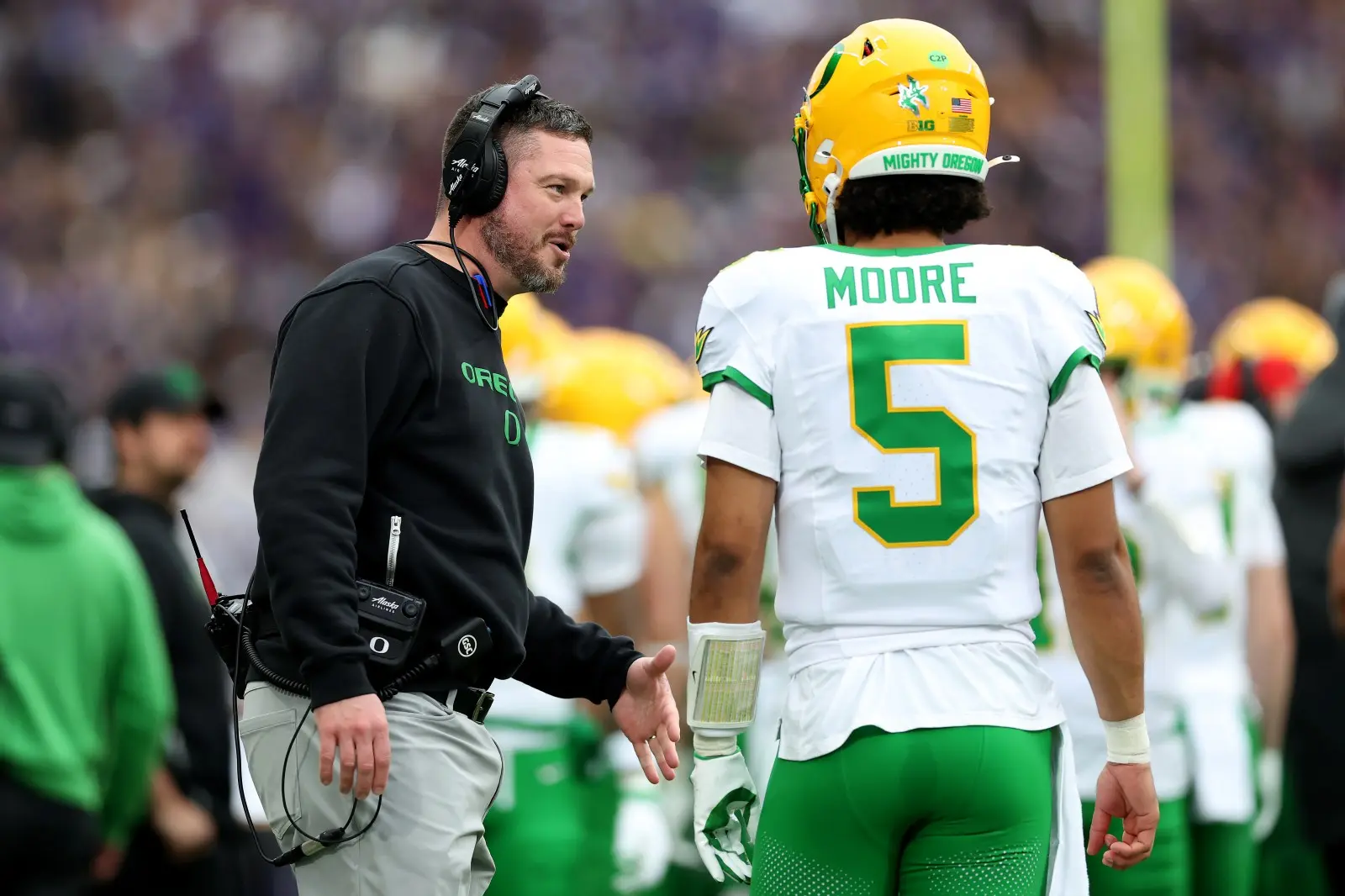
Oregon’s offense struggled throughout, particularly in the first half, averaging fewer than four yards per play amid relentless pressure from Indiana’s defense.
Moore, who entered the matchup with high expectations as a potential top NFL Draft pick, threw for over 280 yards but much of it came in garbage time as the deficit ballooned.
The Ducks surrendered nine sacks, a stark contrast to their season-long protection that had allowed only 14 all year. Indiana’s opportunistic play and physicality overwhelmed Oregon in every phase, leading to a final score that reflected total control: 56-22.
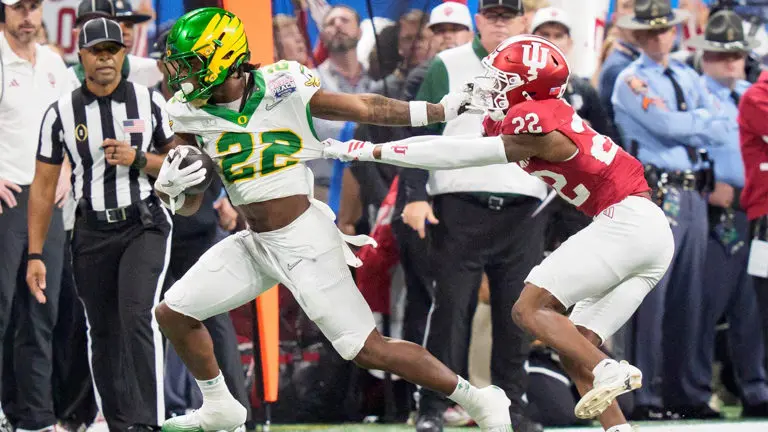
As the clock wound down and the reality of elimination set in, emotions ran high among the Ducks players. Reports surfaced of heated exchanges on the field, with some Oregon players confronting referees over perceived inconsistencies in officiating.
Accusations flew that Indiana had gained an unfair edge, with whispers of cheating circulating—not from official channels, but amplified by social media speculation tied to the Hoosiers’ improbable dominance.
Theories ranged from advanced scouting intel to signal stealing, fueled by Indiana’s veteran-heavy lineup featuring multiple transfers under coach Curt Cignetti and their ability to seemingly anticipate plays. These claims lacked any concrete evidence and were swiftly dismissed by analysts and Indiana supporters as sour grapes over a superior performance.
Social media posts and commentary highlighted how success breeds suspicion, especially for a program that transformed from a 3-9 team into an undefeated powerhouse.
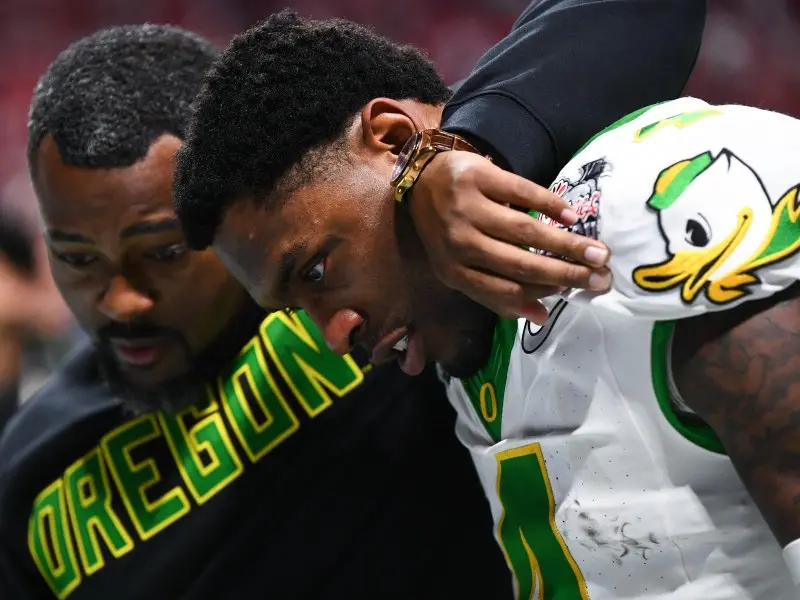
The Ducks’ frustration peaked in the final moments. Several players, visibly upset, refused to accept the outcome quietly. They approached officials, voicing complaints about calls that they believed had tilted the game unfairly toward Indiana.
The outbursts stemmed from the sting of a blowout defeat on college football’s biggest stage, where expectations for Oregon—bolstered by elite recruiting and resources—crashed against Indiana’s execution.
The accusations, however, held no basis in reviewed footage or official reports; no penalties or investigations followed, and the result stood as a testament to Indiana’s preparation and talent rather than impropriety.
Amid the chaos, one voice cut through the noise. Fernando Mendoza, the architect of Indiana’s victory and the 2025 Heisman winner, approached the Oregon sideline in the postgame aftermath.
Known for his poise and sportsmanship throughout the season, Mendoza sought out Ducks coach Dan Lanning first, offering a handshake and words of respect for Oregon’s campaign. But as some Ducks players continued their animated protests near the officials, Mendoza turned toward them.
With calm demeanor, he delivered a simple, measured response: “We just played better football.”
Those five words hung in the air. The accusation-laden energy deflated instantly. Oregon players, caught in the heat of disappointment, fell silent. The reality Mendoza articulated—no elaborate conspiracy, no illicit advantage, just superior play on that night—landed like a cold splash of water.
The Ducks’ bitter disappointment crystallized in that moment: the game had not been stolen; it had been won decisively by a better team.
Mendoza’s composure underscored a broader narrative of the 2025 season for Indiana. Transferring from California, he had become the centerpiece of Cignetti’s rebuild, leading the Hoosiers to a perfect 15-0 record, including dominant playoff wins over Alabama (38-3 in the Rose Bowl) and now Oregon.
His efficiency in the postseason—more touchdown passes than incompletions—silenced doubters and elevated Indiana to the national championship game against Miami.
For Oregon, the loss marked a painful end to a promising year marred by key mistakes and an inability to match Indiana’s intensity. Coach Dan Lanning, who has built the Ducks into a consistent contender, now faces questions about closing out big games.
Yet in the immediate aftermath, it was Mendoza’s understated truth that resonated most. No theatrics, no escalation—just acknowledgment of the obvious.
The Ducks walked off the field in stunned silence, their protests silenced not by referees or rulings, but by the undeniable facts of the scoreboard and the grace of their conqueror. Indiana advances, undefeated and unchallenged in their path, while Oregon reflects on a season that ended in bitter disappointment.
In college football’s high-stakes arena, sometimes the simplest words carry the heaviest weight.