What was once a proud, resilient franchise now looks alarmingly fractured, and the New York Rangers’ growing sense of hopelessness is no longer something that can be hidden behind standings, injuries, or short-term excuses. Both on the ice and behind closed doors, the signs point to a team that has lost its identity, its confidence, and perhaps most troubling of all, its belief.
On the ice, the symptoms are impossible to ignore. The Rangers’ play has become predictable, passive, and emotionally flat. Games slip away not because of one bad bounce or a hot opposing goaltender, but because the team appears disconnected. Defensive breakdowns occur without urgency to recover. Offensive possessions stall as players hesitate, overthink, or default to low-percentage plays. The once-feared forecheck has softened into a half-step late pressure that gives opponents time and space to dictate the tempo.
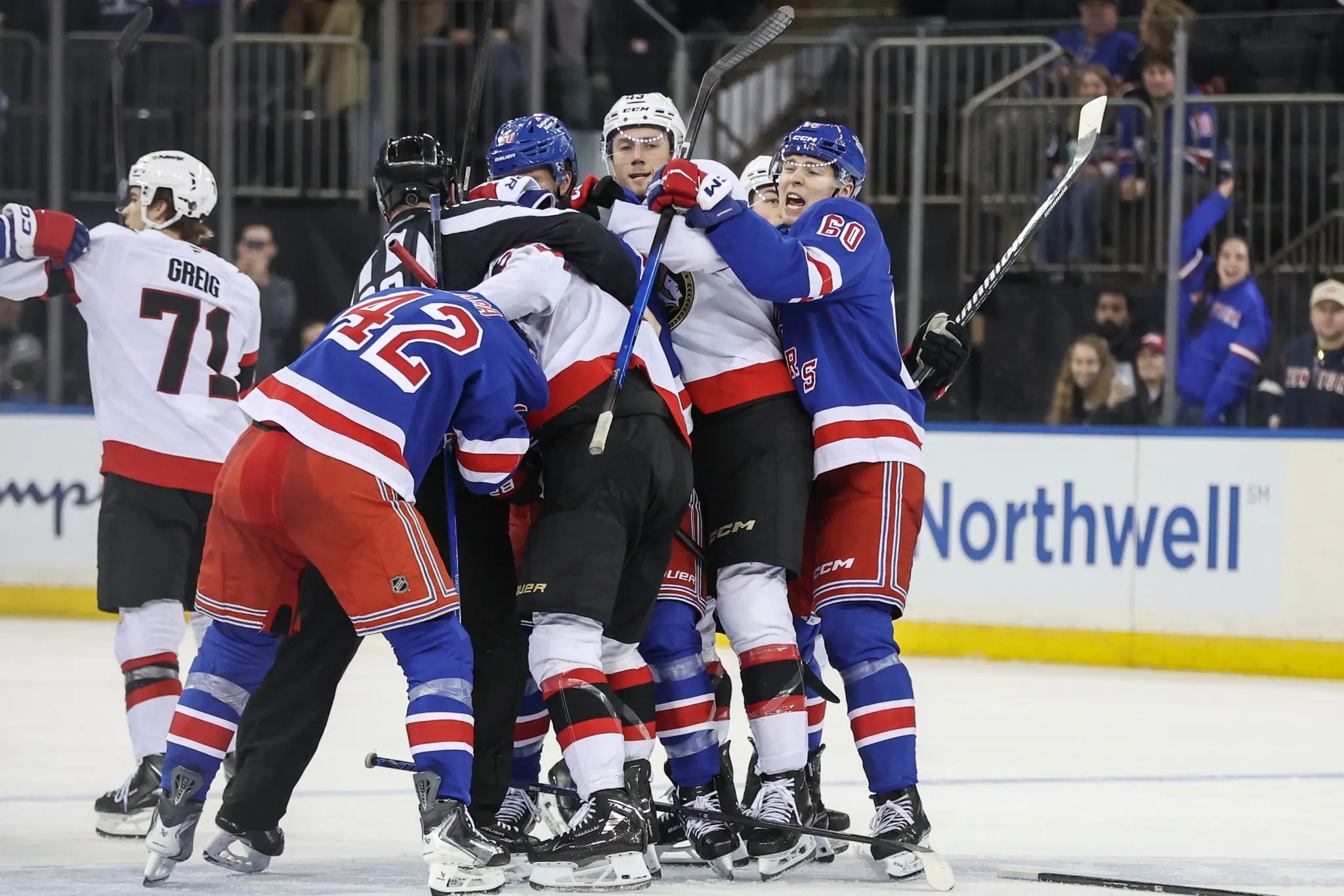
Perhaps the most damning indicator is the body language. Slumped shoulders on the bench after goals against. Minimal communication between shifts. A quiet resignation that settles in long before the final horn. This is not the look of a team battling through adversity. It is the look of a team expecting things to go wrong.
The Rangers’ struggles go beyond tactics or systems. Effort has become inconsistent, and accountability appears diluted. When mistakes happen, there is little visible pushback. No spark to reset the momentum. No emotional response to shift the energy of the game. In the NHL, where parity is ruthless and confidence is currency, that absence is devastating.
Off the ice, the cracks are widening.
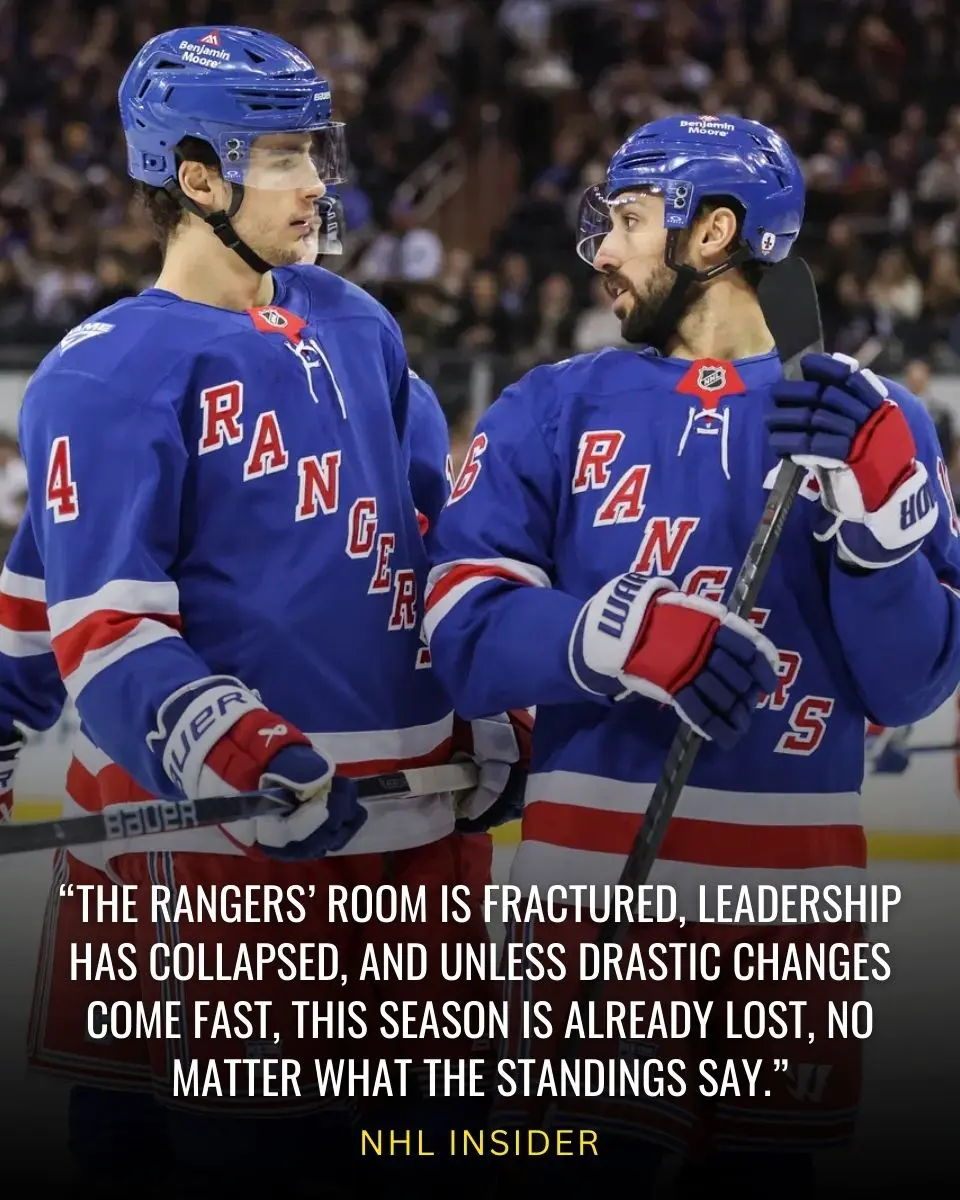
Reports of locker-room tension, frustration with leadership, and unclear direction have begun to surface, and while organizations rarely confirm such issues publicly, the evidence often shows itself through performance. When players speak in vague terms, repeat rehearsed answers, or avoid responsibility altogether, it reflects an internal environment that lacks trust. The Rangers’ postgame comments increasingly feel detached, as if players are going through the motions rather than confronting the reality of the situation.
Leadership, both from veterans and management, has come under intense scrutiny. A team built to contend should not look this fragile. When adversity hits, contenders tighten their structure and lean on leadership. Broken teams fracture. Right now, the Rangers resemble the latter.
The coaching staff faces an unenviable task. Systems can be adjusted, lines can be shuffled, and ice time can be redistributed, but none of that matters if the emotional foundation is compromised. Hockey is a sport of rhythm and belief. Once players stop trusting the process—or each other—the structure collapses. What we are seeing from the Rangers suggests that buy-in is eroding.
The pressure of expectations has only intensified the problem. This roster was assembled with the clear goal of competing deep into the postseason. When reality falls short of that vision, frustration turns inward. Instead of galvanizing the group, pressure appears to be suffocating it. Players grip their sticks tighter. Decision-making slows. Confidence evaporates.
Fans, long known for their passion and loyalty, have noticed. Madison Square Garden has grown restless. Boos now echo where cheers once dominated. The energy that once lifted the team feels heavier, more demanding. While fans are not responsible for the Rangers’ struggles, their reaction reflects a shared sense of disappointment and confusion. They are watching a team that does not resemble the sum of its parts.
What makes the situation particularly concerning is the lack of visible urgency to change it. Teams in trouble often show signs of desperation—line brawls, emotional outbursts, bench-shaking moments that signal refusal to accept decline. The Rangers, by contrast, often look numb. Losses feel absorbed rather than resisted. That emotional numbness is a dangerous place for any organization to live.
In the NHL, talent alone does not save teams. Chemistry matters. Trust matters. Purpose matters. Right now, the Rangers appear to be lacking all three. The gap between what this team should be and what it is has become impossible to ignore.
This is not a one-game problem or a short slump that can be corrected with time. The issues feel systemic. They point to misalignment between expectations and reality, between leadership and execution, between identity and performance. When both on-ice results and off-ice tone reflect the same malaise, it suggests something deeper than tactics or luck.
The path forward will require more than surface-level adjustments. Hard conversations must happen. Roles must be redefined. Accountability must be restored at every level, from the locker room to the front office. Most importantly, the Rangers must rediscover who they are supposed to be.
Until that happens, the signs of a broken team will continue to grow louder. The talent is still there. The market still cares. The opportunity still exists. But without belief, cohesion, and purpose, none of it matters.
Right now, the Rangers are not just losing games. They are losing themselves.