The College Football Playoff National Championship on January 19, 2026, at Hard Rock Stadium was billed as one of the most improbable title games in recent memory. No. 1 seed Indiana Hoosiers, riding an undefeated 15-0 season and powered by Heisman Trophy winner Fernando Mendoza, faced off against the No. 10 seed Miami Hurricanes, who had clawed their way through the expanded 12-team bracket despite a regular-season stumble.
Miami, playing in their home venue under coach Mario Cristobal, sought to end a 24-year national title drought, while Indiana aimed to cap one of the greatest turnarounds in college football history under second-year coach Curt Cignetti. What was expected to be a showcase of elite defense and explosive offense instead became a night defined by controversy, questionable calls, and lingering questions about player safety and integrity.
The game kicked off under the lights in Miami Gardens, Florida, with Indiana deferring after winning the toss. Miami’s offense, led by transfer quarterback Carson Beck, struggled early against the Hoosiers’ suffocating defense. The Hurricanes went three-and-out on their opening drive, setting the tone for a defensive battle. Indiana, however, marched methodically down the field on their second possession. Mendoza, the local product from the Miami area returning home as a conquering hero, orchestrated a drive that featured precise short passes and a key yards-after-catch play from wideout Omar Cooper Jr.
On third-and-4 near the Miami 27, Mendoza executed a clean handoff to running back Kaelon Black. As the play developed, Miami defensive back Jakobe Thomas launched himself forward, driving the crown of his helmet into Mendoza’s chest and then upward into the quarterback’s face and chin area.
The collision was violent. Mendoza staggered backward, blood immediately visible from a split lower lip that stained his chinstrap and jersey. Replays circulated instantly on social media and broadcasts, showing the upward trajectory of Thomas’s helmet after the ball was released—clear criteria for targeting under NCAA rules. Yet no flag flew. No penalty for unnecessary roughness, no ejection for targeting. The drive continued uninterrupted, and Indiana converted it into a 34-yard field goal by Nicolas Radicic, giving the Hoosiers a 3-0 lead. The non-call ignited immediate fury.
Fans, analysts, and former players flooded platforms with outrage, calling it a “blatant targeting violation” and a “cheap shot” that endangered a defenseless player. Headlines screamed variations of “Angry fans blast Miami ‘thug’ Jakobe Thomas for shocking hit on Fernando Mendoza that left Indiana star bleeding.” Social media users demanded Thomas’s ejection, with some labeling him a “thug” and urging him to “get the hell out of here.”
Targeting protocol in college football is unambiguous: forcible contact with the crown of the helmet to a defenseless player’s head or neck area warrants a 15-yard penalty and disqualification if called in the first half. Experts, including former officials, argued the hit met every criterion—Mendoza had released the ball, was no longer a runner, and the contact initiated helmet-to-helmet with an upward motion that caused visible injury. ESPN’s rules analysts noted it could have been flagged as targeting or at least unnecessary roughness.
The absence of a call allowed Miami to stay at full strength defensively, a critical factor against an Indiana offense that had been nearly unstoppable in the playoffs.
Indiana coach Curt Cignetti was vocal at halftime. With his team leading 10-0 after Mendoza connected with tight end Riley Nowakowski for a touchdown, Cignetti told ESPN’s Holly Rowe that the drive featured “three personal fouls on the quarterback not called… obvious personal fouls.” He referenced multiple late hits, including a secondary contact from Thomas later in the sequence. His frustration echoed widespread sentiment that officiating—handled by a Big 12-assigned crew for the CFP final—had tilted the scales in a home-state game for Miami.
An ejection of Thomas would have crippled the Hurricanes’ secondary, potentially opening lanes for Mendoza’s efficient passing and mobility.
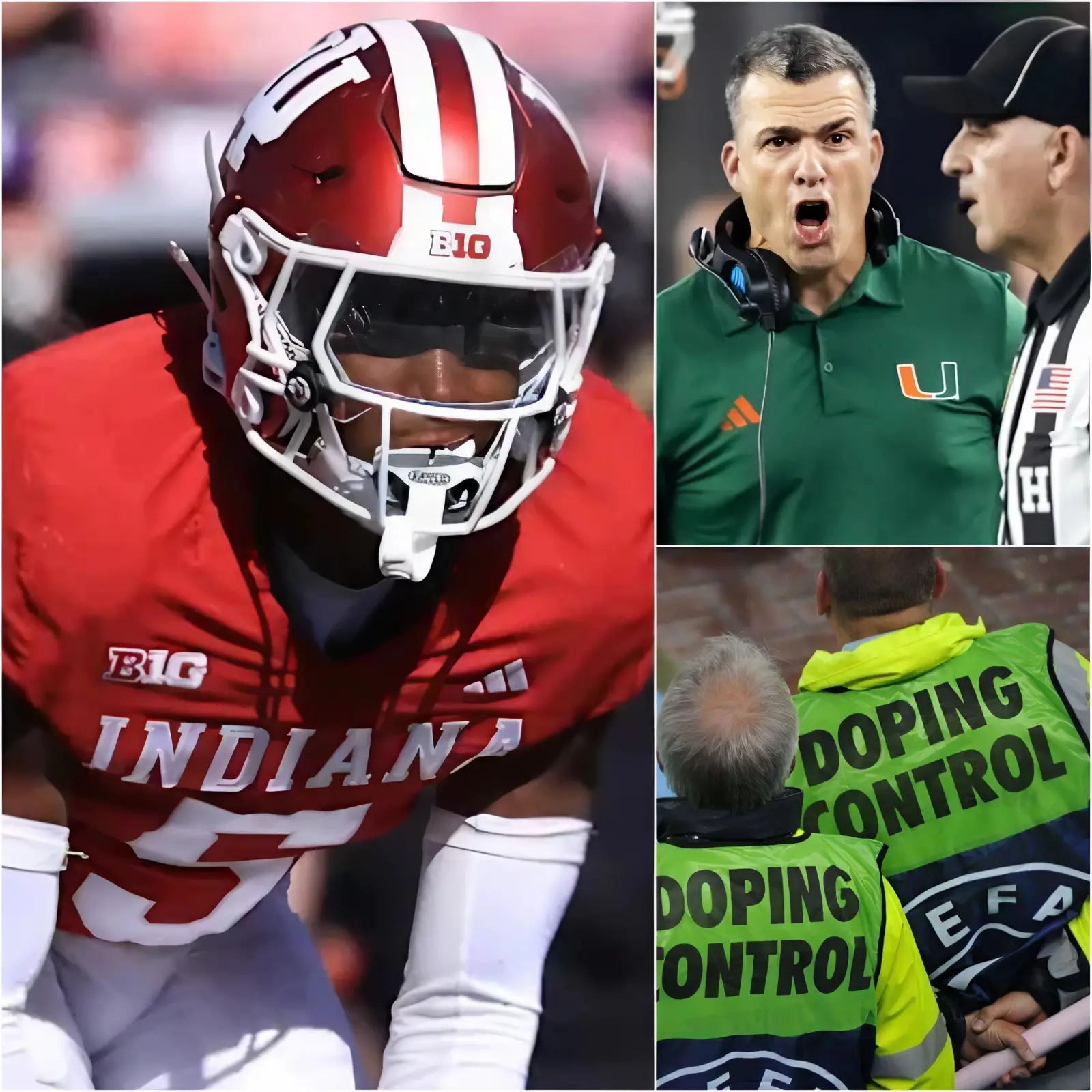
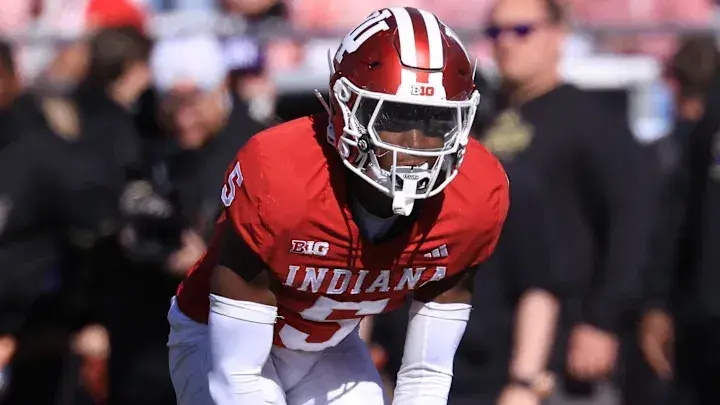
The controversy didn’t end with the targeting debate. Post-first quarter, rumors swirled online about an explosive accusation: claims that Cristobal had confronted officials or presented evidence suggesting Indiana cornerback D’Angelo Ponds had used performance-enhancing drugs (PEDs), forcing an emergency doping test. Social media posts amplified the narrative, portraying it as a desperate tactic amid Miami’s early struggles. Ponds, an All-Big Ten standout and local South Florida product from Chaminade-Madonna High School, had been a lockdown presence, breaking up passes and contributing to Indiana’s elite secondary.
No official statement from the NCAA, CFP, or either program confirmed any such test or accusation during the game. Cristobal, in pre-game comments, had praised Indiana as the “best overall team and best defense” Miami faced, crediting their scheme familiarity rather than anything illicit. The doping rumor appeared to stem from fan speculation and unverified posts, fueled by the intensity of the matchup and prior social media drama around the targeting hit. It added another layer of tension to an already charged atmosphere, with millions of viewers debating fairness on multiple fronts.
Mendoza, bleeding but undeterred, embodied resilience. The Heisman winner, who had thrown for over 3,300 yards and 41 touchdowns with elite efficiency, stayed in the game despite the injury. Trainers patched his lip, and he continued directing drives with composure, mixing short passes with occasional scrambles. His performance highlighted why Indiana had become a juggernaut: disciplined, opportunistic, and led by a quarterback who thrived under pressure. Ponds, meanwhile, continued shutting down Miami receivers, including freshman sensation Malachi Toney, proving his value as an overlooked recruit turned star.
Miami fought back with physicality. Running back Mark Fletcher Jr. broke loose for big gains, including long runs that kept drives alive. The Hurricanes’ defense pressured Beck—wait, no, Miami’s QB was Carson Beck, but the narrative shifted to their ground attack gashing Indiana’s front. Yet penalties and stalled drives, including a missed field goal by Carter Davis that clanked off the upright, kept them scoreless through much of the first half.
The crowd, a mix of crimson-clad Hoosiers fans who had traveled en masse and home supporters in green and orange, created a raucous environment that amplified every big play and non-call.
As the game wore on, the controversies lingered. The targeting miss raised ongoing questions about enforcement consistency—why ejections for lesser hits in regular season, yet none here? The unsubstantiated PED whispers, while baseless in official channels, underscored how quickly misinformation spreads in high-stakes moments. Indiana’s defense swarmed, forcing punts and sacks, while Mendoza managed the game masterfully. The Hoosiers’ story— from perennial underachievers to undefeated champions under Cignetti—was poetic, especially with local ties like Mendoza and Ponds facing Miami in their backyard.
In the end, the national championship transcended the final score. It became a referendum on player protection, officiating integrity, and the fine line between hard-nosed play and recklessness. The hit on Mendoza, the blood on the field, the missed flag, and even the swirling rumors highlighted vulnerabilities in the sport’s biggest stage. For Indiana, it was validation of their improbable rise. For Miami, a frustrating near-miss in their revival. But for college football fans, it was a reminder that even in glory, shadows of controversy can define a legacy.
The game delivered drama, debate, and a night no one would forget—though perhaps not for the reasons anyone anticipated at kickoff.