The Indiana Hoosiers have etched their name into college football history, capturing their first-ever national championship with a hard-fought 27-21 victory over the Miami Hurricanes in the 2026 College Football Playoff final at Hard Rock Stadium. In a season that will be remembered as one of the most improbable turnarounds in the sport, the Hoosiers finished a perfect 16-0, led by Heisman Trophy winner Fernando Mendoza, whose heroics defined not only the game but the entire campaign.
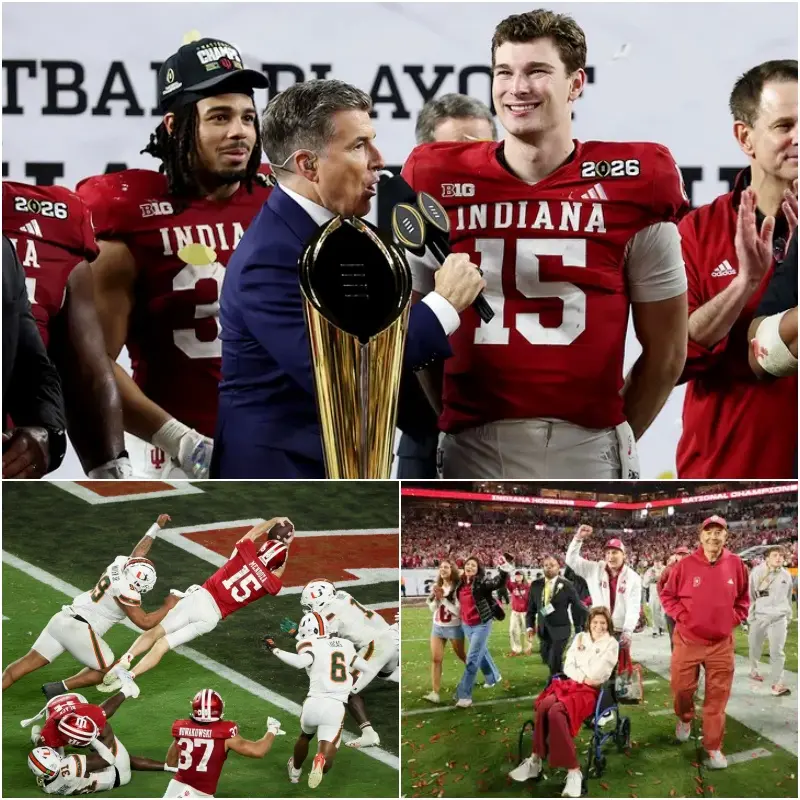
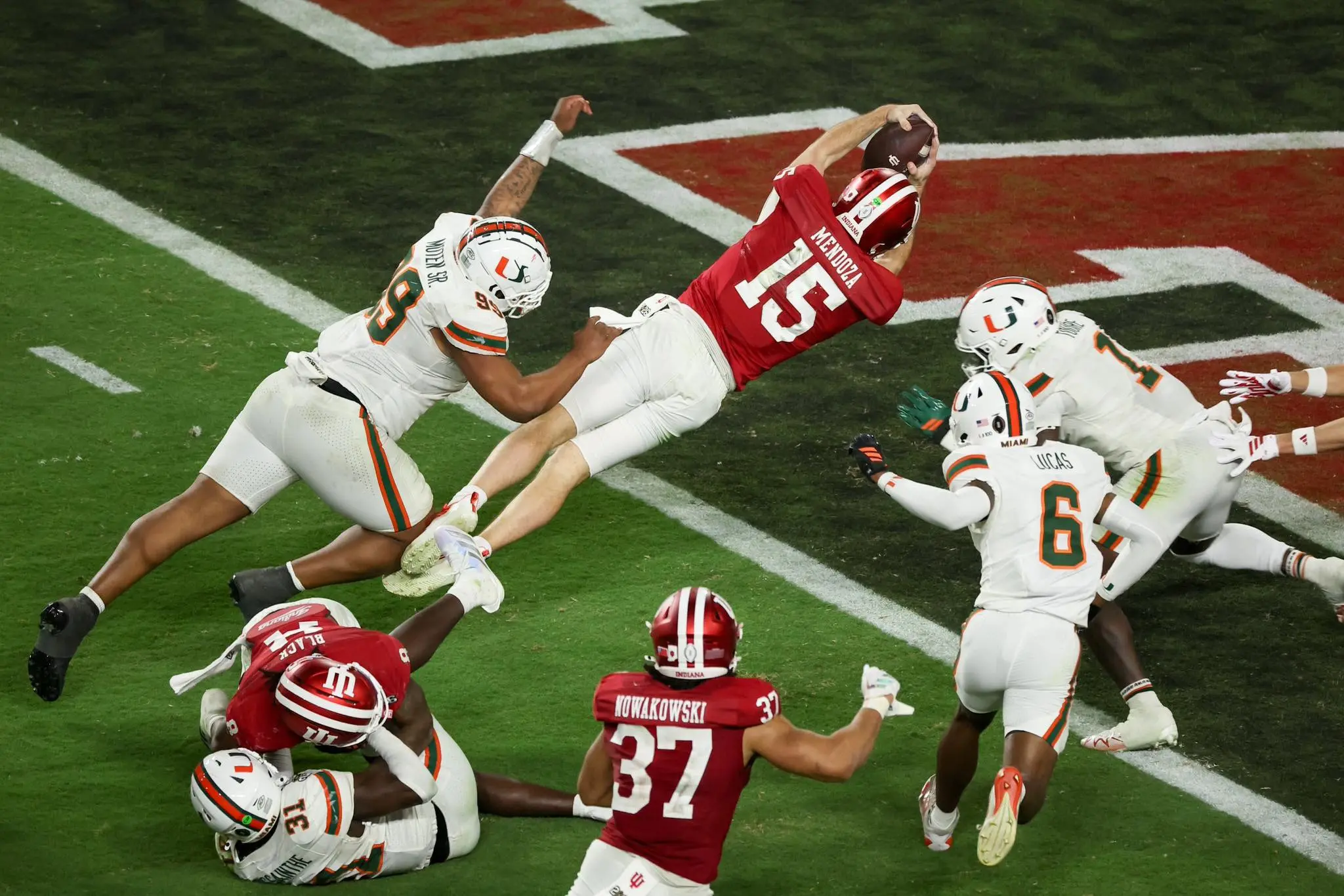
As confetti rained down and the Indiana faithful erupted in celebration, Mendoza stood at the center of it all, the quarterback who had orchestrated comeback after comeback throughout the year. His performance against Miami was vintage: 16 completions for 186 yards, but it was his fourth-quarter scramble on fourth-and-5 that sealed the narrative. With the game hanging in the balance, Mendoza took the snap, evaded defenders, bounced off tackles, and dove outstretched into the end zone for a 12-yard touchdown run that pushed the lead to 24-14.
The play, replayed from every angle on broadcasts, captured the essence of his grit—absorbing contact, refusing to go down, and delivering when it mattered most.
The moment echoed across the stadium, a culmination of a journey that began far from the spotlight. Mendoza, a Miami native who once dreamed of playing for the Hurricanes, transferred from California to Indiana ahead of the 2025 season. What followed was a storybook rise: leading the FBS in passing touchdowns with 41, earning consensus All-American honors, and claiming the Heisman as Indiana’s first winner of the prestigious award. Under head coach Curt Cignetti, the Hoosiers transformed from perennial underachievers into an unstoppable force, blending disciplined execution with explosive playmaking.
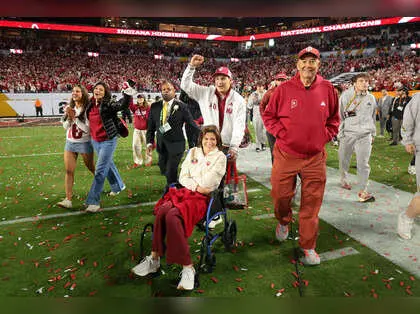
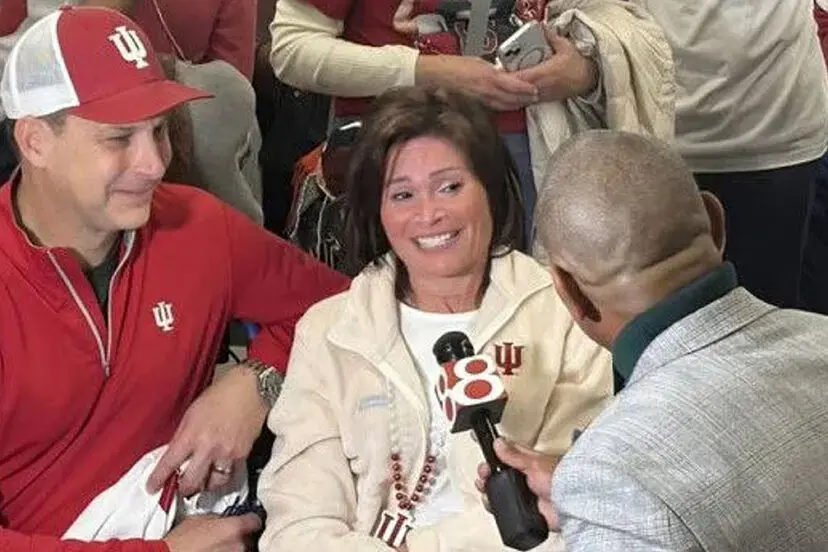
Yet, in the immediate aftermath of the title-clinching victory, amid the hugs from teammates and the roar of the crowd, Mendoza’s gaze turned elsewhere. As the team hoisted the championship trophy and chants of “Hoosiers!” filled the air, he scanned the stands for one face in particular. There, quietly watching with pride rather than seeking attention, stood his mother—the woman who had been the constant force behind his success.
In a post-game interview that quickly went viral, Mendoza’s voice cracked with emotion as he dedicated the win to her. “This isn’t just about me or the team,” he said, eyes glistening under the stadium lights. “It’s about the person who’s been there since day one, sacrificing everything so I could chase this dream. Mom, this is for you. All the late nights, the drives to practice, the belief when no one else believed—you’re the real MVP.” The words hung in the air, a raw and heartfelt declaration that transcended the scoreboard.
For many watching, it was the most moving part of the night, a reminder that even in the brightest moments of glory, the deepest motivations often come from home.
Mendoza’s mother, who has largely stayed out of the public eye, has been a pillar throughout his life. Raising him in Miami alongside his siblings, she instilled values of perseverance and humility. From his early days playing youth football to the transfer portal decision that brought him to Bloomington, she was the steady hand guiding him. Friends and former coaches have spoken of her unwavering support—attending games, offering encouragement during tough losses at Cal, and celebrating every milestone without fanfare. In a sport often defined by bravado and headlines, Mendoza’s tribute highlighted the quieter sacrifices that fuel greatness.
The national championship game itself was a tense battle. Miami, playing on their home turf, refused to fold easily. The Hurricanes mounted drives, kept the score close, and even threatened late. But Indiana’s defense stiffened when needed, and Mendoza’s poise under pressure proved decisive. His fourth-down heroics came after a hard hit earlier in the game left him bloodied, yet he shook it off and led the charge. The win capped a season where the Hoosiers defied expectations at every turn—upsetting top-ranked teams, dominating in the Big Ten, and navigating the expanded playoff with composure.
For Indiana, the title represents more than hardware; it’s validation of a program rebuilt from the ground up. Once among the sport’s longest-suffering, the Hoosiers now stand as champions, a testament to belief, coaching, and talent coalescing at the right time. Mendoza, already projected as a high NFL draft pick, has left an indelible mark on the university.
As the celebrations continued into the night, Mendoza remained reflective. The glory of the moment—the confetti, the trophy, the cheers—was exhilarating, but his thoughts kept returning to the woman in the stands. In dedicating the victory to his mother, he reminded everyone that behind every triumphant run, every record-breaking season, and every championship, there is often an unsung hero whose love and support make it all possible.
In the end, “Behind That Glory” is not just about a game or a trophy. It’s about the invisible threads of family that weave through every achievement, the quiet strength that propels someone to the pinnacle, and the profound gratitude that lingers long after the lights dim. Fernando Mendoza, Heisman winner and national champion, has his hardware. But in his heart, the greatest prize is the one he shares with the woman who believed in him first.